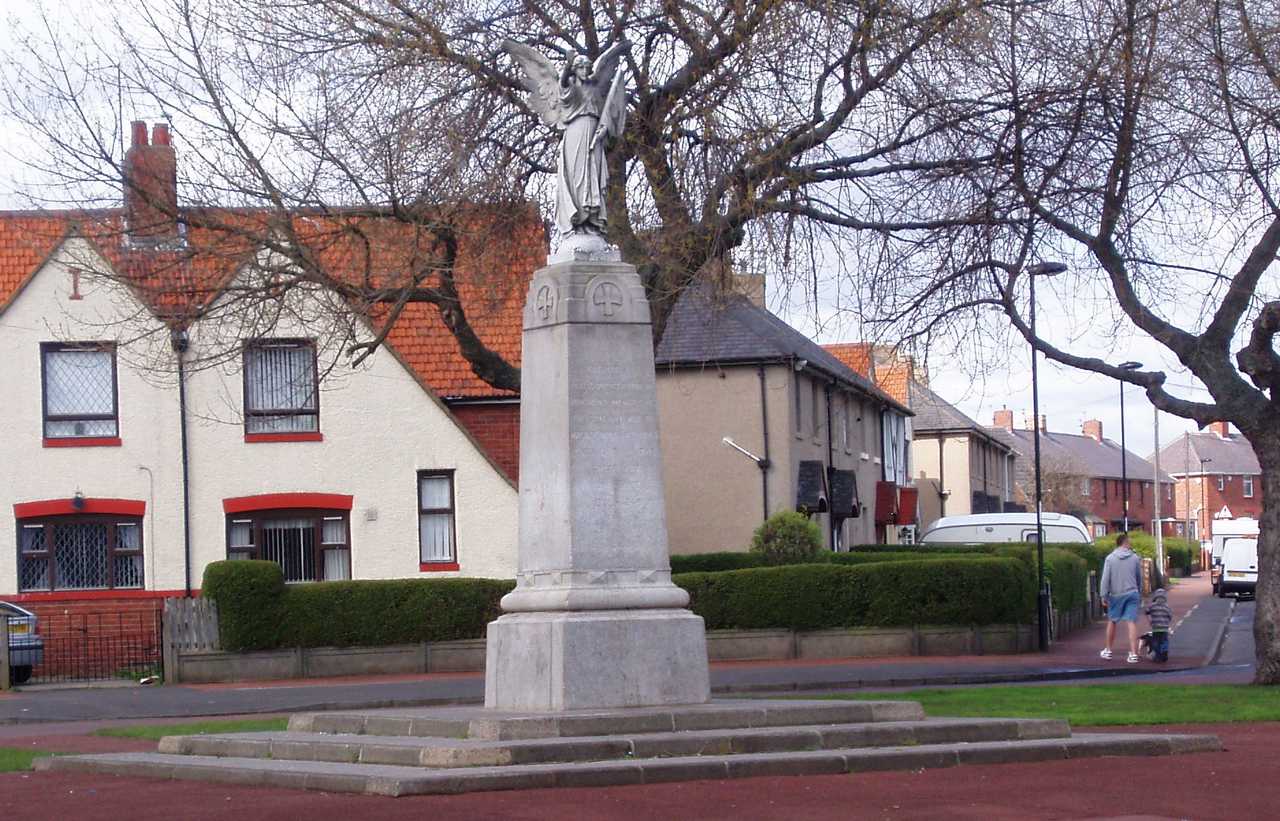
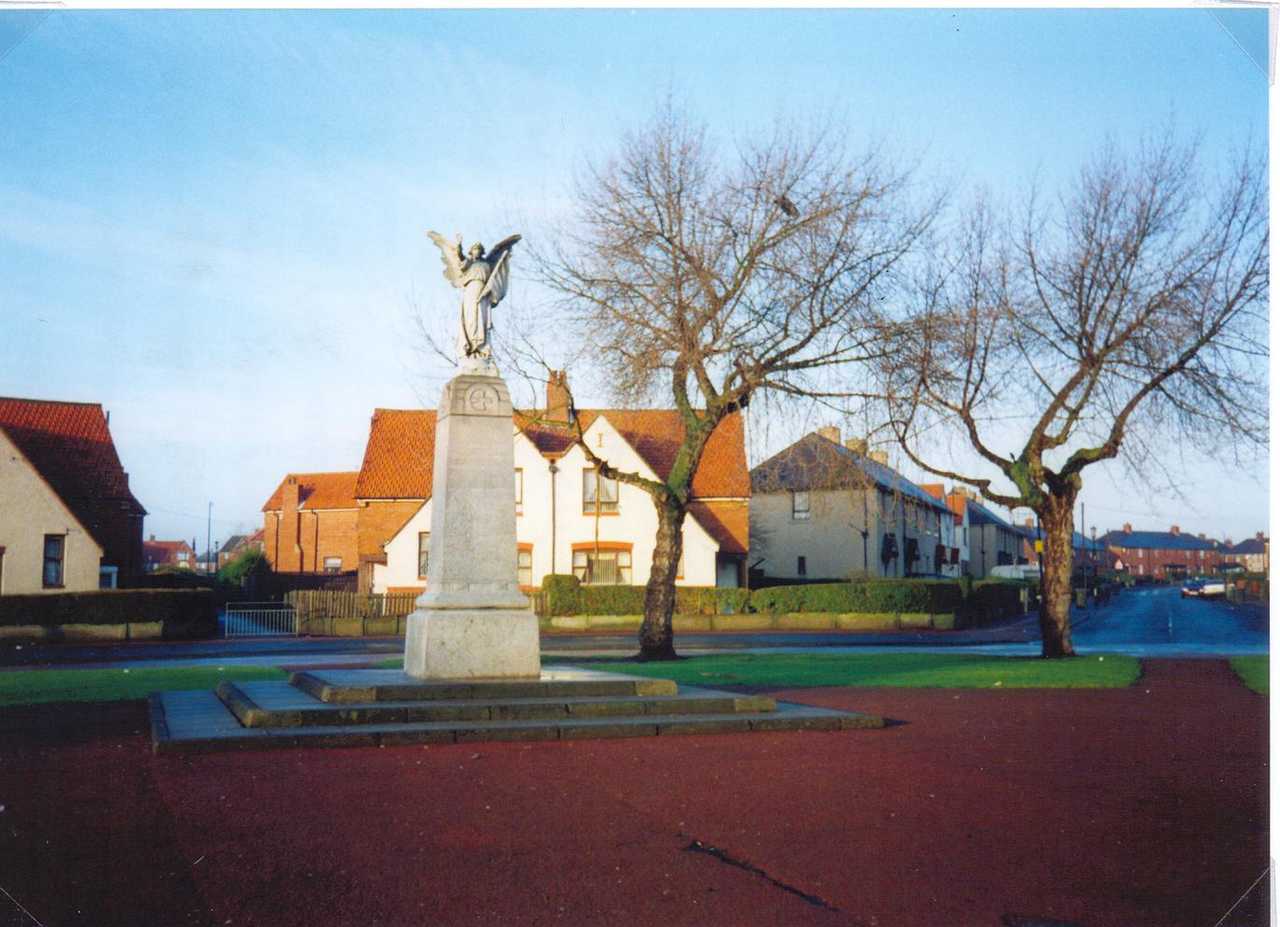
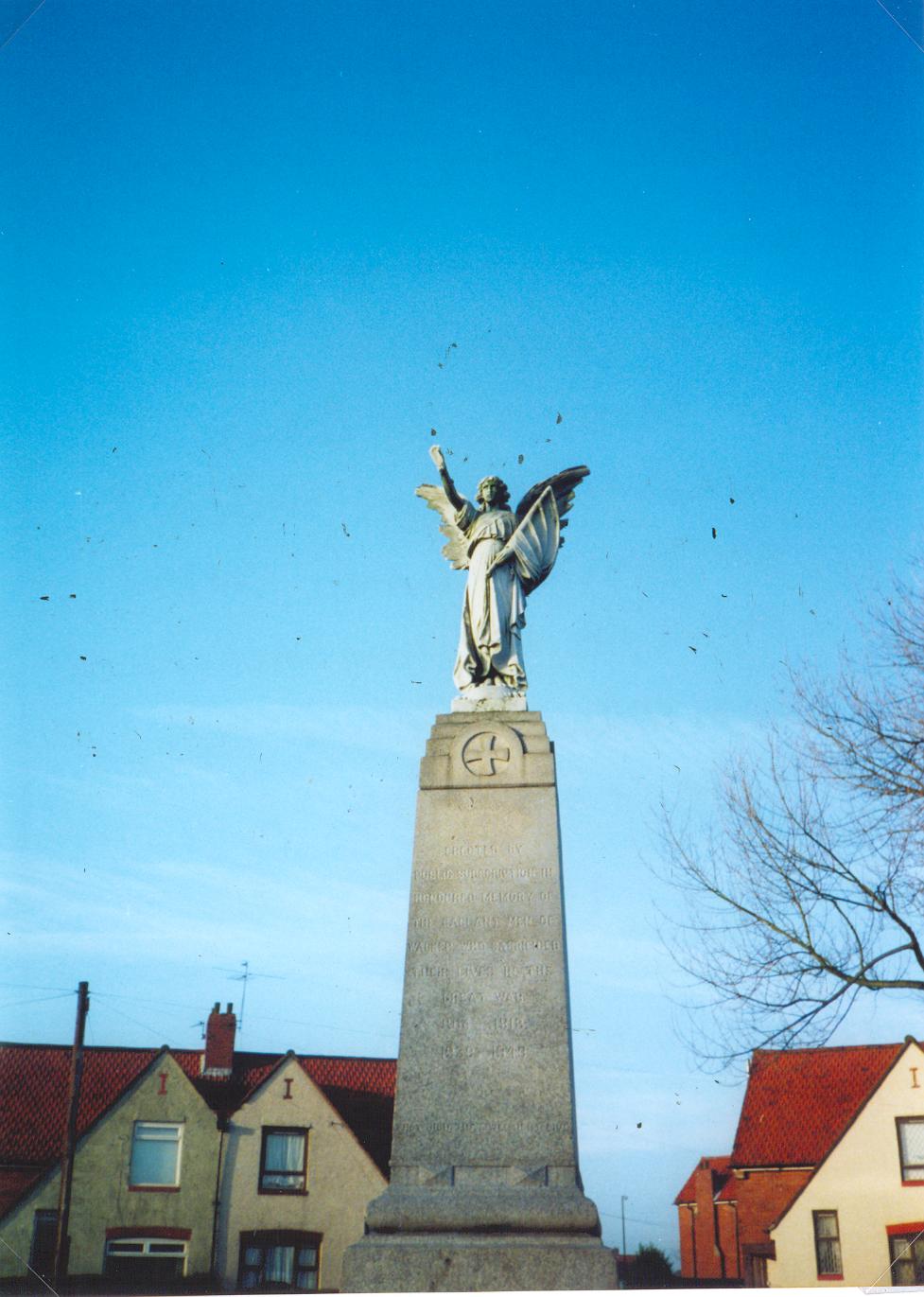
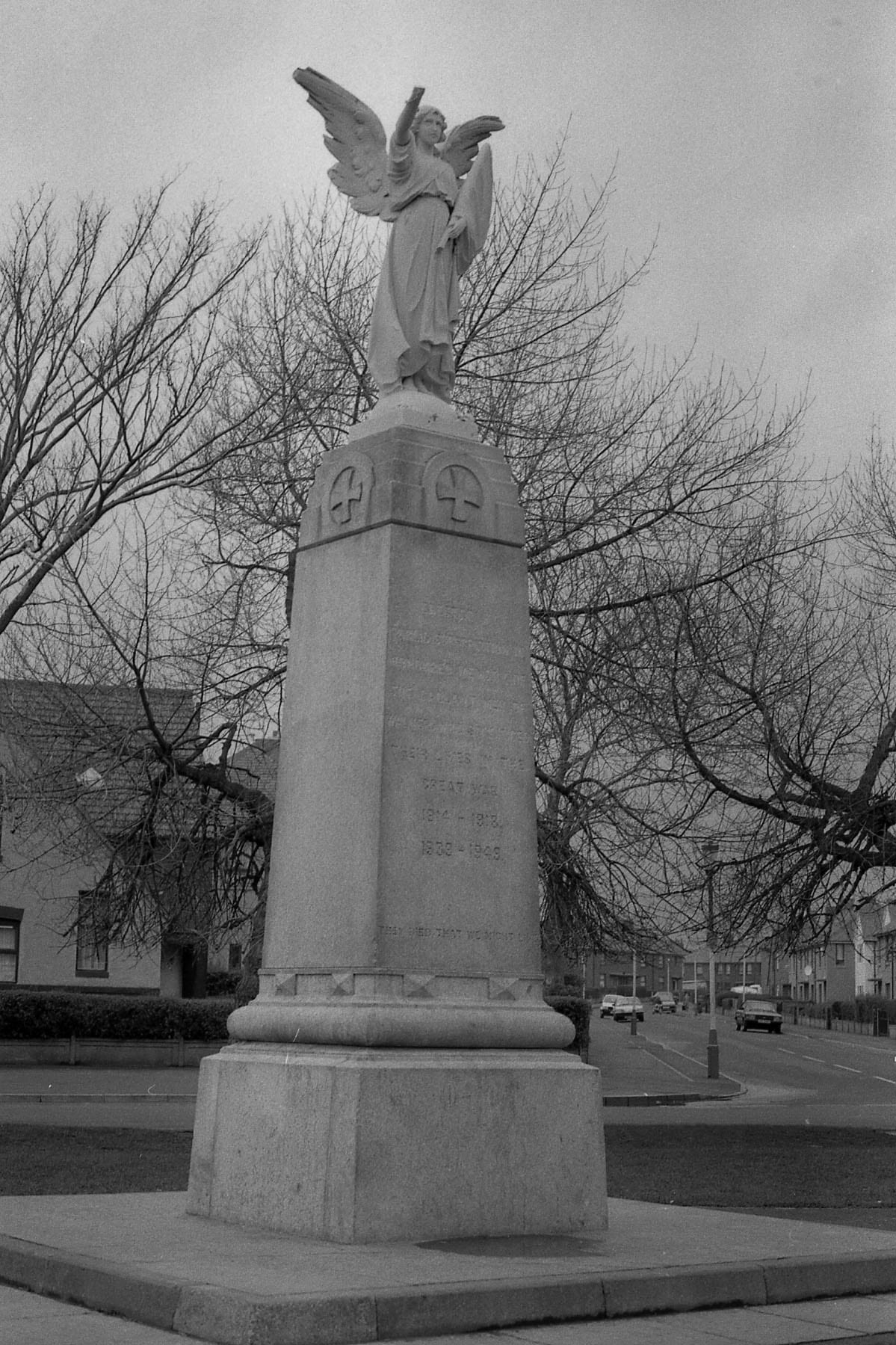
Notes: 1. The angel originally had a laurel wreath in her right hand, but this was broken off. The hand was replaced with no wreath.
2. This spot became a meeting place for youths in the 1960s. “Wreaths no longer lie for weeks after Armistice Day as they used to.”
3. There were two initial proposals for the memorial:
(a) a public hall, with shops in the basement and a reception room for the use of trades unions and friendly societies’ meetings
(b) a monument. Approx. £300 had been raised so far (1919).
4. The Newcastle Journal 19/11/1928 reports with a photograph:-
HOMAGE TO THE DEAD.
Walker’s Memorial to Her Fallen Heroes.
The memorial to the local men who fell in the Great War was unveiled on Saturday at Walker. The company, which comprised representatives of the 5th Volunteer Battalion Northumberland Fusiliers; H.M.S. Helicon; British Legion; Admiral Jellicoe Lodge of Ex-Naval Men; Armstrong-Whitworth Cadet Detachment; British Legion Women’s Section; Boys’ Brigade and Friendly and Trade Societies, assembled at the Drill Ball, and, headed by the British Legion band, paraded to the Memorial opposite the entrance to the Walker Park.
The dedicatory service was conducted by the Vicar, the Rev F. Turton Dixon, hon. chaplain, R.N. The hymns were sung by the Parish Church choir, under Mr George Mackie, choirmaster.
Brevet-Colonel Arnold Irwin, D.S.0., T.D., said it was an honour to unveil the Memorial, as it gave him an opportunity of paying further tribute to the splendid men and women of Walker who were his comrades in the time of war. They remembered because they knew them as boys and girls, the young men and women in whose company they worked and as soldiers and sailors they fought alongside. The children of the war period were now men and women, and to them they must repeat the glorious story of their fathers’ and brothers’ sacrifice. The Memorial stood there as a symbol of heartfelt thanks to those who fell in the noble cause of duty.
He wanted them to appreciate their responsibilities, to take hold of life in the fine, clean and noble spirit shared by those whose sacrifice had made their present nationality possible. For nearly four years he served in Flanders with the men of Walker and so became intimate with their sons. In trench and in billet, in danger and in safety they cast aside all thought of self in their effort to uphold the best traditions of their regiment and of their country.
Mr A. Turnbull, Chairman of the Memorial Committee, read the Roll Call, afterwards buglers sounded the “Last Post” and the “Reveille” and the singing of the National Anthem brought the . proceedings to a close.
The Memorial is 18 feet 6in. high. It on a cement foundation, the base is of three Portland stone steps, a grey granite pillar with a white marble figure on top, representing Peace.
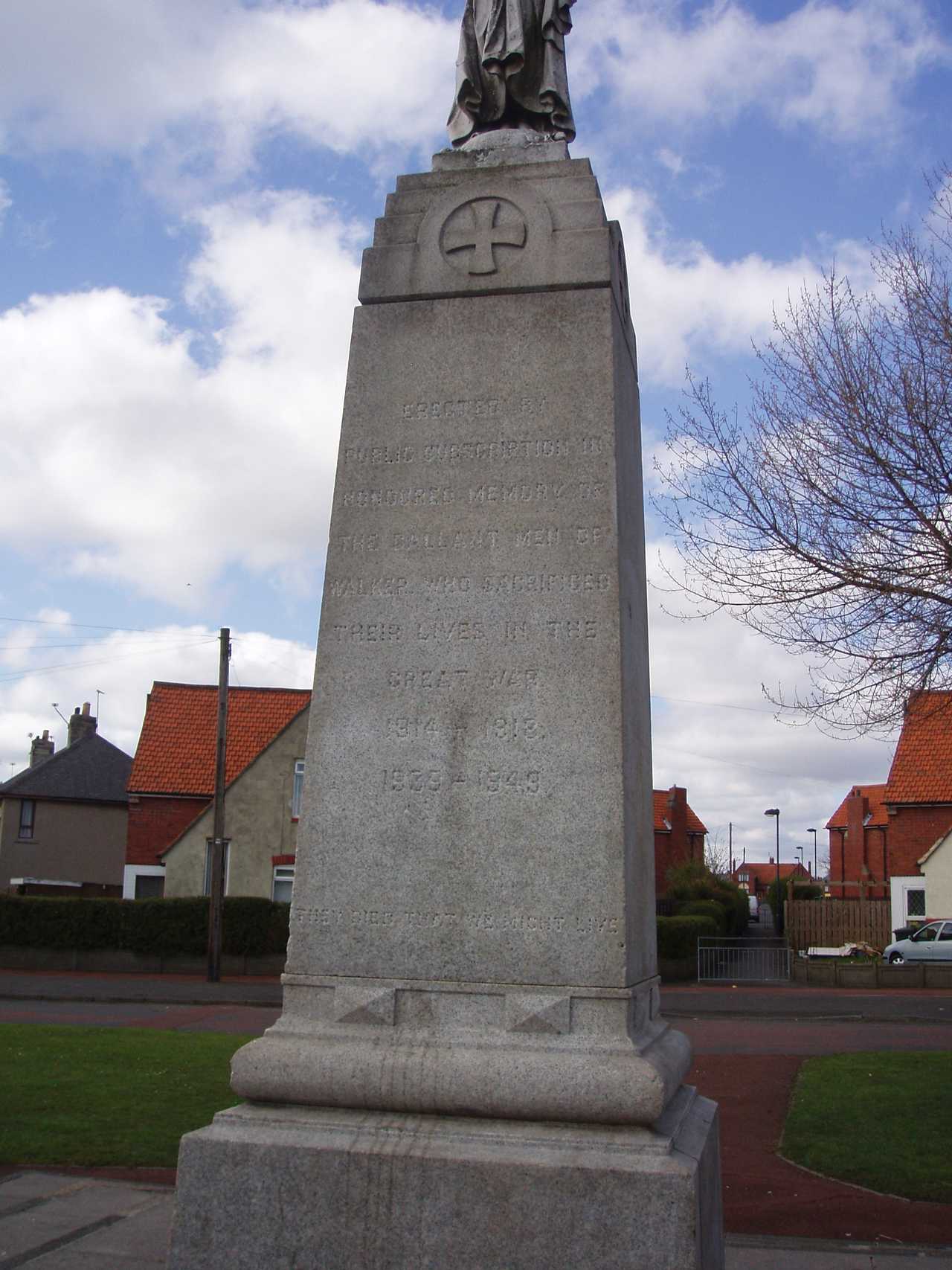
The following inscription is cut on the pillar: “Erected by public subscription in honoured memory of the gallant men of Walker who sacrificed their lives in the Great War 1914-1918. They died that we might live.”