The Great War caused great upheaval. It lasted too long; too many men were killed or maimed. Women had taken men's jobs and their contribution to the war effort helped them to win the vote.
The Government did not bring bodies home. The rich tried to bring bodies back, the poor couldn't, so none were allowed to be returned.
The wealthy offered to pay for tombstones for their sons, but again, the Government refused, stating that all those killed would be treated in exactly the same way, regardless of rank, wealth or privilege.
Most working class families could not afford to visit foreign cemeteries. Part of the process of overcoming the loss of someone is burying the dead. This was now denied to everybody, with the exception of those whose relative had been brought home to recover and died here.
The erection of Memorials was a Government inspired initiative which offered something to focus on. Their 1923 Act allowed local authorities to levy a small rate - no more than 1d in the £ - towards costs and maintenance, a power they still hold. But it was left to locals to decide for themselves what form their memorial would take, and how money would be raised.
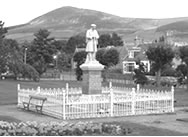
The Memorials became surrogate tombstones which people could visit and where they could pay their respects when they felt the need. The unveiling ceremonies became substitute funeral services, albeit sometimes many years after the loss had occurred.
If the memorial named the men who served as well as those who fell, those same men could have attended the unveiling, and their thoughts would be totally unknowable.
Because of the passage of time, people with personal knowledge of those named have themselves passed into history. The role of memorials has evolved and they now also represent the suffering of all - the fallen, the serving men, the families. Their descendants still have very powerful feelings about what their forebears endured.
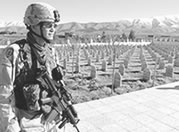
Nobody visits a Commonwealth War Cemetery and comes away unmoved.
Not all Memorials are in the open. In those impoverished times, some people erected Memorials to serve the living: hospitals, village halls, playing fields. Other choices were church furnishings, birdbaths, rolls of honour, boats, plaques, annuities, libraries, clocks, houses, gardens - the variety is astonishing!
Names on War Memorials is not an exact science. Sometimes there was an interval of several years between the end of the war and the erection of the memorial. Those who moved away or wanted to get on with life or hoped their men would return didn't offer names for inclusion on memorials. This is why people are now finding names which have not been placed on memorials. We have identified a lot of reasons why this should have happened, these can be found in our FAQ section, but it is a lot more common than might have been thought in the first place.
In contrast, some had their names in several places,- parish church, chapel, school, place of work, club, or they had an individual dedication such as a seat by the sea. It is possible to find out things about your ancestors you maybe didn't think about - that he belonged to the Boy Scouts, or rang the bells in church, or played football for a neighbouring village. We suggest to any researcher looking for a name that they look in nearby places to find out whether their ancestor followed other activities.