Research War Memorials
Introduction
One of the key aims of the North East War Memorials Project is to provide assistance to those Groups and individuals wishing to learn more about their local War Memorials, and those commemorated on them.
This research would, we believed, fall into two main areas, firstly, the background to the Memorial itself - its inception, design, construction and siting, and, secondly, the identity and background, including the service records, of those commemorated. Both areas are equally valid in terms of local history, though family historians are, naturally, more likely to be interested in the people behind the names.
The Project Group considered how best this aim could be met, and decided that a starting point, and the core of the work, could be the case-study on a particular local War Memorial – that of Malton, near Lanchester in County Durham, which had been prepared by David Butler as the material behind a lecture he delivered to local audiences. David kindly agreed that his work could be used in this way and, furthermore, accepted a brief to work with the Project Group, and local History Groups, to refine the work to ensure it could be used as the basis for researching other War Memorials, and that it met the needs of both local and family historians.
The results are set out below. The Project Group expresses its very sincere thanks to David Butler, and to Iain Mutch and Mick Hardy of the Ryton War Memorials Project, without whose efforts this guidance material would not have been completed. The help of Mr Rowland and Mr Bromilow of Wheatley Hill in commenting on the latest draft is gratefully acknowledged.
Readers are invited to submit comments on, and suggest additions to, the material by e-mailing enquiries@newmp.org.uk quoting Guidance Notes in the subject line of the message. This remains very much a “work in progress” and improvements will continue to be sought. In particular, the additional sources of information related to casualties from the Second World War, and subsequent conflicts, are being developed, and the Project Group would very much welcome help with that aspect of the document.
A contents page is provided, so that readers can move directly to their subject areas of interest. The contents are set out in general terms, followed by the specific details which David’s research unearthed about the Malton War Memorial, the better to illustrate the effect of using the resources identified.
1b Introduction to researching War Memorials
Researching the names on a War Memorial is probably getting easier as more and more books are published on different aspects of military and naval research, and as an increasing number of records are being made accessible on-line. While the trend for the greater availability of digital information, either in the form of the documents themselves, or searchable indexes, is of obvious benefit, it should not obscure the fact that, somewhere along the line of your research you will probably have to do more than sit at a computer. It will never be possible to digitise all records and at some point you will need to visit a library or an archive repository and turn the pages of a real book or document. The general principles set out in the paper for researching Great War army names hold good for other names and other conflicts, but some different sources of information need to be consulted in other cases, and these are now referred to in the notes.
Top
The Place Being Researched - Parishes
Which parish?
There is a difference between civil parishes and ecclesiastical parishes. The word parish is usually taken to mean Church of England ecclesiastical parish, but civil parishes, which came into existence in 1896, replacing townships as the basic unit of local government administration, can have responsibilities for War Memorials. The Roman Catholic Church also has parishes.
What area?
It is important to remember that archives are largely official records, certainly largely formal records, and it is necessary to be aware of the areas of the administrative units used by the organisation whose records you want to search. It also necessary to bear in mind that boundaries can change over time and that new units can be created and old ones abolished, so it is necessary to identify the situation at the time of the event in which you are interested. However, it may be necessary to work forward and see whether the unit with which you are concerned has been merged into another unit which may have taken over its records. It is also worth realising that a unit with the same name may not have the same area in a different context (e.g. the civil parish of Belmont did not have the same boundaries as the Church of England ecclesiastical parish of Belmont; and the Church of England parish of Sacriston did not have the same boundaries as the Roman Catholic parish of Sacriston).
If you are looking for Church of England parish records, it is necessary to know which the parish was covering the place in which you are interested. This may not always be obvious (e.g. the parish covering Stanley was known as Beamish until very recently, and for Sunderland it is also necessary to look under Bishopwearmouth and Monkwearmouth). In a large town there may be a number of parishes (Sunderland had xx). The Durham County Record Office has published a Family History Gazetteer which identifies the parish in which a place is located at any time up to 2000. The Record Office also has a series of large-scale maps which show the parish boundaries in the large towns in the county.
If you are looking for civil parish records then you also need to know which the relevant civil parish is. It is possible that a relatively large village did not have a parish council, but was included with an adjacent village. The easiest way to identify the correct civil parish is to look at the Ordnance Survey, 6 inches to 1 mile (1:10,560), map which is closest in date to the event you wish to trace, since civil parish boundaries are marked on these maps. The maps can be found on the Durham County Record Office website – www.durham.gov.uk/recordoffice and also through the Northumberland…
Roman Catholic parish boundaries are more difficult to trace, and the best advice which can be given is to go for the Catholic Church which is nearest to the place in which you are interested.
Other non-conformist churches (Methodist, Baptist, Congregational, etc.) do not have formal areas, so, again, go for the relevant church which is nearest to the place in which you are interested. Remember that there can be different ‘brands’ of Methodism (Wesleyan, Primitive, New Connexion, etc.) until the 1930s.
Top
The War Memorial Being Researched
It must be remembered that War Memorials can take many different forms – from a School Prize to a large city centre monument, or even a complete building.
In broad terms, War Memorials can be divided into public memorials (which commemorate all those from a particular area) and private memorials (which commemorate an individual or a small specific group).
Public War Memorials
The decisions about the provision of a public War Memorial are usually reflected in either church or local authority records. The church can be of any denomination, while the local authority can be a civil parish council, urban or rural district council, or municipal borough council. In all cases the records should be found at the appropriate local record office.
Concept, design, finance and siting
In the case of a church memorial there may have been a War Memorial committee with a separate minute book (and possibly financial records). If there was no separate committee then the minutes of the body responsible for the church (the parochial church council, in the case of the Church of England) should be searched, and also the general church accounts. In either case there may also be design drawings, plans and correspondence. In the case of the Church of England a faculty (giving formal permission from the diocese) would probably have been necessary for the erection of the memorial, and this should be found among the parish records. There may also be papers relating to the application for and issuing of the faculty among the central diocesan archives.
In the case of a local authority memorial there may also have been a War Memorial committee with a separate minute book. If this is not the case then the responsibility will be with another committee, and, depending on the structure of the authority (and there is no standardisation until the 1970s), this could be Finance (and General Purposes), Parks, Open Spaces, Cemeteries, or other appropriate sounding committee. Financial records, design drawings, plans and correspondence may also survive, but the larger the local authority, the less likely are detailed records to survive.
Construction
It should be possible to identify the firm which constructed the memorial from the records noted above.
1. If the firm is still in business (use Phone Book or Yellow Pages) then it can be approached, though it may not have retained its archives or may not know where they are.
2. If the firm is no longer in existence then its archives may have been deposited in the local record office.
3. If the archives are not in the obvious record repository then try the A2A website or the Historical Manuscripts Commission (now part of The National Archives), which will locate them if they are deposited in another record repository.
4. If the records cannot be traced in a record repository then try checking printed trade or street directories (available in the local studies library or record office), to see if the business has changed its name or amalgamated with another business. If so, then go back through 1.,2. and 3. with the new name.
5. If there is no evidence of the business changing its name or amalgamating then see if the last known location of the firm (from printed trade or street directories) is still in existence and see if there is another business occupying the same premises. Go and talk to them and ask if their attics, cellars or even cupboards, contain any records of the earlier business, it is quite possible that they have never looked properly.
6. If the premises do not yield any records then go back through 2.and 3. with the names of later occupants of the premises to see if records of the earlier business have been included in a deposit of the later firm’s archives.
7. As a last resort, you can see if the private address of the last owner of the firm can be traced (printed street directories may give it with the business details, or look through the list of private residents in the directories) and check whether any records are still at that address, or whether the descendants of the last owner can be traced and if they have any archives.
If you locate any records which are not in a record repository then it would be helpful to future local historians to suggest to the owners that they could be deposited and give the owners the details of the local record office.could also let the record office have the information, so that they have the chance of contacting the owners and discussing the question of deposit with them.
Dedication/unveiling
Basic details about the dedication or unveiling of the memorial should appear in the records of the appropriate organisation. However, a local newspaper account will often give much more detail, including a list of those present, and possibly a photograph. Some local Durham newspapers can be found on microfilm at the Durham County Record Office (details on www.durham.gov.uk/recordoffice), a full listing of all local newspapers is to be found in Frank Manders, Bibliography of British Newspapers: Durham and Northumberland (British Library, 1982). Newspapers which are not available in the region can be found in the British Library Newspaper Library at Colindale in North London ( details on www.bl.uk/catalogues/newspapers.html ) In the case of a church memorial there may also be information in the weekly/monthly church magazine.
Maintenance
Records of continuing maintenance should be among the current records of the body responsible for the memorial.
Private War Memorials
These are memorials provide by an organisation, usually an organisation of a reasonable size, to commemorate its own employees. Typical examples are large local authorities, colliery companies, department stores. Any records relating to the memorial will be found among the records of the parent organisation, but it is probable that there will be less information available than in the case of public War Memorials.
If the organisation is still in business (use Phone Book or Yellow Pages) then it can be approached, although it may not have retained its records or may not know where they are. If the organisation is no longer in existence, then its records may have been deposited in the local record office. If the records are not in the obvious record repository then try the A2A website or the Historical Manuscripts Commission (now part of The National Archives), which will locate them if they are deposited in another record repository.
In addition to the types of record noted above, the parent organisation may have a staff magazine or newsletter.
Top
The Malton Memorial
The Malton Memorial is located at the entrance to the village of Malton, one mile south-east of Lanchester. Malton was originally a colliery village and consisted of two terraces at the east end of the colliery, with a school and a reading room; and Officials Row to the west end of the colliery (to the windward of the coke ovens). Most of the houses have been demolished, but Officials Row survives, as does the colliery welfare hall, now used as a garage.
The colliery was not a deep mine, but a series of scattered drifts in the hillsides north and south of the Lanchester-Durham Road – north, Hutton Drift, Manor House Drift [178468], Mercie Drift [185468], Amy Drift [176472]; south, Harvey Drift, Clay Drift, May Drift [180464]. All were linked to the colliery site by wagonways. It was opened, with its associated cokeworks, in 1870. It was owned initially by G. Love & Son, and then [before 1888 Durham Mining Museum website] by Sir Samuel A. Sadler Ltd., until nationalisation on 1 January 1947. A series of reservoirs on the hillside south of the colliery provided water for quenching the coke and also for the steam engines which provided power in the colliery. From 1890 gas from the coke ovens was piped into Lanchester.
In 1914 Malton produced 95,394 tons of coal and employed a total of 390 men/boys (these figures probably include Esh Hill Top, which does not appear separately in the statistics).1 The 108 coke ovens at Malton, which were Simon-Carves by-product ovens, produced 57,523 tons of coke; while the two beehive ovens at Hill Top produced 230 tons.
By 1915 coal was brought for coking from Esh Hilltop Colliery, two and a half miles to the south-east, by aerial ropeway, and from May 1932 coal was also brought by aerial flight from Hamsteels Colliery, two miles to the south.
The coking plant closed in July 1949 and the colliery closed on 22 July 1961. The colliery site is now largely a nature reserve, managed by Durham County Conservation Trust.
Hamsteels Colliery was opened in 1868. It was owned by the Hamsteels Colliery Co., then [after 1914 NCB I/CO 86/685] by Sir Samuel A. Sadler Ltd., until 1917, then by Joseph Johnson (Durham) Ltd. until 1 April 1923, and then by Sir Samuel A. Sadler Ltd. again until nationalisation on 1 January 1947. It closed in 1958.
Esh Hill Top Colliery was a land sale colliery, which was sub-leased to Sir Samuel A. Sadler Ltd. [between 1896 and 1902 Durham Mining Museum website], with an agreement to supply Ushaw College with coal and coke, and owned until nationalisation on 1 January 1947.
Lanchester Colliery, half a mile north-west of Lanchester was acquired by Sir Samuel A. Sadler Ltd. from Ferens & Love [between 1896 and 1902 Durham Mining Museum website] and disposed of [to the Lanchester & Iveston Coal Co. between 1909 and 1914 Durham Mining Museum website].
Sir Samuel A. Sadler Ltd. also acquired Etherley Grange Colliery at Bishop Auckland [between 1896 and 1902 Durham Mining Museum website] and disposed of it [between 1914 and 1921 Durham Mining Museum website]
Sir Samuel Alexander Sadler (born 1843), in addition to his colliery interests, was a chemical manufacturer in Middlesbrough, with a works on Cargo Fleet Road.
The Memorial is approximately two feet high and three feet wide. It lists 22 men from Sir Samuel A. Sadler Ltd. who died during the First World War, and gives their ranks and the units in which they served. It is out of the ordinary in that it commemorates the employees of only one company who were killed, that it gives their ranks, regiments and battalions, and that it only marks First World War casualties.
Top
List of Data Items
  • 1 Surname
  • 2 Christian names
  • 3 Rank
  • 4 Regiment
  • 5 Unit
  • Malton war memorial
  • 6 Age at death
  • 7 Date of death
  • 8 Service number
  • 9a Cemetery
  • 9b Grave
  • or
  • 9a Memorial (1)
  • 9b Memorial (2)
  • 10 Additional information
  • Commonwealth War Graves Commission
  • website – www.cwgc.org
  • 11 Place of birth
  • 12 Place of enlistment
  • 13 Place of residence
  • 14 Death
  • 15 Other regiments/units
  • Soldiers Died in the Great War 1914-19 CD
  • 16 Medals received
  • 17 First operational theatre
  • 18 Date landed overseas (1914 and 1915 only)
  • Medal Index Cards (TNA WO 372)
  • 19 Miscellaneous information, including details about enlistment, physical characteristics, wounds, next of kin, promotions and demotions, date of birth, etc.
  • Soldiers Documents, First World War,
  • ‘Burnt documents’ (WO 363), or
  • Officers’ Services, First World War,
  • Long Number papers (WO 339)
  • 20 Location of unit, details of actions
  • War Diary entries
  • 21 Date of first commission
  • 22 Details of current posting
  • 23 Date of birth (regular officers only)
  • 24 Date of reaching current rank (regular officers only)
  • Army Lists (officers only)
  • 25 Miscellaneous information, including obituaries, lists of wounded, missing and dead, etc.
  • Newspaper reports
  • 26 Death
  • GRO Index to War Deaths 1914-1921,
  • Army, Other Ranks, or
  • GRO Index to War Deaths 1914-1921,
  • Army, Officers
  • 27 Date of birth
  • 28 Place of birth
  • 29 Father’s name and occupation
  • 30 Mother’s name and maiden name
  • Birth registration
  • 31 Date of baptism
  • 32 Place of baptism
  • 33 Father’s name and occupation
  • 34 Mother’s name
  • 35 Parents’ address
  • Baptism register
  • 36 Address
  • 37 Age
  • 38 Occupation
  • 39 Place of birth
  • 40 Details of relatives at same address
  • Censuses (1881-1901)
  • Marriage
  • Marriage registration
  • Address in 1914
  • Electoral registers 1 January 1915
  • Widow’s re-marriage
  • Marriage registration
Comments on the Malton data results
Any conflicting information is indicated with a note of its source.
None of the casualties’ awards appear in the DLI Museum medal room.
The 1901 census was examined and in some cases the CWGC additional information enabled an obvious match to be found. In other cases it was established that for those soldiers with known ages at death, the age range in 1901 was 2/3- 24/25, i.e. 13 ±13, and this criteria was applied to the 1901 census index.
If you wish to find out more information about an individual listed on a War Memorial, there are a number of different sources to use. The following sections deal with the most usual records
Since the majority of those who died in both World Wars were serving with the army it is inevitable that army references predominate.
It is, of course, possible that a post-war death may be the result of wounds etc. received in action, and while that individual may appear on a local War Memorial he/she may not be in the Commonwealth War Graves lists (section 1) or those in Soldiers Died (section 2), both of which have specific time-frames. Similarly those who never served overseas, but died in the United Kingdom would not appear in the medal listings (section 3), but will probably appear on a War Memorial.
Top
Commonwealth War Graves Commission
In 1917 the, then Imperial, War Graves Commission was established and was made responsible for marking and maintaining the graves of British war casualties, to build memorials of those with no known grave, and to keep records and registers. The principles upon which the Commission worked were: each of the dead should be commemorated individually by name on a headstone (for identifiable remains buried in a cemetery) or memorial (where there are no identifiable remains); the headstones and memorials should be permanent; the headstones should be uniform, with no distinction made on grounds of rank, race or creed. The Commission has information about personnel in all the armed services who died between 4 August 1914 and 31 August 1921 and 3 September 1939 and 31 December 1947.
The Commission’s website, www.cwgc.org, provides access to a searchable database of its Debt of Honour register, which gives:
  • name,
  • nationality,
  • rank,
  • unit in which they served,
  • new information:
  • age at death,
  • date of death,
  • service number (except for officers),
  • cemetery or memorial details, and
  • additional information, which can include details of next of kin, and home address.
The search can only be undertaken on surname and initials, not forename; although the results list displays forenames, if known.
Only 65% of the casualties have next of kin recorded, because not all the ‘Final Verification’ forms sent to the last known address of a casualty’s next of kin were returned.
The Commission maintains no other records for casualties.
It is likely that the search will produce a large number of hits (323 W. Thompsons, 205 W. Bells) and it will be necessary to identify the correct individual by eliminating those from other regiments, those with other forenames, those with other ranks, and those for whom any additional information is irrelevant (e.g. if a home address is not in the correct area in County Durham).
All of the 22 names on the Malton War Memorial were located in the Debt of Honour register, and it was possible to be confident that the correct identification had been made in each case. The least satisfactory match was John Hasson - there was no J. Hasson, but there was a John Hassan who was in the 8th battalion of the Durham Light Infantry, but was shown as a corporal.1 For John Stephenson – there are 73 J. Stephensons, seven in the Durham Light Infantry, six of whom are privates, but there is only one who is in the 20th battalion.
It is important to remember that not all war graves/memorials are overseas - some early casualties were brought back for burial in the United Kingdom and some war deaths occurred among men and women who were in the United Kingdom.
It is also important to note that mention of a serviceman or servicewoman may also occur on a family headstone in a local cemetery or church graveyard. Where these are known, an appropriate entry is made on the relevant War Memorial file.
Top
Soldiers Died in the Great War 1914-19 CD-ROM
In the 1920s a series of books was published by the War Office listing the soldiers who had died in action or by accident or disease up to and including 11 November 1918. They were published separately for each regiment and are divided by battalion within the regiment (part 62, published in September 1921, relates to the Durham Light Infantry). The published lists were compiled from information given to Officers-in-Charge of Records through the Official Casualty Lists.
The series was re-published in 1989.
In c.1996 this information was cumulated onto a single CD-ROM and was published, with each field fully searchable (although there are separate sections for soldiers and officers). Information on soldiers who died up to March 1921 was added.
The information given in the CD is:
  • name,
  • rank,
  • service number (except for officers),
  • unit in which they served,
  • date of death,
  • new information:
  • place of birth (except for officers),
  • place of enlistment (except for officers),
  • place of residence (except for officers),
  • mode of death,
  • other units in which they served, and
  • miscellaneous information, which can include decorations (there is a specific ‘decorations’ field in the officers section).
Since the service number of each soldier is known from the Commonwealth War Graves Commission register, it should be possible to be sure that the correct man has been located on the CD. It must be remembered that the places given may be the precise settlement etc. or the nearest large town, and that with Durham there is always the risk of confusion between the city and the county. If there is any doubt with the identification obtained from the Commonwealth War Graves Commission register then the additional information from the CD should enable a positive match to be made. For John Stephenson, the birthplace of Quebec, and place of residence of Esh confirm that the J. Stephenson with the service number 28471 is correct.
From the Malton War Memorial 21 of the 22 names were located in the Soldiers Died … CD; although James Brankston appears as Brankstone, and Gerard Sadler appears as Sabler. John Hasson/Hassan was not found but he died after 11 November 1918, and it is possible that he slipped through the system.
For army casualties in World War II the equivalent CD is ‘Army Roll of Honour - World War II’. Royal Navy and Royal Air Force casualties are not covered on either CD.
Top
Medal Index Cards
The Medal Index Cards (or Medal Rolls Index) were created towards the end of the First World War to enable the Army Medal Office to record, in one place, all the details about an individual’s medal entitlement. They have been microfiched and the fiches are now available on open-access in The National Archives as WO 372 (Service Medal and Award Rolls Index, First World War). The original cards have been given to the Western Front Association. The Medal Index Cards have been microfilmed by The National Archives and the films scanned, and they can be downloaded (for £3.50 per card) from www.documentsonline.nationalarchives.gov.uk.
The cards have a number of slightly different formats, but all contain:
  • name,
  • rank(s),
  • unit(s) in which they served,
  • service number(s),
  • new information:
  • first operational theatre in which they served (sometimes),
  • date they landed overseas (sometimes), and
  • medals to which they were entitled, with original Army Medal Office medal roll and page references (to WO 329).
The theatre of war is indicated by a code - 1 for service in France and Flanders up to 31 December 1915, and 1a for service there from 1 January 1916.
The medal rolls, WO 329 (Service Medal and Award Rolls, First World War), show the entitlement to the medals and the details of issuing the medals, but only give one more piece of information than the cards – the battalion number.
Officers had to claim their medals, but ordinary soldiers were automatically sent theirs. In the case of both officers and soldiers who had died in the war the medals were automatically issued to their next of kin.
All those who saw service overseas were awarded a campaign medal, and since there is no overall list of all those who served in the war, the medal rolls (and their indexes) are the nearest equivalent.
The First World War campaign medals were:
The 1914 Star (also known as the ‘Mons Star’), a bronze four-pointed star with a ribbon of red merging into white and then into blue. It was awarded for service in France and Flanders between 5 August and midnight on 22/23 November 1914, mainly to members of the Regular Army and Territorial Force. A bar or clasp with those dates was awarded to those individuals who had been under fire in that period. The recipient’s service number, name, rank, battalion and unit are stamped on the reverse.
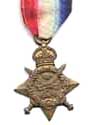
The 1914/15 Star, also a bronze four-pointed star with a ribbon of red merging into white and then into blue. It was awarded for service in France and Flanders between 23 November 1914 and 31 December 1915, and for those who saw service in any other operational theatre from 5 August 1914 to 31 December 1915. The recipient’s service number, name, rank and unit are stamped on the reverse.
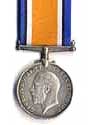
The British War Medal 1914-1920, a circular silver medal with a ribbon with a central golden yellow band with stripes of white, black and blue on each side (the blue outermost). It was issued to commemorate the successful conclusion of the war and was awarded to service personnel and civilians who either entered a theatre of war or rendered approved service overseas (i.e. entering a theatre of war was not essential) between 5 August 1914 and 11 November 1918. Service in Russia in 1919 and 1920 was also included. The recipient’s service number, name, rank and unit are stamped around the edge of the medal.
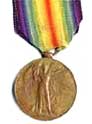
The Allied Victory Medal 1914-1919, a circular bronze medal with a ribbon of two rainbows with red in the centre. It was issued to commemorate the Allied victory, was never awarded alone and went to all personnel (service and civilian) who had served in an operational theatre of war, i.e. to all of those who received the 1914 Star or 1914/15 Star, and to most of those who received the British War Medal. It was never awarded on its own. The recipient’s service number, name, rank and unit are stamped around the edge of the medal.
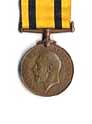
The Territorial Force War Medal 1914-1919, a bronze medal, was awarded to those who had joined the Territorial Force on or before 30 September 1914, who volunteered for overseas service before 1 October 1914, and who had served in an operational theatre of war between 5 August 1914 and 11 November 1918. Those who received either of the Stars were not eligible for this medal.
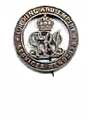
The Silver War Badge (sometimes wrongly called the Silver Wound Badge) was awarded to all military personnel who had been discharged as a result of sickness contracted or wounds received as a result of war service, either at home or overseas. It was a circular badge with the legend ‘For King and Empire – Services Rendered’ surrounding the George V cipher.
The trio of a Star, War Medal and Victory Medal was known, respectively, as ‘Pip, Squeak and Wilfred’, after characters in a Daily Mirror comic strip which was popular in the early 1920s when the medals were being issued.
The awards to the men commemorated on the Malton War Memorial were as follows:-
  • BELL, Walter 1914/15 Star (20 Apr 1915)
  • BLAIR, George Y. no card
  • BRANKSTON, Alexander 1914/15 Star (25 Aug 1915)
  • BRANKSTON, Henderson 1914/15 Star (25 Aug 1915)
  • BRANKSTON, James 1914/15 Star (3 May 1915)
  • COULT, Frederick BWM/AVM
  • DUNN, Simpson BWM/AVM
  • DUNNING, James H. BWM/AVM
  • FALLON, Ernest 1914/15 Star (19 Apr 1915)
  • FARREY, Thomas 1914/15 Star (10 Jul 1915)
  • FOY, James BWM/AVM
  • HASSAN, John BWM/AVM
  • KIRTLEY, George 1914/15 Star (8 Oct 1915)
  • MYERS, John H. 1914/15 Star (17 Aug 1915)
  • SADLER, Gerard G. 1914 Star & clasp (18 Aug 1914)
  • STEPHENSON, John BWM/AVM
  • SWINBANK, John R. 1914/15 Star (9 Oct 1915)
  • TEASDALE, Joseph H. BWM/AVM
  • THOMPSON, William not found
  • WARDLE, George 1914/15 Star (20 Aug 1915)
  • WARDLE, Thomas 1914/15 Star (8 Oct 1915)
  • WHITTAKER, Thomas BWM/AVM
John Stephenson was found as John Stepenson.
These Medal Index Cards do not exist for other services in the Great War, or for any of the services in World War II, but Great War Medal Rolls are held at the National Archives for the Royal Navy, Royal Marines and Royal Naval Air Service. See below in Useful Addresses for other sources of information.
Top
Army Service Records
Other Ranks
The majority of the records for ordinary soldiers who served in the Great War have been destroyed, although 44,000 boxes of ordinary soldiers’ service records have survived. The records suffered from enemy bombing of the War Office Record Store in September 1940 and only about 20-25%, mostly charred or water damaged, have survived. These are now all held in The National Archives as class WO 363 (Soldiers Documents, First World War, ‘Burnt documents’). These are the records for soldiers who were killed in action, who died of wounds or disease, or who survived and were demobilised at the end of the war. They have been microfilmed and the films are available on open-access.
A soldier’s service records can contain:
  • 1 Description on Enlistment – age, height, weight, chest measurements, complexion, eye colour, hair colour, religion
  • 2 Enrolment Paper (Form B2513) – address, age, occupation, marital status, height, chest measurements, next of kin, children, date of call up, date of posting, date of overseas posting, date missing, periods of service at home and overseas
  • 3 Attestation for service in Territorial Force (Form 501) – address, service in Territorial Force, date and place of attestation, details of promotions, details of death
  • 1Attestation Form – date of joining regiment, promotions and demotions
  • 2Attestation for 3 years Service with Colours (Form B2065) – birthplace, nationality, age, occupation
  • 3Attestation for Short Service (Form B2505) – address, nationality, age, occupation
  • 7 Medical History (Form B178) – birthplace, date and place of medical examination, age, occupation, height, weight, chest measurements, hair colour, complexion, eye colour, vaccination marks, vision
  • 8 Record of Service – address, nationality, age, occupation, marital status, place of enlistment, height, chest measurements, next of kin
  • 9 Record/Statement of Services – date of call-up, date of posting, unit, details of promotions, demotions, courts martial
  • 10 Military History Sheet– dates of service at home and overseas
  • 11 Separation Allowance Form – allowance paid to wife/mother
  • 12 Will
  • 13 Company Conduct Sheet (Form B121) – birthplace, age, occupation, religion, details of offences and punishments
  • 14 Regimental Conduct Sheet (Form B120) – dates of attestation and joining unit, details of offences and punishments
  • 15 Casualty Form, Active Service (Form B103) – date of embarkation, date of disembarkation, date of joining unit, date and place of treatment for wounds, dates of promotions and demotions
  • 16 Note of Death (Form B2090A) – details of death
  • 17 Widow Form (Form 8) – details of award of pension
  • 18 Statement of Relatives (Form W5080) – list of names, addresses and ages of living relatives; witnessed by minister or magistrate
  • 19 Notes – including details of effects sent to next of kin
  • 20 Correspondence with relatives
In respect of the Malton casualties, records definitely exist for seven of the soldiers, a 35% success rate, but it is not possible to tell what proportion of the papers that originally existed for each man have survived. The records have been damaged by fire and/or water in many cases, and many others are difficult to read....
  • BELL, Walter not checked
  • BRANKSTON, Alexander Yes
  • BRANKSTON, Henderson Yes; one document refers to him as Henry Brankston
  • BRANKSTON, James No record
  • COULT, Frederick No record
  • DUNN, Simpson No record
  • DUNNING, James H. Yes; record confused with James Edward Dunning
  • FALLON, Ernest No record
  • FARREY, Thomas Yes
  • FOY, James Yes
  • HASSAN, John Yes
  • KIRTLEY, George Yes
  • MYERS, John H. No record
  • STEPHENSON, John not checked
  • SWINBANK, John R. No record
  • TEASDALE, Joseph H. No record
  • THOMPSON, William Grenadier Guards
  • WARDLE, George No record
  • WARDLE, Thomas not checked
  • WHITTAKER, Thomas not checked
At the end of World War II the War Office appealed to other government departments for any relevant records. The Ministry of Pensions passed over records which are now Class WO 364 (Soldiers Documents from Pension Claims, First World War). They are the records of soldiers who were discharged to pension (regulars at the end of their period of service, and regulars, territorials, volunteers or conscripts who were discharged on medical grounds). They were reconstructed from pension records, and have been microfilmed.
Officers
The main series of service records for officers who served in World War I was also destroyed by bombing in 1940. Approximately 250,000 men held temporary or permanent commissions in the army in the Great War. What survives are about 218,000 personal files in two supplementary series. In a number of cases individual files from these series had been destroyed before 1940, and in those cases no service record exists.
There are two National Archives classes of records, and the main class is WO 339 (Officers’ Services, First World War, Long Number papers). This contains 140,000 records for officers who ceased serving before 1922 and who were pre-war regular officers, officers who received Temporary Commissions into the regular army, or who were commissioned into the Special Reserve of officers. WO 374 (Officers’ Services, First World War, personal files) contains 78,000 records for officers who held a Territorial Force commission, some officers who came out of retirement, and civilians who held a temporary commission for special reasons. Both these classes can be searched online by surname.
Originally an officer’s file contained:
  • 1 Form B199 – his record of service with biographical details, qualifications, awards, and details of active service
  • 2 Form B196 – confidential reports from superior officers
  • 3 correspondence; usually it is only the correspondence which survives...
From the Malton casualties, George Y. Blair’s file survives (WO 339/15375), but there is no WO 339 or WO 374 file for Gerard Sadler
Great War records for the Navy and the Brigade of Guards regiments were not destroyed in the blitz. The former are held in the National Archives. See below in Useful Addresses for details of the Guards records and for other sources of later information.
Top
War Diaries
From 1907 the War Office Field Service Regulations required army units on active service to keep a daily record of events or War Diary, sometimes called an Intelligence Summary. The diaries contain a daily record of operations, intelligence reports and other events. They were kept at battalion level by the adjutant or a junior officer. One copy of the diary was sent to the War Office and that copy has now been transferred to The National Archives and most are now in class WO 95 (First World War and Army of Occupation War Diaries). Over 10,000 diaries are now available. Duplicate copies were kept by the unit and, in some cases, these are now preserved among the regimental records. County Archives and/or Regimental Museums may hold copies of those relevant War Diaries. War Diaries also exist for units in World War II, and are also located at Kew, with some accessible via Regimental Museums and County Archives.
War diaries can be difficult to read, some were written in pencil, others are carbon copies of an original. In some cases obscure abbreviations and references are used. Their content varies greatly but usually contains details about the location of the unit, its strength, any occurrence in which the unit was involved or which affected it, details of operational actions either by or against the unit and information about casualties. While officers are usually named as casualties, ‘other ranks’ are frequently not named.
Of the Malton men, Second Lieutenant George Blair’s death is noted, but Captain Gerard Sadler’s is not. James Foy is the only Other Rank to be named as a casualty (in a list of missing), and Henderson Brankston is named for conspicuous gallantry (for which he received the Military Medal).
  • BELL, Walter Yes - TNA
  • BLAIR, George Y. Yes - TNA
  • BRANKSTON, Alexander Yes - TNA/DLI
  • BRANKSTON, Henderson Yes - DLI TNA not available
  • BRANKSTON, James not available
  • COULT, Frederick Yes - TNA
  • DUNN, Simpson Yes - TNA
  • DUNNING, James H. Yes - DLI TNA not available
  • FALLON, Ernest Yes -TNA
  • FARREY, Thomas Yes - TNA
  • FOY, James Yes - TNA
  • HASSAN, John Yes - TNA
  • KIRTLEY, George not available
  • MYERS, John H. Yes - TNA
  • SADLER, Gerard G. Yes - TNA
  • STEPHENSON, John Yes – TNA/DLI
  • SWINBANK, John R. Yes - TNA (photocopy)
  • TEASDALE, Joseph H. Yes - TNA
  • THOMPSON, William no diary in TNA
  • WARDLE, George digital version
  • WARDLE, Thomas Yes - TNA
  • WHITTAKER, Thomas Yes - TNA
Top
Army Lists
The Army List is the official listing of all officers holding a commission in the British Army. Different Army Lists were published:
The Monthly Army List is arranged by regiment, and has an index. For each officer it gives:
  • name,
  • new information:
  • date of first commission, and
  • details of current posting
The Quarterly Army List (January, April, July and October) contains information on regular officers only, and is indexed. It lists officers in order of seniority within each rank, and gives:
  • name,
  • new information:
  • date of birth,
  • date of first commission,
  • date of reaching current rank, and
  • details of current posting
In addition to the above information, the January edition only gives details of war service.
Top
Newspapers
Local newspapers often printed obituaries, details of medal awards, award citations, sometimes and photographs, lists of soldiers wounded, missing and killed. A detailed list of newpapers covering the North-East and their whereabouts is given in Frank Manders, Bibliography of British Newspapers:Durham and Northumberland (1982). The Times will often carry death notices and obituaries of officers, officer promotions, medal awards for all ranks, and casualty lists. Regimental journals will often have detailed obituaries for officers (probably with a photograph), group photographs (often with identifying names), details of promotions and medal awards, and casualty lists. The London Gazette contains the names of those awarded gallantry medals and citations in some cases, and can be searched online at www.gazette-online.co.uk.
In general, as the war progressed, less information was printed, especially when the shortage of newsprint after mid-1917 led to the reduction in the number of pages in newspapers.
For those who survived, a search of relatively modern newspapers may well provide a later obituary which will give war service details, and may include details of siblings who served. Accounts of Golden (50 years) or Diamond (60 years) wedding celebrations may also include references to war service.
Some local Durham newspapers can be found on microfilm at the Durham County Record Office (details on www.durham.gov.uk/recordoffice), and a full listing of all local newspapers is to be found in Frank Manders, Bibliography of British Newspapers: Durham and Northumberland (British Library, 1982). Newspapers which are not available in the region can be found in the British Library Newspaper Library at Colindale in North London (details on www.bl.uk/catalogues/newspapers.html).
Top
Birth Records
The ‘St. Catherine’s House Indexes’ is the popular name for the civil registration indexes, including the index to births, maintained by the General Register Office from 1837. The indexes are available on microfiche. After 1874 there was a legal requirement for parents to register every birth, so it should be possible to locate a birth index entry for each of the soldiers, and, for Malton, with the exception of Thomas Whittaker, this has been done.
The index gives:
  • name,
  • quarter of the year in which the birth was registered,
  • registration district, and
  • area and page reference to the copy birth entry held by the GRO.
The quarter of registration may be the quarter following the actual date of birth since a period of 42 days was allowed for the birth to be registered.
If a birth certificate is purchased, it will provide the following information:
  • name,
  • new information:
  • date of birth,
  • place of birth,
  • father’s name and occupation,
  • mother’s name and maiden name, and
  • date of registration,
Local and national indexes to births registered continue to the present day.
Top
Baptism Records
It is sometimes possible to use a baptism record as a partial replacement for a birth certificate, and to avoid the costs of purchasing a birth certificate.
A baptism can take place in a Church of England or a non-conformist church. In general, the former records are more likely to survive than the latter....
The baptism register gives:
  • name,
  • new information:
  • date of baptism,
  • name of the church,
  • father’s name and occupation,
  • mother’s name, and
  • parents’ address (not usually precise)
A baptism will normally take place within a month or six weeks of the date of birth, but it is possible for a longer period to elapse, and two (or more) children to be baptised together.
Registers checked for Malton:
  • Boldon, St. Nicholas Jan 1885 – Dec 1891 EP/Bo 55 (M42/531) nothing
  • Chilton (Ferryhill Station) Jan 1889 – Dec 1894 EP/Ch.SO 1/1 42/xxx) nothing
  • Esh, St. Michael EP/Esh 5-7 (M42/1) nothing
  • Ferryhill, St. Luke Jan 1889 – Dec 1894 EP/Fer 1/3-4 42/601) nothing
  • Hamsteels, St. John Apr 1874 – Dec 1900 EP/Hals 1-3 42/763)
  • Bell 1892, T. Wardle 1894
  • Hedworth, St. Nicholas Jan 1885 – Dec 1891 EP/Hed 1/1 (M42/917) nothing for Boldon Colliery
  • Holmside, St. John Jan 1888 – Dec 1890 EP/Hol 1-3 (M42/767) nothing
  • Lanchester, All Saints Jan 1874 – Dec 1900 EP/La 131-132 (M42/1007) nothing for Burnhope
  • Stockton, Holy Trinity Dec 1880 – Jun 1881 EP/Sto.HT 1/3 (M42/344) nothing for Preston-on-Tees
  • Registers to be checked:
  • Burnopfield, St. Nicholas EP/Bur 1/2 (M42/728) check 1893-1897 (Coult)
  • Winlaton, St. xxxx EP/Win 1/5 (M42/503) check 1893-1897 (Coult) for Chopwell
  • Auckland, St. Andrew EP/Au.SA 1/44 (M42/182) check 1892-1896 (Fallon) for Bishop Auckland
  • Auckland, St. Anne EP/Au.SAn 1/3 (M42/644) check 1892-1896 (Fallon) for Bishop Auckland
  • Satley, St. Cuthbert EP/Sat 3 (M42/532) check 1893-1897 (Myers) for Cornsay Colliery
  • Sacriston, St. Peter EP/Sa 1/3 (M42/578) check 1893-1897 (Swinbank) for Nettlesworth
  • Hebburn, St. Cuthbert EP/Heb.SC 1/2 (M42/867) check 1892-1896 (Thompson)
  • Hebburn, St. John EP/Heb.SJ 1/1 (M42/397) check 1892-1896 (Thompson)
  • Hebburn, St. Oswald EP/Heb.SO 1/8 (M42/815) check 1892-1896 (Thompson)
  • Esh Laude RC RC/EL 1/1-2 (M5/119) check 1875-1901 Index 608
  • Newhouse RC RC/New 1/1 (M5/113) check 1875-1901
  • Brooms RC RC/Brm 1/5-7 (M5/114-115) check 1875-1901 Index 523
  • Blackhill RC RC/Bl 1/2-4 (M5/105) check 1875-1901
  • Stanley Primitive M. Circ. M/Sta 42-44 (M5/49) check 1875-1901
  • Stanley Wesley. M. Circ. M/Sta 60 (M5/51) check 1875-1901
  • Durham Primitive M. Circ. M/Du 15-17 (M5/41) check 1875-1901
  • Durham Wesley. M. Circ. M/DDV 572-573 (M5/40) check 1875-1901
  • BELL, Walter found (1892)
  • BLAIR, George Y. Hutton Rudby, Yorkshire (1894)
  • BRANKSTON, Alexander Lanchester (1898)
  • BRANKSTON, Henderson Lanchester (1895)
  • BRANKSTON, James Burnhope (1889)
  • COULT, Frederick Burnopfield/Chopwell (1895)
  • DUNN, Simpson Boldon/Boldon Colliery (1886)
  • DUNNING, James H. Quebec (1897)
  • FALLON, Ernest Bishop Auckland (1894)
  • FARREY, Thomas Quebec (1879)
  • FOY, James birth certificate (1877)
  • HASSAN, John birth certificate (1892)
  • KIRTLEY, George Esh/Ferryhill (1890)
  • MYERS, John H. Cornsay Colliery (1895)
  • SADLER, Gerard G. Preston-on-Tees (1881)
  • STEPHENSON, John Quebec (1887)
  • SWINBANK, John R. Nettlesworth/Malton (1895)
  • TEASDALE, Joseph H. Malton (1898)
  • THOMPSON, William Hebburn (1894)
  • WARDLE, George Malton (1892)
  • WARDLE, Thomas found (1894)
  • WHITTAKER, Thomas Northallerton, Yorkshire (1887)
Baptism records continue to the present day.
Top
Census Records
As with virtually all servicemen in World War One, all the Malton soldiers were alive in 1901, and should, therefore, appear in the census of that year, taken on 31 March. There is an online index to the 1901 census at www.1901census.nationalarchives.gov.uk which gives name, age, place of birth, county and parish of residence, and occupation. The relevant census page can be viewed and downloaded (for 75p).
Eight of the Malton soldiers were alive in 1891 and should, therefore, also appear in the census of that year, taken on 5 April. There is an online index to the 1891 census at www.ancestry.co.uk but it only gives name, estimated year of birth, birthplace, county, and county of residence. The relevant census page can be viewed and downloaded for a charge.
Two of the soldiers were born before 1881 and should, therefore, appear in the census of that year, taken on 3 April. There are two online indexes to the 1881 census. That at www.familysearch.co.uk gives name, county of residence, relationship to head of household, gender, year of birth, and place of birth; and a transcript of the relevant household entry can be viewed free of charge, but no image of the census page is available. The online index at www.ancestry.co.uk gives name, estimated year of birth, birthplace, relationship to head of household, and place of residence. The relevant census page can be viewed and downloaded for a charge.
Each census gives:
  • name,
  • address,
  • age,
  • occupation,
  • place of birth, and
  • details of others living at the same address.
The results for the Malton soldiers were as follows:-
  • BELL, Walter 1901 found
  • BLAIR, George Y. 1901 found
  • BRANKSTON, Alexander 1901 found
  • BRANKSTON, Henderson 1901 found
  • BRANKSTON, James 1901 found 1891 found
  • COULT, Frederick 1901 found
  • DUNN, Simpson 1901 found 1891 found
  • DUNNING, James H. 1901 found
  • FALLON, Ernest 1901 found
  • FARREY, Thomas 1901 found 1891 found
  • 1881 found
  • FOY, James 1901 found 1891 found 1881 not found
  • HASSAN, John 1901 found
  • KIRTLEY, George 1901 found 1891 found
  • MYERS, John H. 1901 found
  • SADLER, Gerard G. 1901 [Sth Africa] 1891 not found 1881 found
  • STEPHENSON, John 1901 found 1891 found
  • SWINBANK, John R. 1901 found
  • TEASDALE, Joseph H. 1901 found
  • THOMPSON, William 1901 found
  • WARDLE, George 1901 found
  • WARDLE, Thomas 1901 found
  • WHITTAKER, Thomas 1901 not found 1891 found
Census records are closed for 100 years and therefore the latest which is available is that for 1901. The 1911 census will be opened on 2 January 2012.
Top
Marriage Records
There is evidence from the Commonwealth Ward Graves Commission information, and the surviving Army Service Records, that a number of the Malton soldiers were married, and it is possible that a number of others, for whom, at present there is no evidence, were also married. It is equally clear that some of the soldiers were not married. The ‘St. Catherine’s House Indexes’ is the popular name for the civil registration indexes, including the index to marriages, maintained by the General Register Office from 1837. The indexes are available on microfiche.
The index gives:
  • name,
  • quarter of the year in which the marriage was registered,
  • wife’s surname (from 1 January 1912),
  • registration district, and
  • area and page reference to the copy marriage entry held by the GRO.
A marriage can take place in a Church of England church, a non-conformist church or a registry office.
The marriage register gives:
  • name of the church,
  • date of marriage,
  • name, age, status, occupation and place of residence of the groom; name and occupation of groom’s father
  • name, age, status, occupation and place of residence of the bride; name and occupation of bride’s father
There is an online index to marriages which took place in the present county of Durham at www.durham.gov.uk/. The index gives the year, names of the two parties and the (present) registration district in which the marriage took place. A pre-printed order form for a copy of the marriage certificate can be downloaded and it has a reference code from which the church in which the marriage took place can be identified if it was an Anglican church or a non-conformist church with an Authorised Person to conduct the marriage. Other marriages will have taken place in the Registry Office or in a non-conformist church with the Registrar present.
Possible marriages for the Malton soldiers (based on search of Durham Northern and Central, for period 1901-1920):
  • Walter Bell Beamish, St. Andrew 11 November 1914
  • EP/Bea 1/8 (M42/604) wrong Walter Bell, age 27
  • Alexander Brankston none MARRIAGE UNLIKELY
  • Henderson Brankston none MARRIAGE UNLIKELY
  • James Brankston none MARRIAGE UNLIKELY
  • Frederick Coult Registrar 31 July 1915 DCREG95, p.98
  • to Ada Beadle PROBABLE
  • Simpson Dunn Registrar 18 February 1911 DNRLAN59, p.180
  • to Esther Stebbings PROBABLE
  • James Dunning Delves Lane PM 5 August 1918 M/MR 32 (M5/9)
  • wrong James Dunning, age 48; MARRIAGE UNLIKELY
  • Ernest Fallon Registrar 7 March 1914 DNRLAN65, p.96
  • to Sarah A. Hunter
  • Thomas Farrey Registrar April-June 1904 DNRLAN46, p.142
  • to Sophia Maitland PROBABLE
  • James Foy Registrar 12 July 1908 Tynemouth
  • to Mary Ann Ward PROBABLE
  • John Hassan Registrar 19 September 1914 DNRLAN66, p.55
  • to Ada Tinnion PROBABLE
  • George Kirtley Registrar 29 July 1911 DNRLAN60, p.56
  • to Elizabeth Bell PROBABLE
  • John Myers none 1913-1916 MARRIAGE UNLIKELY
  • John Stephenson too many entries to identify specifically
  • John Swinbank none
  • Joseph Teasdale none MARRIAGE UNLIKELY
  • William Thompson too many entries MARRIAGE UNLIKELY
  • George Wardle Registrar 12 December 1914 DNRLAN66, p.117
  • to Elizabeth Anderson
  • George Wardle Registrar 1 January 1916 DCREG96, p.47
  • to Lily Wilson
  • Thomas Wardle Holmside, St. John 19 January 1917
  • EP/Hol 5 (M42/767) to Laura Hobbs FOUND
  • Thomas Whittaker Lanchester Central M July-August 1917 DNA272/1, p.31 Too late, marriage occurred on 4 August.
  • Possible re-marriages (based on search of Durham Northern and Central, for period 1911-1930):
  • Ada Coult (Beadle) Registrar 5 March 1921 DNRLAN76, p.120
  • to Ernest E. Swinbank PROBABLE
  • Esther Dunn (Stebbings) Registrar 23 December 1922 DNRLAN78, p.100 to Thomas F. Golightly PROBABLE
  • Sophia Farrey (Maitland) Registrar 15 September 1923 DNRLAN80, p.85 to Robert Loughran PROBABLE
  • Mary Ann Foy (Ward) 1927
  • to Joseph H. Lowdon PROBABLE
  • Ada Hassan (Tinnion) Registrar 1 January 1921
  • DNRLAN76, p.72 to James King PROBABLE
  • Elizabeth Kirtley (Bell) Blackhill Methodist 8 July 1922
  • DNA62/1, p.137 to Thomas Langley
  • Elizabeth Wardle (Anderson) Registrar 7 September 1919
  • DNRLAN73, p.44 to George Jameson
  • Laura Wardle (Hobbs) Lanchester, All SS 21 April 1923
  • EP/La 134 (M42/1007) to John W. Hunter FOUND
MARRIAGE UNLIKELY = (1) Commonwealth War Graves Commission additional information refers to parents and not wife, or, (2) Army Service Record refers to parents as next of kin
Local and national indexes to marriages registered continue to the present day.
Top
Electoral Registers
By 1915, to all intents and purposes, all adult males had the vote, consequently, those soldiers who were 21 or older on 1 January 1915 should appear in the Electoral Register for that year. For those under 21 it should be possible to find details of their fathers.
The Electoral Register will give details of the place of residence, which for the Malton soldiers were as follows:-
  • BELL, Walter
  • BLAIR, George Y. under 21; Yorkshire
  • BRANKSTON, Alexander under 21
  • BRANKSTON, Henderson under 21
  • BRANKSTON, James
  • COULT, Frederick under 21
  • DUNN, Simpson
  • DUNNING, James H. under 21
  • FALLON, Ernest under 21
  • FARREY, Thomas
  • FOY, James
  • HASSAN, John
  • KIRTLEY, George
  • MYERS, John H. under 21
  • SADLER, Gerard G. Yorkshire
  • STEPHENSON, John
  • SWINBANK, John R. under 21
  • TEASDALE, Joseph H. under 21
  • THOMPSON, William under 21
  • WARDLE, George
  • WARDLE, Thomas under 21
  • WHITTAKER, Thomas
Following the 1918 Act, the vote was given to all servicemen, and to provide a list of those eligible, many of whom were still mobilised, Absent Voters Lists were compiled. These run parallel to the normal electoral registers, and are thus compiled for each constituency, with the information being given by civil parish within each constituency, and alphabetically within each civil parish.
The information on a serviceman varies greatly, from a regiment to a service number and precise unit. Because the information was compiled while fighting was continuing, it is possible that men who subsequently died will appear in the Absent Voters Lists. It is also necessary to bear in mind that the information was compiled from forms completed by family members at home, who may not have been clear about the serviceman’s precise details.
Electoral registers continue to the present day.
Top
Death Records
The General Register Office maintained an index to its registers of World War I deaths. There are two Army sequences, one for officers and the other for other ranks. The indexes are available on microfiche.
The index of officers’ deaths gives:
  • name,
  • rank,
  • unit in which they served,
  • year of death, and
  • volume and page number of the copy death entry held by the GRO
The index of other ranks’ deaths gives:
  • name,
  • rank,
  • service number,
  • unit in which they served,
  • year of death, and
  • volume and page number of the copy death entry held by the GRO
Entries in the index were found for all the Malton soldiers, except Alexander Brankston, John Hassan and Thomas Whittaker.
The French and Belgian authorities issued death certificates for those soldiers who died in hospitals outside the war zone between 1914 and 1920, and these can be found in The National Archives as class RG 35/45-69. The records have been microfilmed and the films are available on open-access.
Of the four men who did not die in the war zone – John Hassan at Rouen (RG 35/64 pt.4), George Kirtley at Calais (RG 35/48), Joseph Teasdale at Boulogne (RG 35/55 pt.2) and Thomas Whittaker at Le Treport (RG 35/67 pt.4) – no certificates were located.
Top
Rolls of Honour
Following the end of World War I many organisations (churches, businesses, schools, societies, etc.) produced Rolls of Honour, often listing not only those who died, but also those who survived. They can take the form of a published booklet, or may simply survive as a list among the records of the organisation. The information which they contain varies greatly and was usually provided by the families of those who died, or by the individuals who survived. As with all such records, it is important to bear in mind that a family may not have wished a name to appear.
A general printed source is the Marquis de Ruvigny’s Roll of Honour: A Biographical Record of Members of His Majesty’s Naval, Military and Aerial Forces Who Fell in the Great War, 1914-1917. This was a privately financed undertaking of which only two volumes appear to have been produced, presumably because the scale of the conflict exceeded the early expectations. However it contains details of 25,000 officers and other ranks, many with photographs. The Project holds a copy, produced as a modern reprint in five volumes.
The fourteen volumes of the National Roll of the Great War were published between 1920 and 1922. This was a privately financed publication and it was necessary to pay for entries, which were often written by members of the family. There are therefore limitations to its value, but it does contain details of civilians as well as service personnel. However, none of the published volumes covers the North-East of England.
Top
Hospital Records
Record cards were maintained for every sick or wounded casualty. A 2% sample of hospital record cards has been retained (the remainder were destroyed in the 1980s), and are held in class MH 106 – these were not checked in respect of the Malton casualties.
Top
Pension Records
Widows (and disabled soldiers) were entitled to claim a pension. An 8% sample of widows’ and dependants’ pension papers has been retained (the remainder were destroyed in the 1980s), and are held in alphabetical order in class PIN 82 – these were not checked in respect of Malton.
Top
Regimental Records
No records are held in the D/DLI collection in the County Record Office for those Malton casualties who were in the Durham Light Infantry (over 50%, 12 out of the 22).
Regimental journals, if they survive may give additional information. Approaches can be made to Regimental Museums and Regimental Associations who may well have archives of value, or can often point researchers in the direction of relevant information.
The recent release of the volumes of Regimental Enlistment and Discharge Records to Regimental Museums by the Ministry of Defence can, at the very least, confirm the Regimental Numbers of those who served, as well as details of transfers between Regiments – a subject which is a frequent cause of misinformation within family records and family memory.
Top
Family Records
Many families retain memorabilia, such as letters, photographs, cap badges and so on which can be crucial in identifying the serviceman or woman commemorated – appeals to families through local media can often produce access to such items.
In some cases, family members may have conducted their own genealogical research and may well welcome the additional information which the War Memorial researcher is able to supply – it all adds pieces to the family history jigsaw!
Top
School Records
Many schools within the North East have their own War Memorials, listing former pupils who either served, or were casualties. When people search this Website for their relatives the existence of such Memorials can often come as a surprise. Changes to School buildings, closures and demolitions all have potentially serious implications for the survival of such War Memorials – hence the importance of the records on this Website of those Memorials which have disappeared – enabling researchers to at least verify that their relative was commemorated.
School records form a significant part of the holdings in Local Authority Archives and it is often possible, once the School has been identified, to search Logbooks, for example, for a mention of a particular casualty.
Top
Colliery Records
The existence of Colliery records of men who served is an example of the efforts made by large employers to record the contribution of their workforce to the War effort, and is, of course, particularly relevant to the North-East. In addition, many Collieries, Miners’ Institutes and Working Men’s Clubs had their own War Memorials – of which, of course, Malton itself is an example.
Records vary in detail but some, such as those for the Emma Pit, Crawcrook, Ryton, give considerable domestic and family information about those employees who volunteered or were conscripted, as well as relevant military information.
Top
Useful addresses
In most cases access to the service records noted below will only be granted to the next of kin of the serviceman. Royal Navy service records for officers and ratings for the period 1928-1938 can be obtained from: Ministry of Defence DR 2a (Navy Search) Room 31 Bourne Avenue Hayes Middlesex UB3 1RF
Royal Navy service records for ratings for the period from 1939 can be obtained from: Ministry of Defence HMS Centurion Grange Road Gosport Hampshire PO13 9XA
Army service records for the period from 1920 can be obtained from: Army Personnel Centre Historical Disclosures Mailpoint 400 Kentigern House 65 Brown Street Glasgow G2 8EX
Army medal records for the period from 1920 can be obtained from: Army Medal Office Government Office Buildings Worcester Road Droitwich Worcestershire WR9 8AU
Brigade of Guards service records for officers and other ranks can be obtained from: Regimental Headquarters Coldstream/Grenadier/Scots/Irish/Welsh [as appropriate] Guards Wellington Barracks Birdcage Walk London SW1E 6HQ
Royal Air Force service records for the period from 1920 can be obtained from: PMA (CS) 2a 2 Building 248a HQ RAF PTC RAF Innsworth GL3 1EZ
Royal Air Force medal records for the period from 1920 can be obtained from: CS Sec 1d Room F93 Building 256 HQ RAF PTC RAF Innsworth GL3 1EZ
Royal Naval Air Service/Fleet Air Arm service records and medal records for the period from 1920 can be obtained from: Ministry of Defence HMS Centurion Grange Road Gosport Hampshire PO13 9XA
Army Air Corps service records can be obtained from: Ministry of Defence CS (R) 2b Bourne Avenue Hayes Middlesex UB3 1RF
Top
Useful books
There are a large number of relevant books which can be borrowed from local libraries, or, in some cases, can be purchased through a local bookshop. New books are coming out regularly, so a list will always be out-of-date, but some titles that may be of use and which are available at the end of 2007 are given below.
(a) Navy
N.A.M. Rodger, Naval Records for Genealogists, published by The National Archives (Handbook no.22), 1988


Bruno Pappalardo, Using Naval Records, published by The National Archives (Pocket Guides to Family History), 2001


Bruno Pappalardo, Tracing Your Naval Ancestors, published by The National Archives, 2003


Simon Fowler, Tracing Your Second World War Ancestors, published by Countryside Books, 2005


Randolph Cock & N.A.M. Rodger, A Guide to the Naval Records in the National Archives of the United Kingdom, published by the Institute of Historical Research, 2006


Tracing Your Family History: Army, published by The Imperial War Museum


(b) Army
Michael J. Watts & Christopher T. Watts, My Ancestor was in the British Army, published by the Society of Genealogists, 1995


Simon Fowler & William Spencer, Army Records for Family Historians, published by The National Archives (Readers’ Guide no.2), 1998


Norman Holding, More Sources of World War I Army Ancestry, published by the Federation of Family History Societies, 1998


Norman Holding (revised by Iain Swinnerton), Location of British Army Records, 1914-1918, published by the Federation of Family History Societies, 1999


William Spencer, Army Service Records of the First World War, published by The National Archives (Readers’ Guide No.19), 2001


Using Army Records, published by The National Archives (Pocket Guides to Family History), 2001
Norman Holding (revised by Iain Swinnerton), World War I Army Ancestry, published by the Federation of Family History Societies, 2003


Simon Fowler, Tracing Your Second World War Ancestors, published by Countryside Books, 2005

Simon Fowler, Tracing Your Army Ancestors, published by Pen & Sword Military, 2006


(c) Royal Air Force
I. Tavander, The Distinguished Flying Medal: A Record of Courage, 1918-1922, published by J.B. Hayward, 1990


Eunice Watson, The Records of the Royal Air Force: How to Find the Few, published by the Federation of Family History Societies, 1991


Simon Fowler, Peter Elliott, Roy Nesbit & Christina Goulter, R.A.F. Records in the P.R.O., published by The National Archives (Readers’ Guide No.8), 1994


C. Hobson, Airmen Died in the Great War, 1914-1918, published by J.B. Hayward, 1995


William Spencer, Air Force Records for Family Historians, published by The National Archives, 2000


If you want to find out the action in which your ancestor was involved, the following series may help:

W.R. Chorley Royal Air Force Bomber Command Losses of the Second World War. Midland Counties Publishing. Several volumes as follows:
1939-1940 ISBN 0 904597 85 7
1941 ISBN 0 904597 87 3
1942 ISBN 0 904597 89 X
1943 ISBN 0 904597 90 3
1944 ISBN 0 904597 91 1
1945 ISBN 0 904597 92 X
Vol.7 Operational Training Units ISBN 1 85780 132 6
Vol.8 Heavy Conversion Units ISBN 1 86780 156 3
Vol.9 Roll of Honour 1939-1947 ISBN 1 85780 195 8


Norman L.R. Franks: Royal Air Force Fighter Command Losses of the Second World War. Midland Publishing. Vol.1. Operational Losses: Aircraft and Crews 1939-1941. ISBN 1 85780 055 9
Vol.2. Operational Losses: Aircraft and Crews 1942-1943. ISBN 1 85780 075 3
Vol.2. Operational Losses: Aircraft and Crews 1944-45 (incorporating Air Defence Great Britain and 2nd TAF) ISBN 1 85780 093 1


Ross McNeill Royal Air Force Coastal Command Losses of the Second World War. Midland Publishing. Vol.1 Aircraft and Crew Losses 1939-1941. ISBN 1 85780 128 8


Colin Cummings The Price of Peace: A catalogue of R.A.F. Aircraft Losses Between V.E. Day and End of 1945. 2004; Nimbus Publishing; ISBN 0 9526619 5 0

Colin Cummings Though Without Anger. ( Losses of Transport and Special Duties Aircraft and Assault Gliders 1940 to 1945) 2008; Nimbus Publishing; ISBN 978 0 9526619 6 2


(d) Merchant Navy
Christopher T. Watts & Michael J. Watts, My Ancestor was a Merchant Seaman, published by the Society of Genealogists, 1991


Peter L. Hogg, Basic Facts about Using Merchant Ship Records for Family Historians, published by the Federation of Family History Societies, 1997


Kelvin Smith, Christopher T. Watts & Michael J. Watts, Records of Merchant Shipping and Seamen, published by The National Archives (Readers’ Guide no.20), 1998


Simon Fowler, Tracing Your Second World War Ancestors, published by Countryside Books, 2005


(e) Civilians
Simon Fowler, Tracing Your Second World War Ancestors, published by Countryside Books, 2005


(f) General
Using Medal Records, published by The National Archives (Pocket Guides to Family History), 2001


William Spencer, Medals: The Researcher’s Guide, published by The National Archives, 2006


A series of very useful leaflets on military/naval records and how to use them can be obtained from The National Archives at Kew and can either be collected from Kew or downloaded from www.nationalarchives.gov.uk/catalogue. The Imperial War Museum also has useful leaflets which can be found at www.iwm.org.uk.

Top
Volunteer information
Top


This website is produced by Effective Internet Ltd