Names Documents: Book of Remembrance Pelton 2019
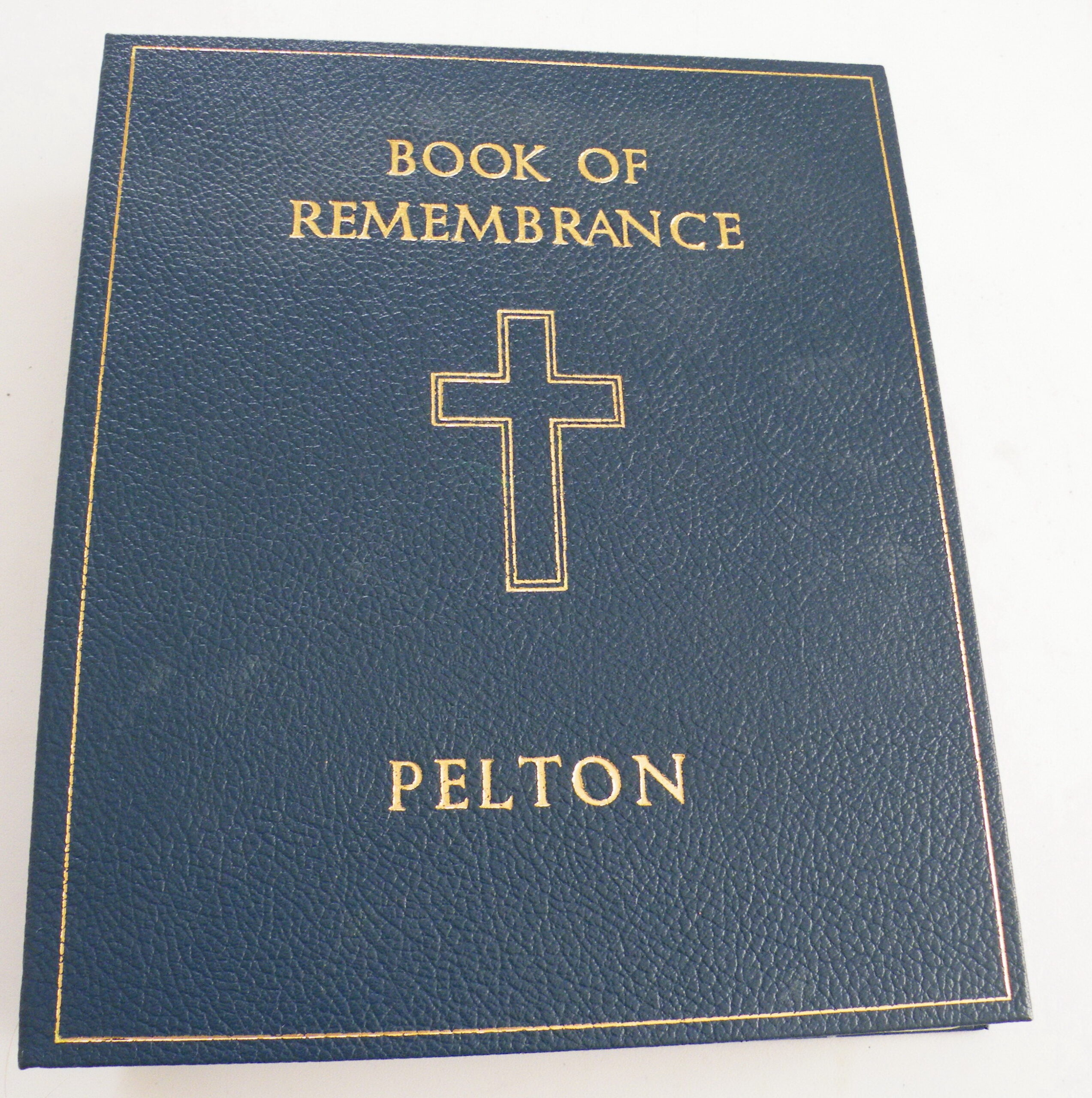
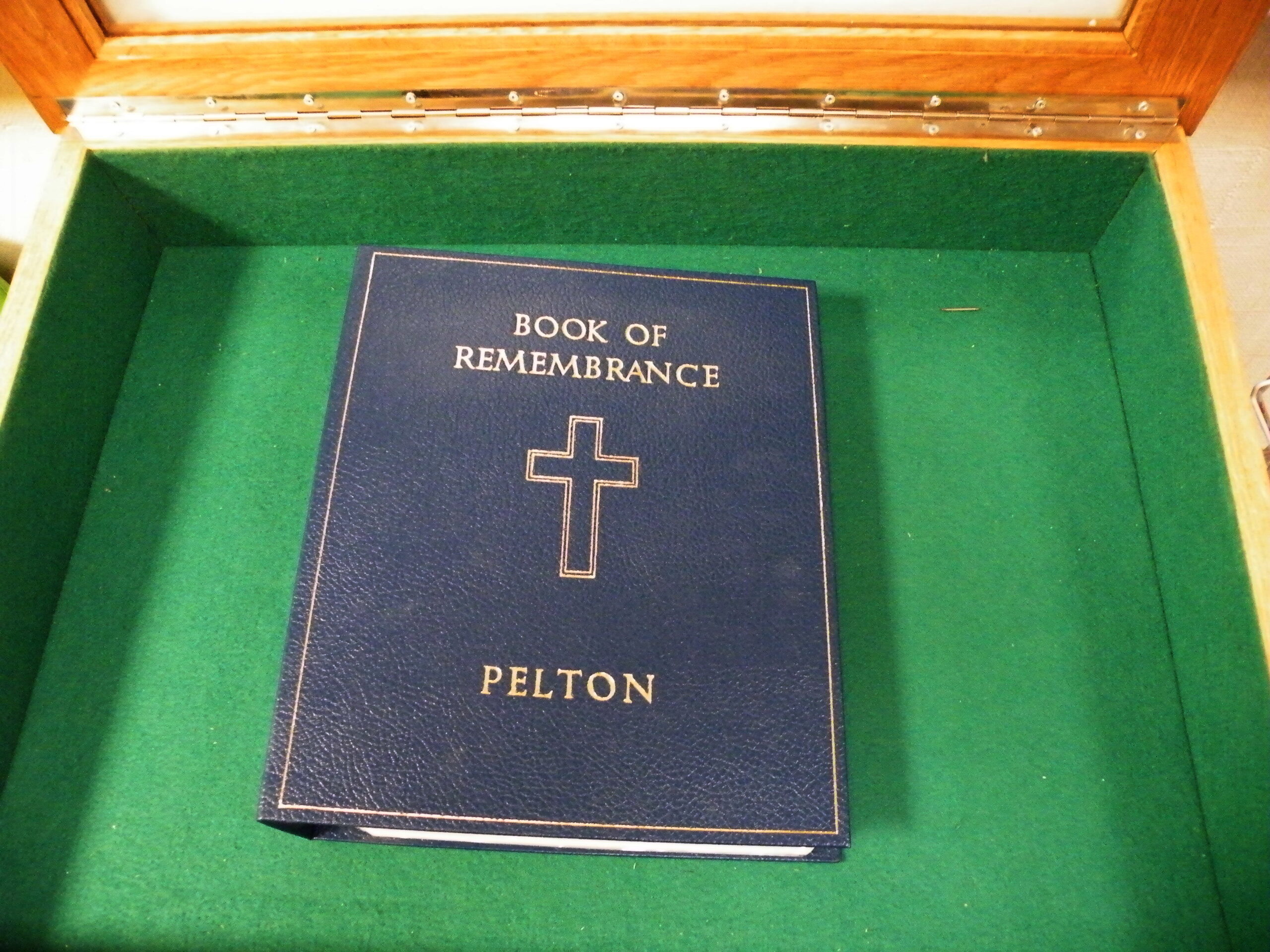
Cover
Book
Of
Remembrance
Pelton
Page 2
THE COMMONWEALTH WAR GRAVES COM MISSION
The Commonwealth War Graves Commission owes its existence to the determination of one man – Sir Fabian Ware.
Neither a soldier nor a politician. Ware was nevertheless well placed to respond to the public's reaction to the enormous losses in the war. At 45 he was too old to fight, but he became the commander of a mobile unit of the British Red Cross. Saddened by the sheer number of casualties, he felt driven to find a way to ensure the final resting places of the dead would not be lost forever. His vision chimed with the times. Under his dynamic leadership, his unit began recording and caring for all the graves they could find. By 1915, their work was given official recognition by the War Office and incorporated into the British Army as the Graves Registration Commission.
Ware was keen that the spirit of Imperial cooperation evident in the war was reflected in the work of his organisation. Encouraged by the Prince of Wales, he submitted a memorandum to the Imperial War Conference. In May 1917, the Imperial War Graves Commission was established by Royal Charter, with the Prince serving as President and Ware as Vice-Chairman.
The Commission's work began in earnest after the Armistice. Once land for cemeteries and memorials had been guaranteed, the enormous task of recording the details of the dead began. By 1918, some 587,000 graves had been identified and a further 559,000 casualties were registered as having no known grave.
Establishing principles
The Commission set the highest standards for all its work. Three of the most eminent architects of the day – Sir Edwin Lutyens, Sir Herbert Baker and Sir Reginald Blomfield – were chosen to begin the work of designing and constructing the cemeteries and memorials. Rudyard Kipling was tasked, as literary advisor, with advising on inscriptions.
Ware asked Sir Frederic Kenyon, the Director of the British Museum, to interpret the differing approaches of the principal architects. The report he presented to the Commission in November 1918 emphasised equality as the core ideology, outlining the principles we abide by today.
Page 3
The First Cemeteries
In 1921, the Commission built three experimental cemeteries. Forceville in France was considered the most successful. Garden designer Gertrude Jekyll advised on the planting and the architects created a walled cemetery with uniform headstones in a garden setting. Blomfield's Cross of Sacrifice and Lutyens' Stone of Remembrance were the formal features. After some adjustments, Forceville became the template for the Commission's building programme. Over the course of the decade over 2400 cemeteries were constructed in France and Belgium, while work progressed in Italy, Egypt, Palestine, Macedonia, Mesopotamia (Iraq) and on the Gallipoli Peninsula. The pace of building was extraordinary and the energy brought by the individual architects gave character and often great beauty to the cemeteries they built.
Today, Tomorrow and Forever
The Commission continues to preserve its cemeteries and memorials and encourage the act of remembrance. Occasionally military remains are found – a human reminder of the reason the Commission came into being and why its work is still so important today. These casualties are buried with honour in one of the Commission's immaculately maintained war cemeteries. In 2009 the discovery of 250 Australian and British casualties from the Battle of Fromelles required the construction of an entirely new cemetery, Fromelles (Pheasant Wood) Military Cemetery. This was unveiled in 2010.
Renovation and maintenance forms a major part of our responsibility. Each year around 20,000 headstones are either replaced or repaired by our staff. Our work is never ending and we are proud to continue to work to the high standards set by the Commission in 1917.
By preserving the memory of the dead with simple dignity and true equality, the Commission hopes to encourage future generations to remember the sacrifice made by so many.
Names included:-
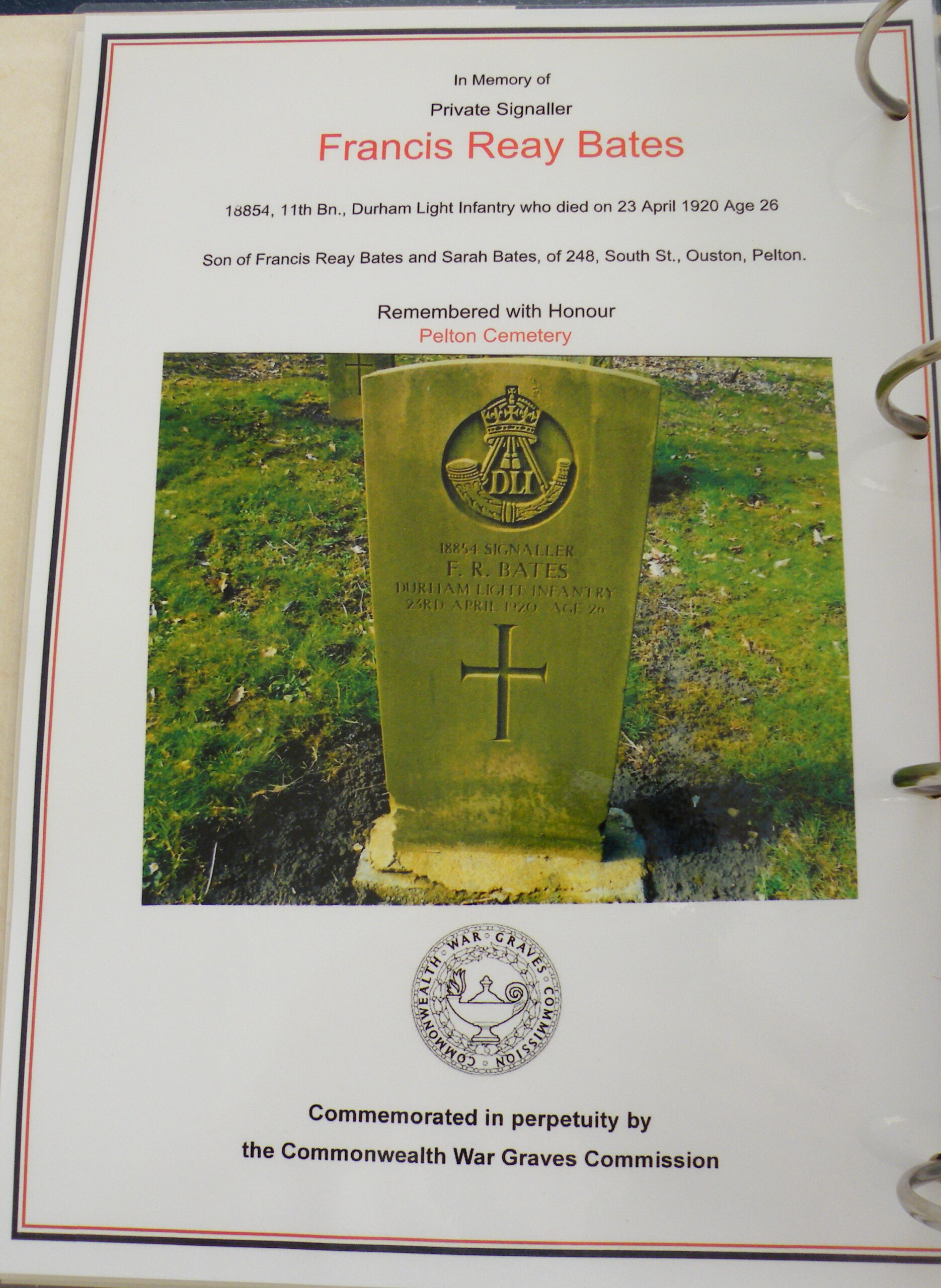
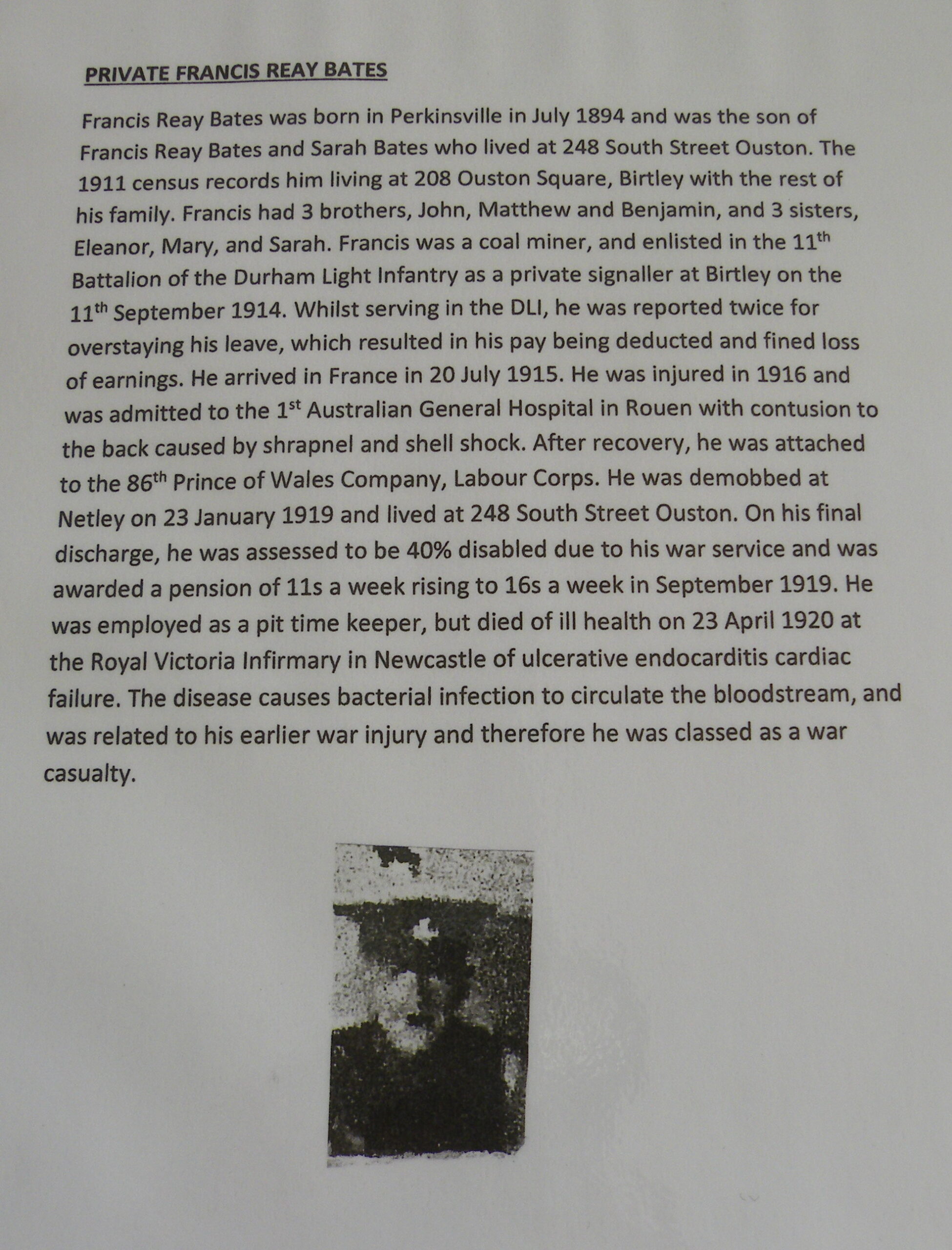
Francis Reay Bates
Joseph Bird
Richard Bonney
Thomas Bonney
William Bonney
George Alder Bradford
Alfred Brannigan
George William Brown
Steven Campbell
Joseph Carlton
Frederick Carradus
Frederick Clasper
Richard Cockburn
William Dixon
John William Evans
James Fish
John Forster
Robert Gordon
Norman Goundry
Arthur Sylvester Gray
Phillip Gray
William Gray
James Griffin
Robert Hall
George Harrison
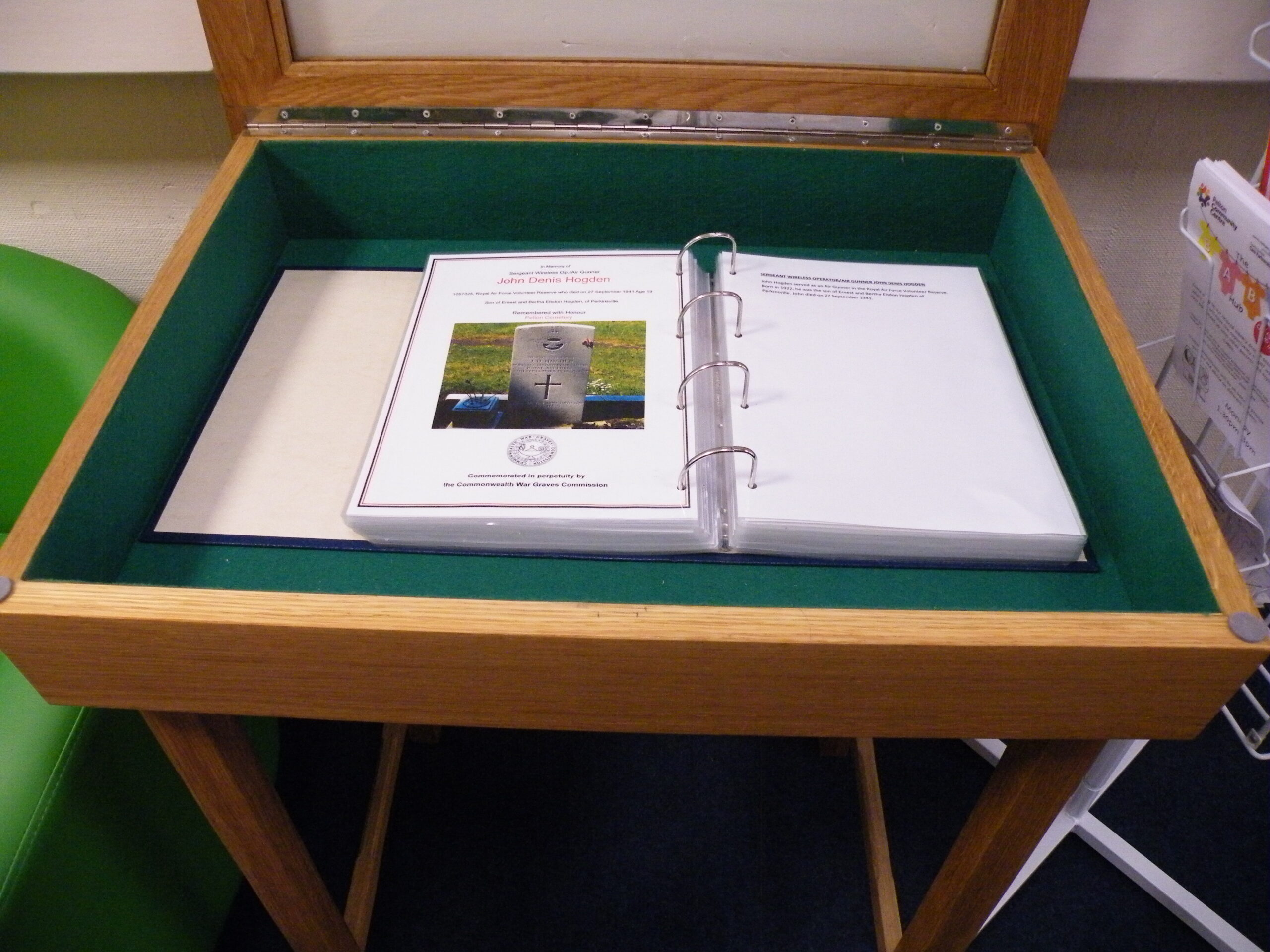
John Denis Hogden
Robert Smillie Kelly
Frederick Leighton
John Humble Liddle
John Little
John George Lynch
George William Maitland
William Marshall
George Mason
Robert William Moffitt
Robert Muncaster
George Robert Nesbitt
George Nicholson
Frederick Oakes
Tom Jobson Owers
Joseph Ranson
William Reed
George William Riddle
Thomas Samms
William Sanderson
John Sands
Robert Hill Scarth
Joseph Leslie Shaw
Robert Strachan
John Thomas Tarn
Eric Taylor
Sidney Towers
Frederick Thompson
James Turnbull
John Penman R. Wilkinson
NamesP26.15