
Every Name a Story
Adam Herbert Wakenshaw
Every Name a Story
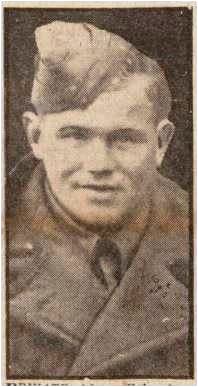
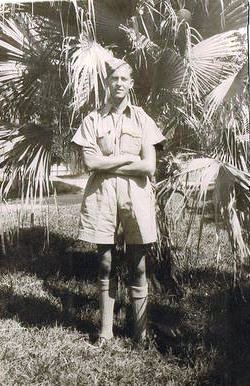
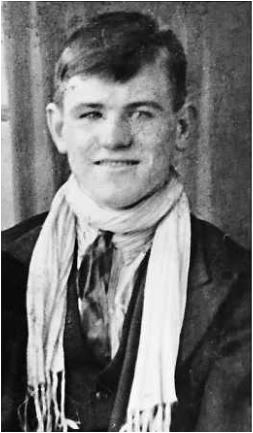
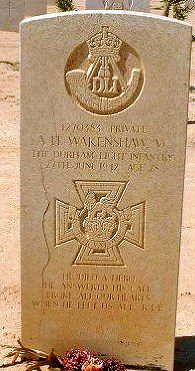
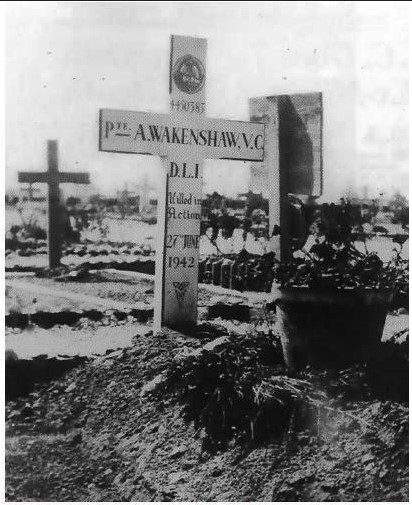
In El Alamein War Cemetery, Egypt is the Commonwealth War Grave of 4270383 Private Adam Herbert Wakenshaw, V.C., serving with the 9th Battalion Durham Light Infantry who died 27/06/1942.
Adam Herbert ‘Wakey’ Wakenshaw was born on the 9th June 1914, at 16 Duke Street, Newcastle upon Tyne. His parents were Thomas Wakenshaw, and his wife Mary Elizabeth, nee Moran, born 22nd September 1875. They had thirteen children, however only 6 survived, with Adam Herbert Wakenshaw the youngest.
Adam was educated at St Mary’s and St Aloysius Roman Catholic School, being taught by a Mr Joseph Dixon, who was the headmaster there.
Adam’s mother Mary Elizabeth Moran’s family originally comes from Ireland, with a few military connections in her family. In 1942 two of her boys, George and Peter, were serving in 1939-45.
Adam grew up in grinding poverty in the slums of Newcastle upon Tyne, where it was bitterly hard and poverty-stricken. As a bairn he ran messages for the men outside the factory gates at Scotswood, or went to the Crooked Billet to fill their beer cans in return for a copper. He also sold newspapers to help the family income. Yet, he was described as a cheerful lad willing to help anybody.
He left school at 14 to go down the pit at Elswick and later Hazelrigg. Adam also went boxing to make extra money, to the boxing fraternity he was known as ‘Taffy Smith’, whether he won or lost, he gave value for the shillings in the ring. He used to go the Town Moor Hoppings and volunteer to take on the professional boxer whenever the call came up.
In April 1932, Adam married Dorothy Ann nee Douglas, born 6th June 1909, in Newcastle upon Tyne Register Office on the 9th May 1932. She lived at 3 Back Hammond, Newcastle upon Tyne. She was the eldest daughter of John Pringle Douglas, a Joiner working from home, born Blyth 1876, and his wife Minnie, nee Stuart, born 1884, Richmond, York. They had younger daughter, Maggie, born March 1911.
Adam was working at the Pit as a labourer, and in 1936, the family were then residing at 17 Rye Hill. On the 15th April 1935, Adam enlists into the 6th Battalion Royal Northumberland Fusiliers. Then 5 feet three inches, 135lbs, eyes and hair brown. Adam and Dorothy, known as ‘Dolly’, had three children, John Adam, born 8th May 1933, died February 6th 1941, Thomas George ‘Tommie’, born 16th March 1935 and Lilian born 1939. By 1939 the family had moved to 20 Lord Street. Also in 1939 there was a Lilian Douglass, born 25th September 1913 residing with the family. She was a grocer’s shop assistant, who married a Thompson.
In 1930, Adam’s mother Mary Elizabeth, now widowed, was residing at 90 Rye Hill.
Adam joined the Territorial Army, at the 96th Recruiting Centre, Newcastle upon Tyne on the 11th November 1939. His army number was 4270383. He was 5 feet four and a quarter inches, 137lbs, Fresh complexion, grey Eyes, brown hair. He was posted to the D.L.I. Training Centre at Brancepath as a private. The family moved to 16 Duke Street, Newcastle upon Tyne.
He was posted abroad on the 13th March to the no 2 Infantry Base Depot at Sotteville, France. 18th March he is posted into the 9th Battalion Durham Light Infantry with a draft of 100 other ranks with 2nd Lieutenant J.L.D. Oliver and M.H. Jackson. There was a severe lack of equipment due to cutbacks in the Inter-War Years. 29th March the Battalion marched to the Lille Area. Started digging defensive positions as part of II Corps reserve line. 2nd April the Battalion is at Dannes, chance to fire their weapons.
The Battalion arrived at Dunkirk beaches at 4 am, and immediately dug in on the 31st May 1940. On the 1st June 1940, they moved towards the Mole. At Dusk in batches of 50 they marched along to the ships, some men were hit going up the gangway. The area was being shelled heavily. The Battalion arrived back in to the UK. Adam was in Lyme Regis on the 2nd June. On the retreat from Dunkirk he was slightly wounded in the arm and leg. Adam was evacuated around the 1st June and on arrival in the UK, he was sent to Barossa Camp, Camberley Rest camp to recuperate and for refitting.
48 hours’ leave was given before arriving at Rugeley in Cheshire. On the 22nd June the battalion moved by train from Rugeley to Sherbourne. The following day they left for Lyme Regis to take up a coastal defence role. On the 19th October the Battalion moved to Sherborne Dorset. 2nd November, Tiverton in Devon.
In February 1941, Adam was given compassionate leave as John Adam, his eldest boy, had been killed tragically.
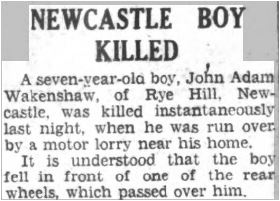
Newcastle Evening Chronicle Friday 06/02/1941
Newcastle Boy Killed
A seven-year-old boy, John Adam Wakenshaw, of Rye Hill, Newcastle, was killed instantaneously last night, when he was run over by a motor lorry near his home.
It is understood that the boy fell in front of one of the rear wheels, which passed over him.
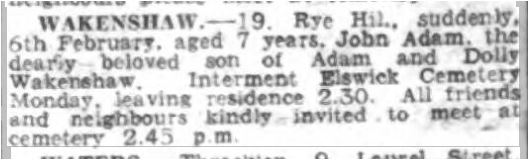
Newcastle Evening Chronicle Saturday 08/02/1941
Wakenshaw. 19 Rye Hill, suddenly, 6th February, aged 7 years, John Adam, the dearly beloved son of Adam and Dolly Wakenshaw. Internment Elswick Cemetery, Monday, leaving residence 2.30. All friends and neighbours kindly invited to meet at cemetery 2.45pm.
Adam returned to the Battalion, and they were then issued with tropical kit. On 18th May 1941 the battalion left Tiverton for the port of Gourock, Glasgow. The battalion was embarked on the SS Orduna, ship number 135539, which sailed in a convoy on the 20th May 1941. The troopship was very uncomfortable. On 24th May a solo German bomber attacked the convoy. On 4th June they arrive at Freetown. They then sailed for Durban, South Africa which was reached on 20th June 1941. Then again sailed for Aden, arriving on 4th July. Adam had written some letters home to Dorothy.
On 17th July the battalion arrived at Camp 17 at El Qassassin, via the port of El Tewfik, Egypt. The battalion was then posted to Cyprus, and Famagusta harbour was reached on-board the HM destroyer Jaguar. On the 3rd November the battalion arrived at Haifa, Palestine. The battalion took over from the 5th Indian Division at Assab, a large tented camp. On the 14th November the battalion travelled over 800 miles to a concentration area K1, 7 miles north-west of Kirkup, where they spent over 10 days.
Then from 5th December the battalion marched 90 miles via Erbil, taking 10 days to reach the river Khazir where a camp was erected two miles south of the river. The 50th Division was in Northern Iraq due to allied concerns that the Germans might advance through the Caucasus and threaten Iraq and its oilfields.
On 7th February the battalion proceeded to Kirkup by motor transport heading for Syria. However on the 14th the battalion orders were changed – it was now destined for Beit Lid camp, in Palestine. They eventually arrived via Mersa Matruh, in the Gazala Line relieving the 3/1st Punjab Regiment in the central section of the Line.
The 151 Brigade took up positions on the Gebel Shaquqa area of the escarpment 15 miles south west of Garawla, called Raqabet El Sikka. The battalion worked all night to mine and prepare defensive positions. However, there were no mines available!
On 27th June 1942, the Germans’ 90th Light Division, attacked the Battalion position, attacking a platoon of ‘B’ Company. The position was on a small plateau, Point 174. At 5.15am the Germans launched an attack, by superior numbers of infantry and tanks and supported by heavy shelling by artillery and mortars. Fierce hand to hand fighting took place with heavy casualties suffered by both sides. By about 7.30am the three forward rifle companies had been overrun and at 9am the order to withdraw was given.
There were many gallant actions that day, a German tracked vehicle towing a light gun approached ‘B’ Company’s positions, there were 4 x 2-pounder anti-tank guns positioned 200 yards on the forward slope in front of ‘B’ Company. Adam was in the Anti-tank platoon, which then consisted of 2 x 4 2-pounders anti-tank Guns. The anti-tank gun, crewed by 4458979, Private Eric Mohn and 4458396, Private Patrick Michael Murray and Adam, opened fire and managed to immobilise the German tracked towing vehicle. Another mobile gun was in action. The crew of the 2-pounder was either killed or seriously wounded, including Adam whose left arm was blown off above the elbow.
Private Wakenshaw, realising the danger to his comrades, crawled to the 2-pounder and loaded and fired five more rounds which set fire to the tractor and damaged the light gun with Private Eric Mohn, who was the gun aimer. A near miss by an artillery shell killed Private Eric Mohn and the blast blew Adam away from the 2 pounder. With further severe wounds, Adam slowly dragged himself back to the gun, placed a round in the breach, was preparing to fire, when a direct hit exploded the ammunition which killed him and destroyed the gun. Many of the battalion were taken prisoner.
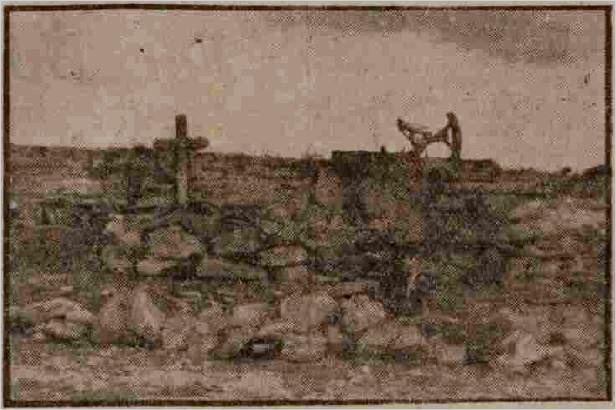
The Germans withdrew. In the evening Major A.B.S Clarke, second in command of the 8th Battalion Durham Light Infantry, found the body of Private Adam Wakenshaw stretched out on the back of the breech block beside the destroyed ammunition box. He was buried in the hard ground nearby.
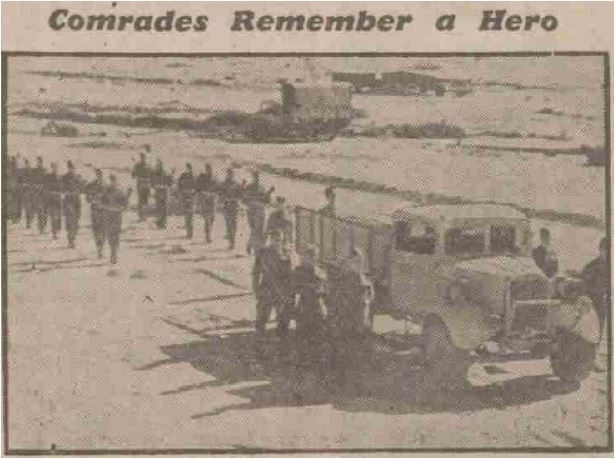
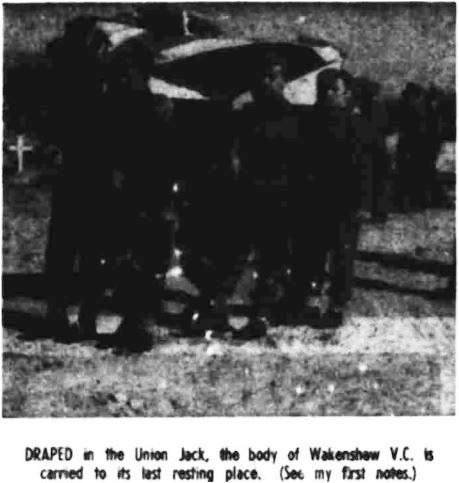
On 7th February 1943, the body of Adam Wakenshaw was re-buried in the Mersa Matruh Military cemetery with full military honours. In the centre of the Cemetery was a 2-pounder anti-tank gun, twisted and shell-shattered. Against the shield were roses and purple bougainvillea. A South African officer, Captain Brown, was in charge of the burial party, and a Corporal L. Chambers, serving with the Royal Northumberland Fusiliers was a member of the burial party. On the 25th May 1944, Adam was reburied again at the El-Alamein cemetery where he is remembered.
Adam was an incorrigible character who had more than his share of scrapes with army authority. But he was a loyal comrade and one they could rely on. He had suffered hardship from industrial depression before the war. Lieutenant Jim Kennedy wrote:
Private Wakenshaw was a Geordie… I found him to be a kind, friendly man. Wakenshaw earned a meagre living as a ‘boxers chopping block’, ie he was prepared to get into the boxing ring with more talented professional boxers for small fees. Before the Battalion moved overseas, boxing contests were held in the cold winter evenings, Wakenshaw and a professional boxer called ‘Lush’, fought a three round bout. At the end a draw was pronounced.
Adam had also shown courage when he was a notable member of the gun crew. The incident was about a fire in the Company Cookhouse, which was a 12 feet x 12 feet hole in the ground. This was covered by a camouflage netting which caught fire and Adam, with bayonet and bare hands, saved the cooks from a roasting. Source : The Gateshead Gurkhas Harry Moses ISBN 1897585659 2001.
Dorothy Wakenshaw in September 1942, was interviewed by the Journal and North Mail, with tearful eyes and admiration. “He was always a cheerful and willing to help anyone. I have a feeling he still lives. He certainly lives in my heart.” She also had said that he worked in the pits since the age of 14, and at the outbreak of war, joined the Durham Light Infantry. The neighbours in the street where he resided indicated that he was popular. His last letter came from the Middle East, in which he told his wife “Look after the bairns and yourself, because I’ll soon be coming home.”
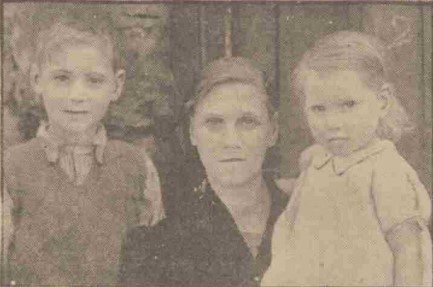
The children, Tommy aged 7, and Lilian (Lily) aged 3 were at home with their mother Dorothy in 1942. Mrs Wakenshaw also commented “Adam was a favourite with everyone, always cheery and willing to help, full of life and good spirits. He was the best of husbands and I am proud of him.”
Adam’s widowed mother, Mrs Mary Elizabeth Moran, now age 68, who lived alone at 90 Rye Hill, Newcastle upon Tyne, said when interviewed, “I’m not surprised a lad of mine should get the V.C., for I was a Moran before marriage and the Morans were fighting Irishmen one and all”. She also said that “Adam was the youngest of 13, and his grandfather and great grandfather were soldiers. Why, we had colonels and lieutenants on my father’s side!”
The Lord Mayor (Alderman George Dixon) and the acting Lady Mayoress (Mrs Edith Farish) visited the Wakenshaw home to extend sympathy to the widow whose husband has so gallantly laid down his life.
Source : Newcastle Journal 12th September 1942.
The Lord Mayor (Alderman Dixon) and the acting Lady Mayoress (Mrs E. Parish), on the 12th September 1942, went to shake hands with Dorothy Wakenshaw and three year old daughter Lilian who was beside her. Also with her was her brother Leslie Thompson, who has just been invalided out of the forces. There was no ceremony, the Lord Mayor just expressed his profound sympathy at her great loss, but said that she could find solace in the knowledge that her husband had lost his life in doing his duty and with a gallantry so outstanding that it was being recognised by the King with the award of the V.C. He added that steps would be taken to see that the family did not suffer through the death of the husband and father. There were two other touching episodes during the short visit. Just as the civic party arrived, a small bouquet of flowers was handed in. The messenger was asked from whom they came, and he said “Oh, nobody, just a friend”. The flowers were in Mrs Wakenshaw’s hands as a photograph was taken. The other incident was when the Lord Mayor heard that Mrs Wakenshaw, the mother of the V.C., was not present, he immediately summoned the civic car to collect Mrs Wakenshaw to join the group.
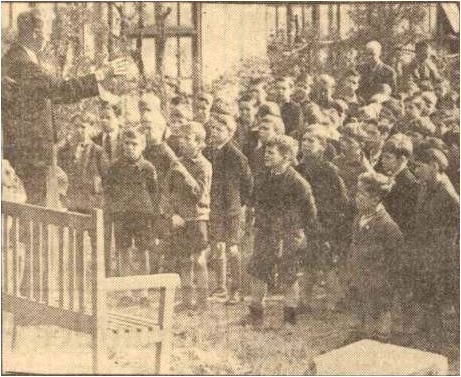
Mrs Dorothy Wakenshaw was visited on Tuesday 15th September 1942, by Captain J.R. Lindsay, chaplain to the depot, to provide new clothes for the family and £20 from the regimental fund. Captain Lindsay had served with Wakenshaw through the French campaign right up to Dunkirk. Also there was a subscription list opened. For four hours Captain Lindsay escorted Mrs Wakenshaw around the shops, bringing her children home in new clothes and Mrs Wakenshaw loaded with parcels of new dresses, coats and other garments. Coupons, he said, had been forfeited by officers of the Durham Light Infantry to make the purchases possible. He also entertained her to lunch. On the 15th September 300 pupils at the Saint Aloysius Roman Catholic, led by the Headmaster prayed for the repose of the soul of their old schoolfellow, Adam Wakenshaw. “Adam was a quite a normal lad high spirited undoubtedly, but with little to distinguish him from the others” replied the Headmaster to the Newcastle Journal in reply to certain references to him.
By the 16th September 1942, the subscriptions had amounted to £685 14s [shillings] 6d [pence].
Gloucestershire Echo 11th November 1942 carried a report. Mrs Dorothy Wakenshaw widow of Pte. Adam Wakenshaw, posthumously awarded the V.C. at Mersa-Matruh, will one day move out of her house in a Newcastle back street to a furnished home. It will be provided by the Wakenshaw Fund, started by the Lord Mayor of Newcastle which has received £2,783.
There was a requiem mass service for Adam at St Mary’s Cathedral on 17th September 1942 at 9.00 am. This was attended by Mrs Wakenshaw and close relatives including Mr Leslie Thompson, her brother-in-law. Adam’s headmaster Mr Joseph Dixon and boys from his school were also in attendance.
The Wakenshaw V.C. shilling Fund closed on the 21st September, this was started nine days previously by the Newcastle Chronicle to give a start in life to the children of Private Wakenshaw, Newcastle’s posthumous V.C. The final total was £1,623 7s [Shillings] 6d.[Pence]. The Lord Mayor’s fund had reached the total of £2,783 by the 11th November 1942.
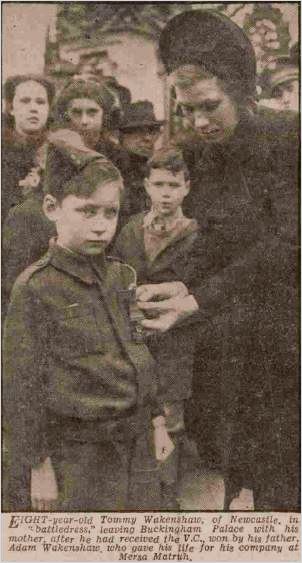
Dorothy and Tommy now aged 8, were at Buckingham Palace to receive his father’s Victoria Cross on 2nd March 1943. Dorothy and the children had moved from the one room in Lord Street to a well-furnished flat in Newcastle upon Tyne by this time. Tommy was dressed in a miniature D.L.I. uniform, which was made by a Sunderland well-wisher who had made it for her own son. Mrs Wakenshaw and Tommy climbed the dais to receive the medal, the King dressed in naval uniform, looked down and smiled sympathetically and said “How long was your husband in the army?” Mrs Wakenshaw: “Three years. He joined the Durham Light Infantry in November 1939”. The King: “He was a brave man. What battalion was he in?” When told, the King replied “That’s something to be proud of.” The King then gave Dorothy the Victoria Cross and then shook hands with her and Tommy. As she walked away Tommy said “I think the King was very nice, and he gave us such a lovely smile”. Dorothy also said that she had one regret that her three old daughter Lily could not attend. Also Adam’s mother was unable to attend due to being ill. Dorothy, then described the ceremony. “It was so beautiful that I cannot put it into words. Everyone was very kind to me. Tommy expected to see his father with the King. He saw some soldiers and asked where his daddy was. He still doesn’t seem to understand his father is dead.” She also remarked that “It’s strange I should collect Adams’s medal to-day, because it’s exactly two years since I last saw him.” They arrived back in Newcastle upon Tyne on 3rd March 1943 in the afternoon.
On 9th March 1943, Tommy was at a trade show watching the film ‘Desert Victory’ wearing his father’s V.C., in his miniature D.L.I. uniform. After about a year, Dorothy was unable to cope and the two children, Tommy and Lillian, were placed out of her care. Lillian was sent to the Ponteland Cottage Homes orphanage, then fostered out to a family in Brixham in Devon. She later was married and had children of her own, residing back in Newcastle upon Tyne. Tommy went into some sort of an army cadet school for children and was later married but this did not work out. He lost touch and at the present time, there is no definite news on his whereabouts or if he is still alive. (2025)
Lillian, today, is very proud and she wears the miniature V.C., when attending functions, determined that his memory should live on.
‘He may not have much out of life, but he won his medal by showing that when it came to the crunch he had something important, Geordie guts.’ Quote: Evening Chronicle, Wednesday, 5th January 1983.
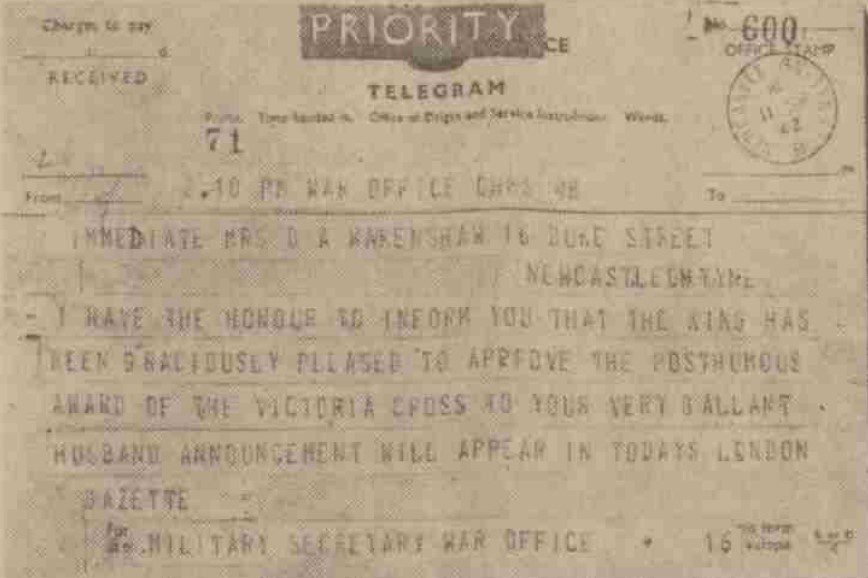
The London Gazette 8th September 1942 tells the story of how he obtained his Victoria Cross:
“On the 27th June, 1942, south of Mersa Matruh, Private Wakenshaw was a member of the crew of a 2-pounder anti-tank gun. An enemy tracked vehicle towing a light gun came within short range. The gun crew opened fire and succeeded in immobilising the enemy vehicle. Another mobile gun came into action, killed or seriously wounded the crew manning the 2-pounder, including Private Wakenshaw, and silenced the 2-pounder. Under intense fire, Private Wakenshaw crawled back to his gun. Although his left arm was blown off, he loaded the gun with one arm and fired five more rounds, setting the tractor on fire and damaging the light gun. A direct hit on the ammunition finally killed him and destroyed the gun. This act of conspicuous gallantry prevented the enemy from using their light gun on the infantry Company which was only 200 yards away. It was through the self sacrifice and courageous devotion to duty of this infantry anti-tank gunner that the Company was enabled to withdraw and to embus in safety.”
Sources: The British Newspaper Archive; The Ministry of Defence; The National Archives;
Adam Herbert Wakenshaw is remembered at Brancepeth on B151.02, at Durham on D47.071, at Newcastle on NUT157, NUT160, NUT162, NUT166 and NUT270, in the 9th Battalion Book of Remembrance page 85 and in the DLI Book of Remembrance, page 47.
First Name: Adam Herbert
Last Name: Wakenshaw
Service Number: 4270383
Which War: Second World War 1939-45
Died: 27/06/1942
Age: 28
Rank: Private
Regiment: Durham Light Infantry
Served in: Army
Unit/Ship: 9th Battalion
Decorations: Victoria Cross
See 151st Brigade at War.
Links to Source Material
If you know more about this person, please send the details to NEWMP.
