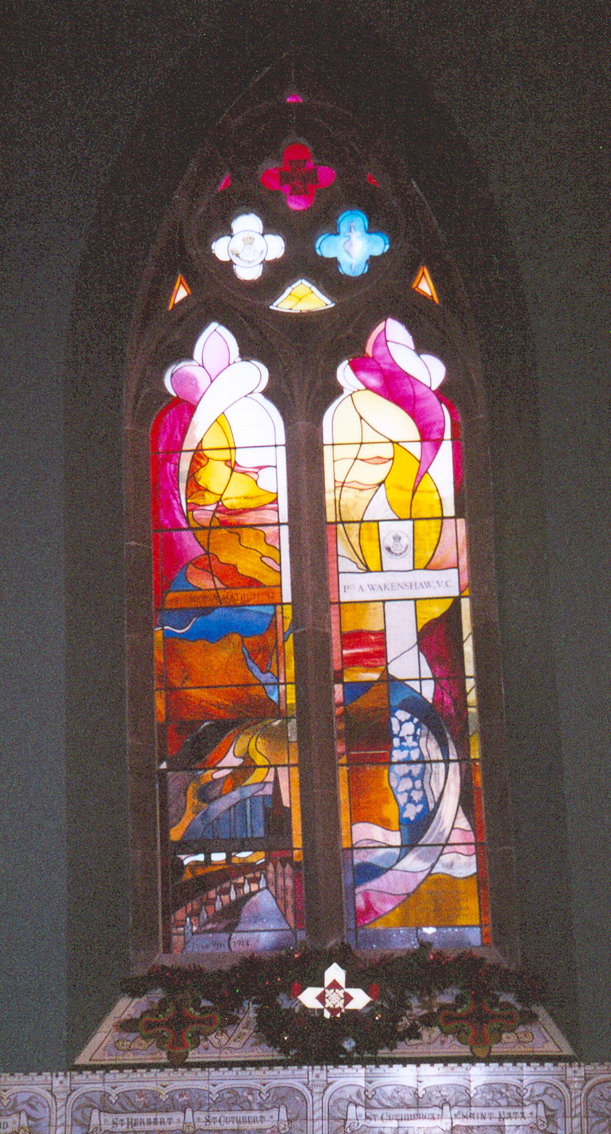
Memorial Description: Stained glass window of two lights with traceried top each 96 inches high x 24 inches wide (2.6m x 608mm).
It tells his story from humble beginnings in Newcastle, to his death in North Africa.
The stained glass window, comprising two panels, was selected after a public competition organised by Northern Arts.
The two-light window is situated on the south side of the Cathedral.
It was the first new stained glass window in St Mary’s for more than 100 years and it replaced a window damaged during the bombing of Newcastle by the Luftwaffe in the Second World War.
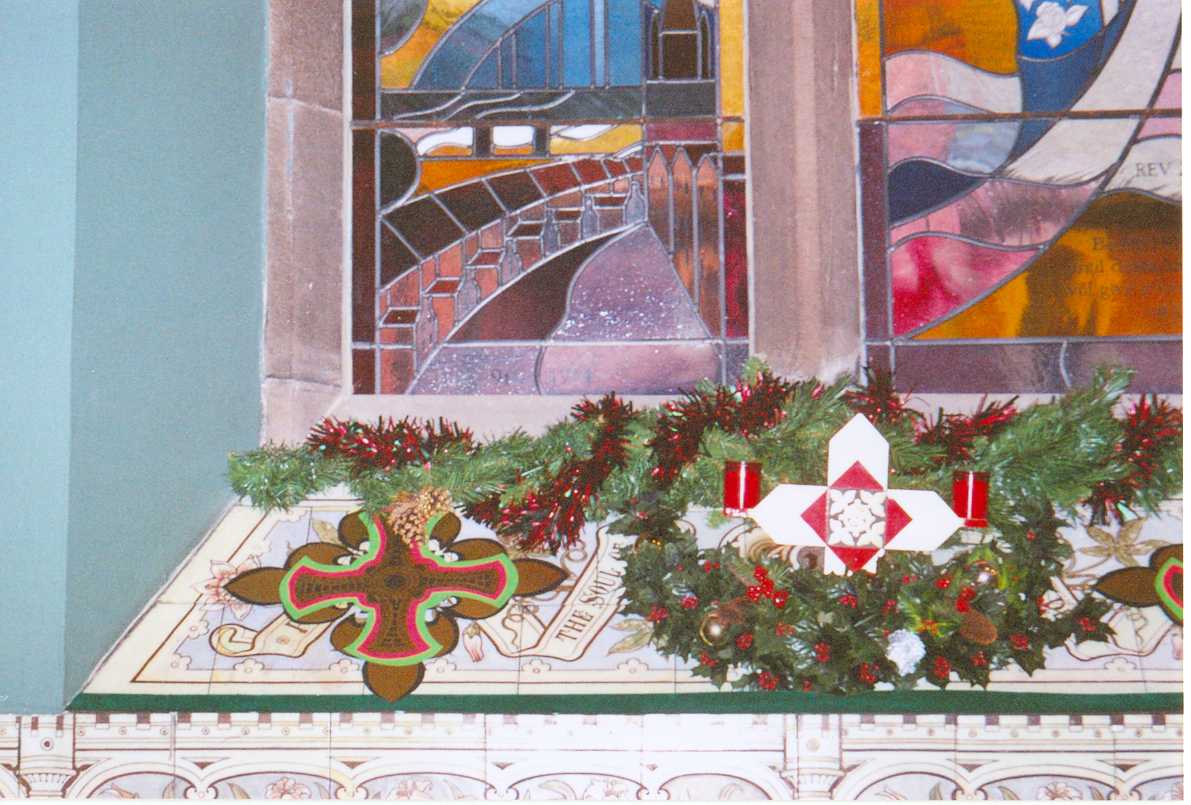
At the base of the left-hand window is a terraced street in Newcastle with the Tyne Bridge in the background.
The bridge was built between 1925 and 1929 when Adam Wakenshaw was growing up and it was a new landmark on the Quayside.
A silhouette of St Mary’s spire, where Adam was baptised and married is included, as is a map of the area where he fought with the D.L.I.
It depicts the North African coastline, along with the location of Mersa Matruh and El Alamein.
The top of the left-hand light contains the colours seen on the horizon at sunrise, the time of day when the attack on Mersa Matruh took place.
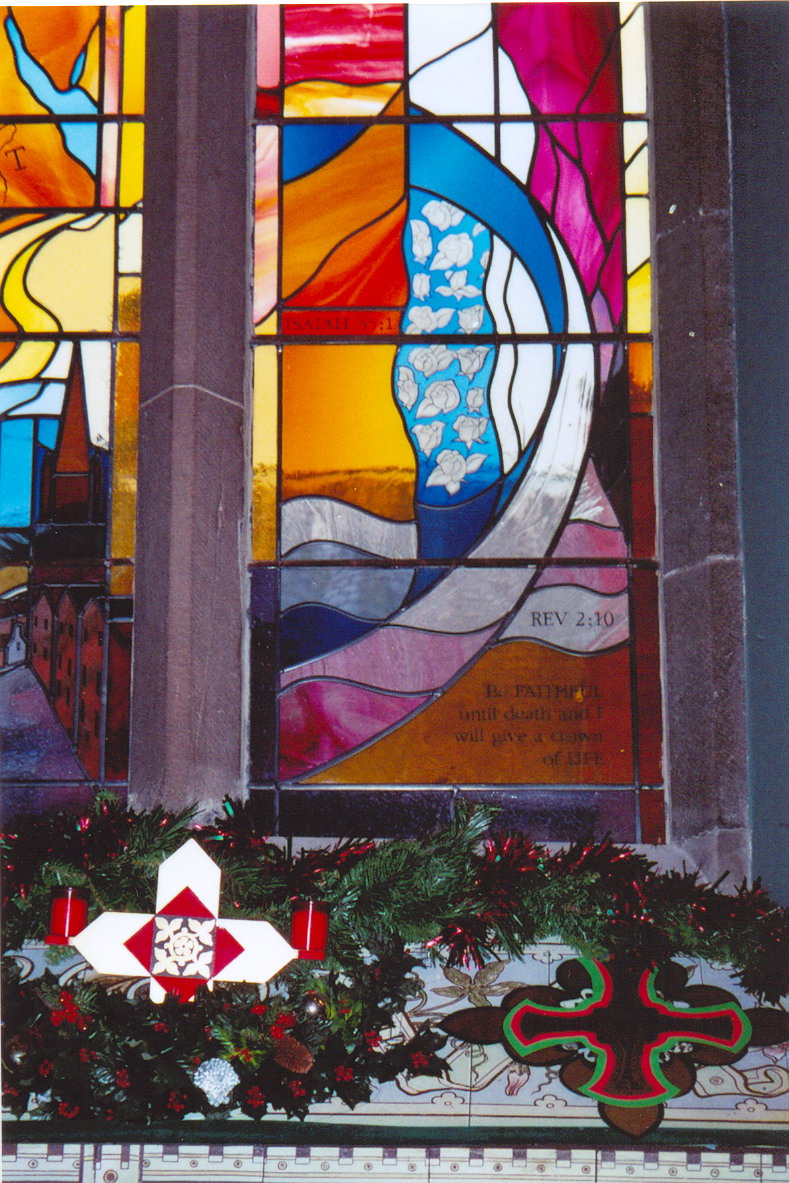
Moving across to the right-hand light, the cross originally placed on Adam Wakenshaw’s grave is depicted.
Bougainvillea and white roses, the flowers that decorated his two-pounder gun in El Alamein Cemetery, are also shown.
The motto of the 9th Battalion Durham Light Infantry is also included: “Be FAITHFUL until death and I will give a crown of LIFE” (Rev 2:10).
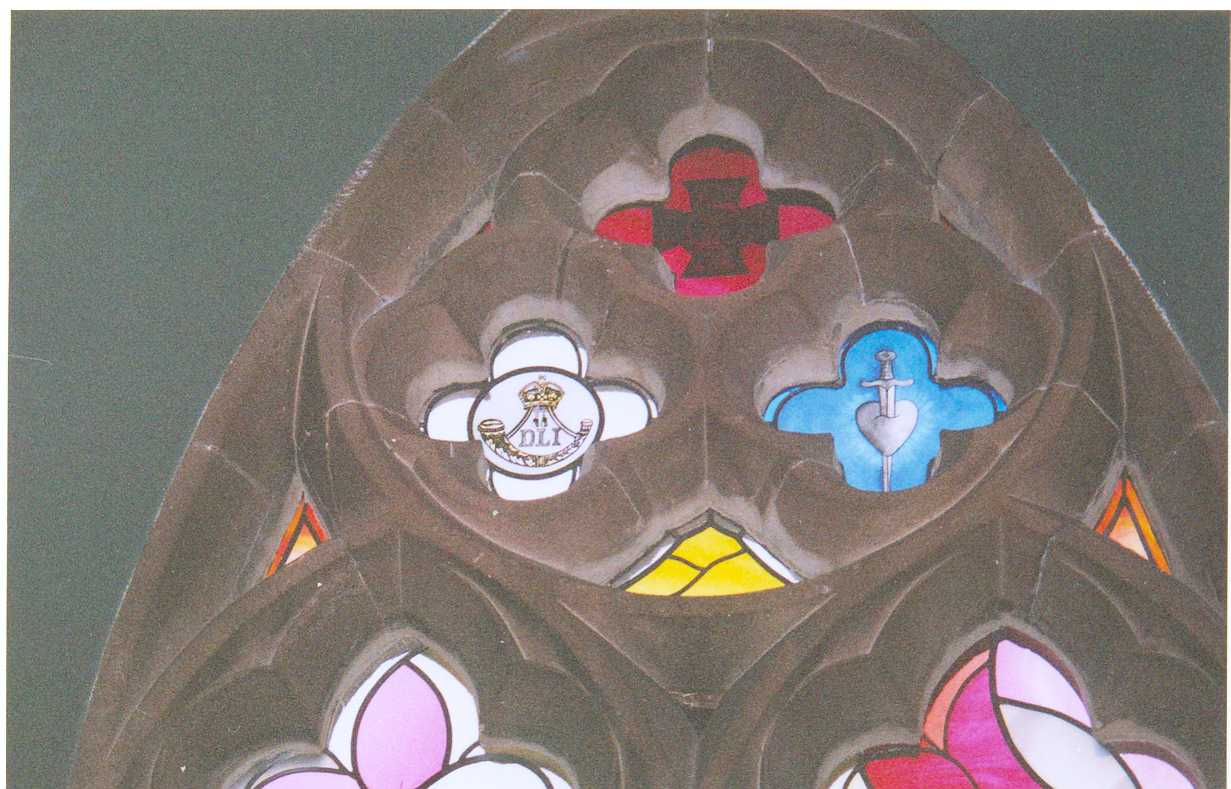
In the tracery of the window is the cap badge of the Durham Light Infantry, a representation of the Victoria Cross and a heart pierced by a sword.