Every Name a Story
Joseph William Stones
Every Name a Story
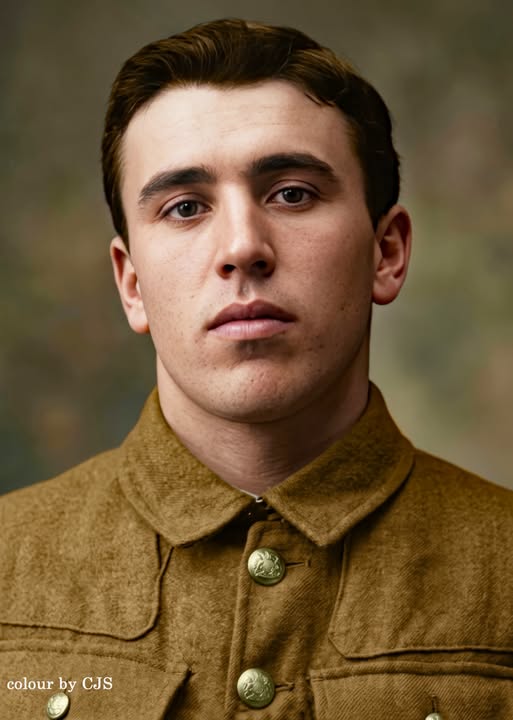
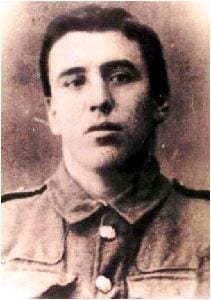
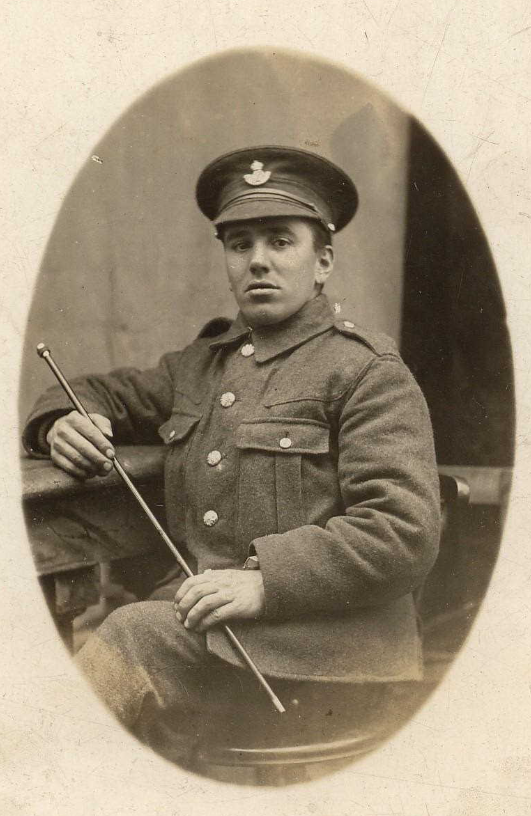
In St. Pol Communal Cemetery Extension, France is the Commonwealth War Grave of 19/647 Lance Sergeant Joseph William Stones, serving with ‘Z’ company, 19th (Service) Battalion Durham Light Infantry, who died 18/01/1917.
The husband of Elizabeth Edith Jones (formerly Stones), of 85 Front Street, Wheatbottom Terrace, Crook, Co. Durham.
Joseph William Stones was born on the 13th August 1890 at 17 Jobs Hill Terrace, Crook to father Edward Stone, born August 1850, baptised 22nd September 1850, died 1909, and his wife Mary Ann nee Rumley, Stones, born May 1854, died 22nd September 1914, the youngest child of 6 children. They were married 2nd October 1876.
The other children were:-
- Edward Stones, born 9th June 1878. He emigrated to Canada on the 16th May 1903 onboard the SS Phoenician, ship number 48944. His trade was described as a Labourer.
- John George Stones, born 26th February 1885, died 4th November 1941. He married in 1906 a Lily nee Abbott, Stones, born 3rd February 1887, died 1961. They had 5 children. John Edward Stones, born 21st February 1908, died 1986, Thomas William Stones, born 28th December 1909, died 8th March 1976, Lily Stones, born 8th December 1914, died 1983 and Vera Stones, born 7th April 1920, died 1996. In 1939, they were residing at 40 West Chiltern Terrace, Sedgefield District. John George was also an ARP Warden, he was working as a Rolleyway man. Thomas was a stone mason working underground, also present was an Ivy Stones, born 7th September 1923, she later married a Kenneth J. Mustoe, in 1944.
- Mary Hannah Stones, born 1887, died 1896.
Two other children died at an early age.
The father was a Lead Miner and he died in 1909. In 1891 and 1901, the family resided at 17 Jobs Hill Terrace, Crook. By 1911, the family were residing at Cooperative Terrace, Crook. Joseph William was residing here as well. There was also a grandson residing at this address an Edward William Stones, born 12th November 1903, mother [daughter in law], was a widow Isabel nee Manuel, Stones born 1882. The family then moved to 85 Front Street, Wheatbottom, Helmington Row, Crook, Co Durham.
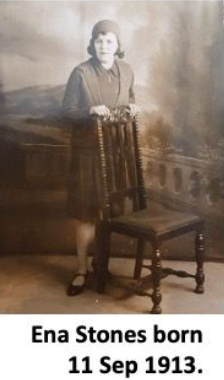
Joseph William Stones was married on the 3rd March 1912 at Durham Register Office to Elizabeth Edith nee Gaddass, Stones, born 22nd May 1896, died 1980. They had two children, Mary Elizabeth Stones, born 2nd April 1912, died 22nd March 1915 of Measles and Acute Pneumonia at 85 Front Street, Wheatbottom, Helmington Row, Crook. and Ena Stones, born 11th September 1911, died 1946. He was employed at the Crook Colliery as a miner.
Joseph William Stones volunteered at West Hartlepool, into the 19th (Service) Battalion Durham Light Infantry (2nd County), on the 9th March 1915 in response to the Army reducing the recruiting height to 5 feet three inches and above 5 feet. [His service record states that is record started from the 31st May 1915]. He was 5 feet two inches, 128lbs. These were known as ‘Bantam’ Battalions. The War Office official sanction was given on the 18th January 1915. The early recruits were quartered at West Hartlepool at the Baltic Chambers in George Street, also at the New Co-Operative buildings in Stockton Street, West Hartlepool. Then the battalion moved to Cocken Hall. The battalion was brigaded into the 106th Brigade in the 35th Division. Service number 19/647.
On the 15th April 1915, Elizabeth Edith Stones wrote to the York Record office about her Government Pay, she was bemoaning the fact that she was receiving 21s [Shillings] a week and one of her children [Mary Elizabeth Stones], had just died reducing her pay to 17s 6d [pence]. Her rent was 4s, and she thought it was a too small amount receive to bring up her other two children and pay rent. [Joseph was at The Co-Operative Buildings at this time].
The Battalion arrived in France on the 1st February 1916, from Southampton arriving at Le Havre. Joseph was appointed a Lance-Corporal in January. 31st May 1916, promoted to Corporal. Joseph was appointed Lance-Sergeant on the 22nd July 1916.
Joseph William Stones had reported to the Battalion Medical Officer Captain G. A. Barss, at least on two occasions with rheumatic pains in his legs within 11 months, 27th October and November 11th.
At the beginning of November 1916, the Battalion were holding K2 sector again. [This sector had seen much mining activity and the front line had been badly damaged, so that it was the support line that was strongly held]. Only outposts were held in the front line and in front of that, the condition of the barbed wire varied considerably. Along the K2 sector, the mine craters were named from right to left as Katie, Kent, Kick, Kite and King, which all had to consolidated and to be held by the British as the front line. The original support trench ‘Spook Avenue’ had been badly knocked about and as a result was abandoned. A new support line ‘Works Line’ was dug. The Reserve line was called the Redoubt Line, with companies at Observatory and Thelus Redoubts and Roclincourt Village defences. The main communication trenches which led to the rear from the K2 position were Cecil Avenue and Bogey Avenue.
On the night of the 25/26th November there was a series of advanced posts A, B and C normally held by six men. Post ‘A’ was manned by Corporal Stevenson and one soldier, Post ‘B’ Lance-Corporal Hopkinson and Privates Harding and Hunt, Post ‘C’, Lance-Corporal McDonald, Private Ritchie, Private Spence, and nearby in a dugout was a Lance-Corporal Goggins, Privates Davies, Dowsey and Forrest.
At 1.00am, Lance-Sergeant Joseph William Stones relieved Acting Sergeant James Staff as NCO of the watch in the Front line. At 2.00am the Germans re-opened the trench Mortar Barrage.
At about 2.15am, the enemy raided the trenches occupied by ‘Z’ Company on the right of the line in the vicinity of ‘Kings Crater’. Lieutenant James Mundy, the officer on watch, set off with Lance-Sergeant Stones to visit the front line posts. They made their way to post ‘A’ then set off for post ‘B’. As they entered the ‘Kings Crater’, Lieutenant Mundy was shot by a member of the German Raiding party, who had used the trench mortar barrage as a cover to get into the British front line. [The ‘Kings Crater’ was only about 50 yards from the German Trenches]. As he fell, according to Stones, he was ordered to alert Company Headquarters.
In later evidence, Stones stated that he wedged his rifle across a trench and then turned and ran back past post ‘A’, yelling a warning to Corporal Stevenson as he passed by, and continued back to Company Headquarters. Corporal Stevenson went to the aid of Lieutenant Mundy and brought the badly wounded officer in, though he died of his wounds. The German raiders blocked the trench towards Post ‘A’ and then moved down towards post ‘B’. Lance-Corporal Hopkinson and Private Harding left the post and ran down the line shouting ‘Run for your lives, the Germans are on you‘.
The raiders took Private Hunt as a prisoner who had stood his ground. Having gone some way from his post Private Harding stopped and returned to find Private Hunt gone. In Post ‘C’, Privates Ritchie and Spence, who had been taking cover because of the trench barrage, heard a shouted warning that the enemy were in the trench. An exploding bomb blew Spence off the fire step, he picked himself up and rushed along the trench to men of the 17th Battalion West Yorkshire regiment who were manning a bay south of ‘Kings Crater’. Private Ritchie however, went to warn the men in the dugout with Private Spence and they headed down Cecil Avenue, until they were stopped at a post manned by Private J. Kidd of the 17th Royal Scots at the junction of Cecil Avenue and G Work.
Lance-Sergeant Stones had now reached Company Headquarters, where he shouted down into the dugout. On hearing the shouting CSM WOII Holroyd, reported to Lieutenant Howes, who was in command of the support platoon.
A Private Pinkney and Lance-Sergeant Stones were stopped at a Regimental Police Battle post at the junction of Bogey and Wednesday Avenues. Sergeant Robert Foster who was manning this post, stopped them and asked where they had had been and where they were going. [Lance-Seargent Stones had no rifle with him at this time], Foster ordered them to return to the line.
He reported to company HQ, and to the Company Sergeant Major, but when he was ordered to return to the front line his legs gave way and he was unable to walk properly.
He was subsequently found 700 yards behind the lines with no weapon or webbing and was arrested. A member of the regimental battle police noted that Joseph was exhausted and trembling.
19/647 Lance-Sergeant Joseph William Stones was charged with: When on active service shamefully casting away his arms in the presence of the enemy in that he in the front line trenches K2 sub sector on 26th November 1916 when as NCO of the watch and attacked by the enemy shamefully cast away his rifle and left the front line and ran away. Army Act Section 4(2).
Lance-Sergeant Stones was tried on Christmas Eve, also tried the same day were six men, including two Lance-Corporals who had fled the posts. This group was charged were charged with leaving their posts without orders from a superior officer, although they could also have been charged with the same offence as Stones. At his trail, the court heard evidence from both the private who assisted him and the sergeant at the battle stop. Both confirmed that Stones was in nervous state and had difficulty in walking. He was defended by a Captain George Warmington, {Prisoner’s Friend}. He was from ‘Y’ Company and was a solicitor, his brother was in the 18th Battalion Durham Light Infantry.
All of the six men received the same sentence as Stones. However, on reviewing the sentences, Major-General H.J.S. Landon, would seem to have determined their fates. The General aired his prejudiced opinions about the two junior NCO’s, noting on the proceedings that the pair were mentally and physically degenerate. [The opinion that some of the reinforcements to 35th Division were degenerate was repeated in the official history of the war, Military Operation’s France and Belgium 1917 Volume 1].
In the New Year, Sir Douglas Haig came to review the sentences, he commuted those imposed on the 4 privates to 15 years, which were then suspended.
Although records of the trial survived, the questions put to the witness are not recorded, only their replies. Witnesses include Lieutenant Charles W. Howe, 9129 CSM Holroyd, 19/1430 Acting Sergeant James Staff, 19/362 Private John Pinkney from Easington, 19/136 Sergeant Robert Foster. These were for the prosecution.
An eye witness [Private Albert Rochester], recorded the final moments of the three condemned NCO’s shot on January 18th.
In the morning, after a wash and a scanty meal of biscuits and ‘pozzy’ [jam], three of the men all NCO’s were ordered out through the hole [in the wall of the outhouse], and escorted by a squad of military police armed with revolvers, transferred to a more isolated cell.
‘Come out, you‘, ordered the corporal of the guard to me. I crawled forth. It was snowing heavily. ‘Stand here‘, he said, pushing me between two sentries. ‘Quick march!’ and away we went, not as I dreaded, to my first taste of ‘pack drill’, but out and up the long street to an RE Dump. There the police corporal handed in a ‘chit. whereupon three posts, three ropes and a spade were given me to carry back. Our return journey took us past the guard room, up a short hill until we reached a secluded spot surrounded by trees.
Certain measurements were made in the snow, after which I was ordered to dig three holes at stipulated distances apart. I began to wonder. Could it be? No perhaps Spies. perhaps, oh perhaps, only my fancy.
On 17th January the intensely cold night. A heavy mantle of snow covers the earth, overhead a steely moon. The hour is near midnight, and in the distance is heard the incessant thunder of the guns. Down the street there comes a file of soldiers, with rifles at the slope and bayonets gleaning in the moonlight.
They wheel into the yard of the farm allocated to the military police, and are promptly ordered into military formation. Ten minutes later a luxurious car arrives with 4 British officers. More orders, then from a barn close at hand emerges three handcuffed men who are led before the company, the senior officer pompously unrolls a document, and by the light of a flash lamp read the confirmation of the death sentence, and the decrees they be shot at dawn.
A gasp from one poor trembling victim the other two remain stiff and impassive. The officer quickly rolls up his papers and makes for the car, and the soldiers march away.
The motor ambulance arrives conveying the doomed men.
The next scene a piercingly cold dawn; a crowd of brass hats, the medical officer and three firing parties. Three stakes a few yards apart and a ring of sentries around the woodland to keep the curious away. A motor ambulance arrives conveying the doomed men. Manacled and blindfolded they are helped out and tied up to the stakes. Over each man’s heart is placed an envelope. At the sign of command the firing parties, twelve to each, align their rifles on the envelopes. The officer in charge holds his stick aloft and as it falls thirty-six bullets usher the souls of three Kitchener’s men to the great unknown. As a military prisoner I helped clear the traces of the triple murder. I took the posts down. I helped carry those bodies towards their last resting place. I collected all the blood-soaked straw and burnt it. Acting upon instructions I took all their belongings from the dead men’s tunics, (discarded before being shot). A few letters, a pipe, some fags, a photo. I could tell you of the silence of the military police after reading one letter from a little girl to ‘Dear Daddy’, [probably from John McDonalds daughter], of the blood stained snow that horrified the French peasants; of the chaplain’s confession that braver men he had never met than those three men he prayed with just before the fatal dawn. I could take you to the graves of the murdered.’
Source: Shootings at Dawn Ernest Thurtle. Military Discipline and Democracy, Ernest Thurtle, The Railway Review February 1922.
The three soldiers were held at the village of Fouflin Ricametz in the barn. The president of the court was a Lieutenant-Colonel Cecil Bampfylde James Riccard, Captain George Henry Mason and Captain Sydney Lara Bell also made up the Court Martial. Second Lieutenant Robert Mitchell Hill Middleton, the Adjutant and prosecuting officer of the 19th Durham Light Infantry. Captain Waldo Raven Briggs was in attendance representing the Third Army Courts Martial Officer.
The victims of the above execution were a sergeant and two corporals of the Durham Light Infantry. Their Company had made an attack on King’s Crater, near Arras, and captured it. The enemy counter-attacked and recaptured the Crater. The captain in charge was killed, and as he was dying he told his men to get back to their own trenches. {The rank is incorrect, Lieutenant Mundy was shot and died of wounds}, The next morning they were all put under arrest, and three NCO’s were court-martialled, sentenced to death and shot at Rollencourt near St Pol.
The officer commanding ‘Z’ Company, Lieutenant William Oliver spoke highly of Sergeant Stone’s ability to command men and his boldness when working in No Mans’s Land. He came out with the Battalion in February as a Lance-Corporal. Showing ability to handle men, he was promoted over the heads of senior NCOs in the company. He has done good work on patrols and when in charge of wiring parties. I have personally been out with him in no-man’s land and always found him keen and bold. In the trenches he never showed the least sign of funk. He has always been in my company. I therefore had countless opportunities of seeing him under all circumstances and can safely say that he was the last man I would have thought capable of any cowardly action. He has been in a poor state of health lately.
An entry in the Division’s war diary noted that Lance-Sergeant J.W. Stones was “in a pitiable state of terror”.
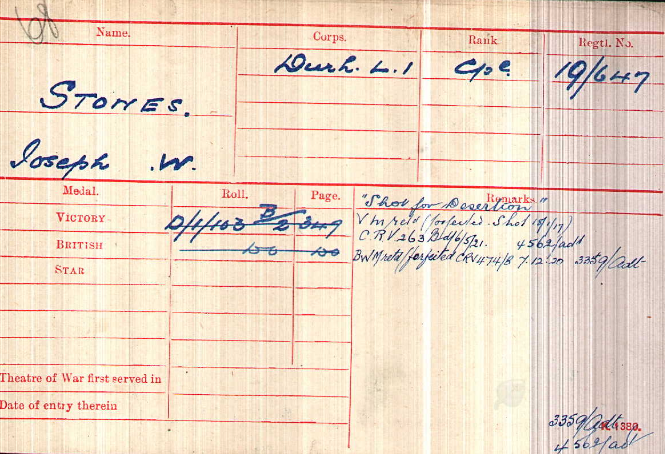
Lance-Sergeant Joseph William Stones was shot at 07.35am on a freezing 18th January 1917, for casting away his arms and running away from the front line, at the same time as Lance Corporal McDonald, (Millfield Sunderland) and Lance Corporal Peter Goggins (South Moor). General Routine Order 2109 dated 31st January 1917. All three lie side by side in St. Pol cemetery. Joseph was in the Army 1 year and 316 days.
The Armed Forces Act 2006 was passed allowing the soldiers to be pardoned, although section 359(4) of the act states that the pardon “does not affect any conviction or sentence.”
His wife received a re marriage gratuity one off payment of £89 and a pension of 6s 8d a week for her two children which increased to 10s. She originally received 5s a week for her and 1 child from the 27th November 1917.
On the 24th February 1917, there was a letter from the Ministry of Pensions stating that due to the circumstances of the death of Lance-Sergeant 19/647 Joseph William Stones, his widow is not eligible for a pension!.
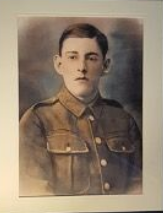
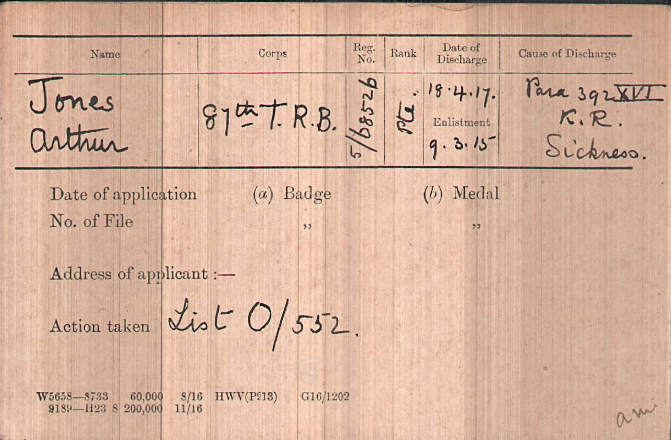
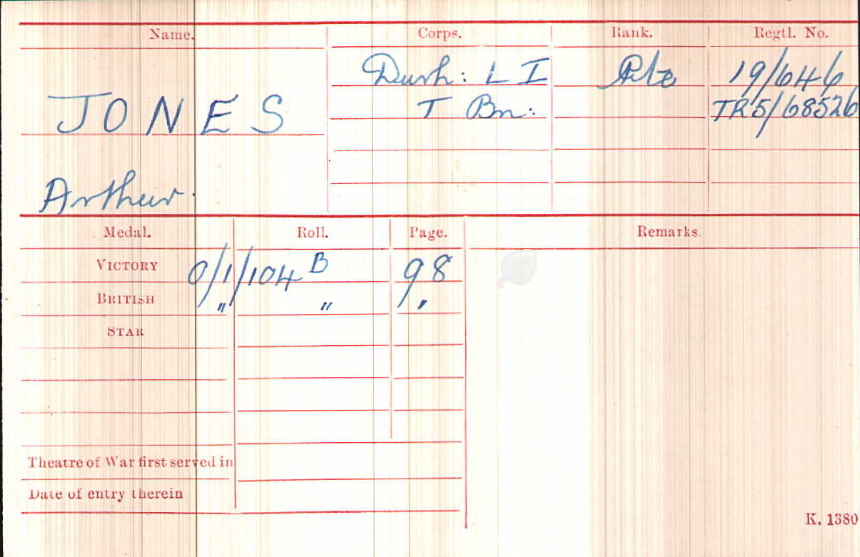
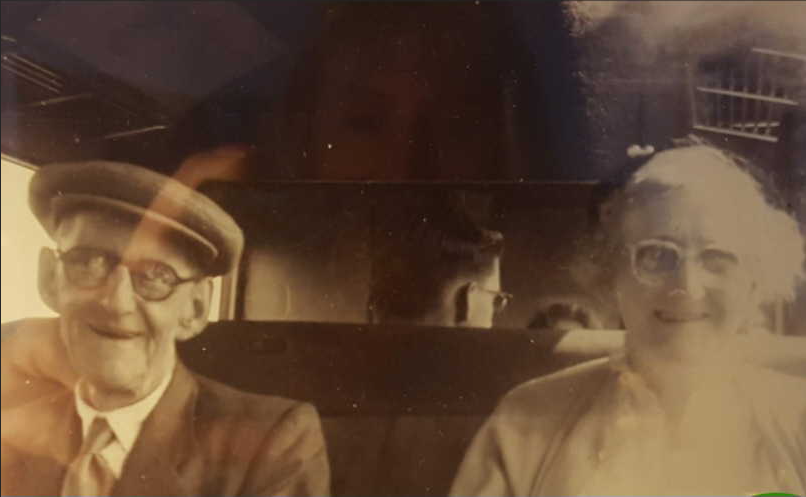
Elizabeth Stones remarried an Arthur Jones, on the 6th October 1917, born 19th February 1892, baptised 27th March 1892, died 1964, who also served in WW1. In 1911, Arthur was residing at 2 Wheatbottom, Crook. Arthur was in the 19th (Service) Battalion Durham Light Infantry, service number 19/646. He had enlisted at West Hartlepool on the 9th March 1915. He was discharged on the 18th April 1917, under KR 392 Para (XVI). Discharged due to Shellshock whilst on active service. He is awarded a Silver War Badge no 170376. Arthur went to France on the 31st January 1916 and prior to the 23rd July 1916, he was shell shocked. The Battalion were involved in the Battle of Delville Wood and were subjected to a very heavy artillery barrage from the Germans. Arthur returned home and was transferred into the 87th Training Reserve Battalion, [21st Reserve Battalion Durham Light Infantry], which was at Hornsea. He was allocated a new Service number TR5/68526. The Battalion moved to Catterick where they were eventually training for the newly formed Machine Gun Corps. Whilst at Catterick, Arthur was given a Medical examination and was diagnosed with shell shock, he also was walking with a stick to aid him in walking any distance.
They had five children. Arthur was educated from the 1st July 1898 at the Shotton Colliery County Infants School (Formerly Shotton Church Of England Infants School), and from 1909, Shotton Council Infant School, leaving on the 14th February 1906 aged 14 years.
In 1921, they are residing at 85 Wheatbottom, Helmington Row, Co Durham, with an Ena Stones, Violet Jones, born 1918 and a Thomas Edward Jones, born 1920. Arthur is working at Bowden Close Colliery at Crook.
In 1939, they were now residing at 55 South End Villas, Crook, Co Durham with an Ena Stones, a Female Domestic Servant, Thomas Jones, born 25th May 1920, a colliery putter below ground, an Eileen Hearn (Jones), born 7th Jul 1915, Female, seeking work, Arnold Jones, born 11th February 1926 who is at School. Two other records are redacted.
Sources: Blindfold and Alone: British Military Executions in the Great War Cathryn Corns and John Hughes-Wilson; Cassell 2001; ISBN 0 304 36449 5;Shot at Dawn Julian Putkowski and Julian Sykes; New and revised edition; Leo Cooper; 1989 ISBN 9 780850 295 1; The British Newspaper Archive; The Western Front Association; The National Arboretum; The National Archives; GRO; War Diary; Shootings at Dawn Ernest Thurtle. Military Discipline and Democracy. Ernest Thurtle.; Durham Pals John Sheen; The Railway Review February 1922.
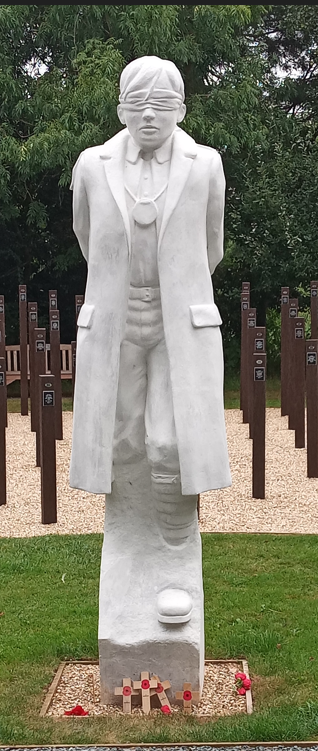
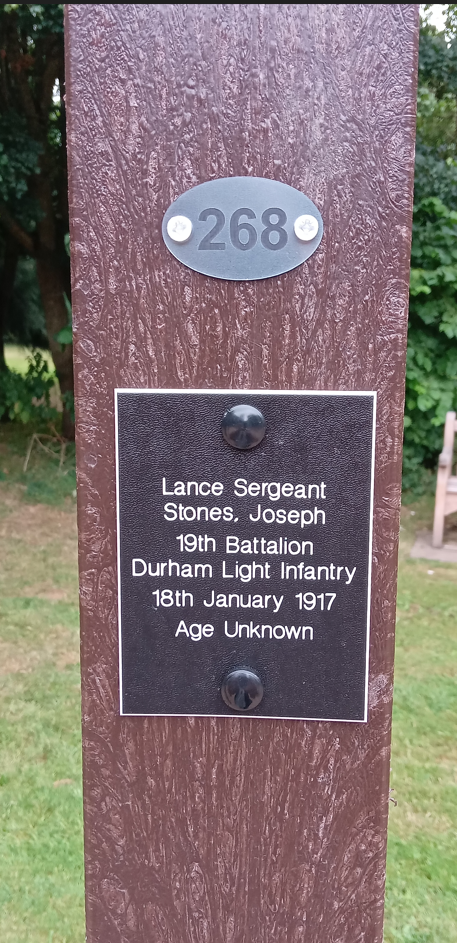
Joseph William Stones is remembered at Crook on C121.04 and in the D.L.I. Book of Remembrance, page 8, he is also remembered at the National Memorial Arboretum.
First Name: Joseph William
Last Name: Stones
Service Number: 19/647
Which War: First World War 1914-18
Died: 18/01/1917
Age: 26
Rank: Lance-Serjeant
Regiment: Durham Light Infantry
Served in: Army
Unit/Ship: 19th (Service) Battalion
Links to Source Material