Every Name a Story
Isidore Newman
Every Name a Story
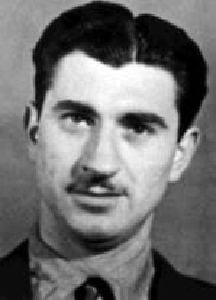
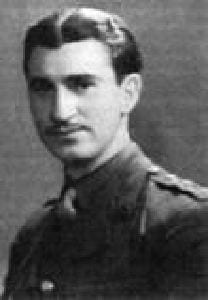
On the Brookwood Memorial is the name of 216306 Captain Isidore Newman, serving with ‘F’ Section, Special Operations Executive who died 07/09/1944.
Isidore (Izzy) Newman was born in Leeds on the 26th January 1916, to Joseph and Tilly Newman [nee Cohen]. His parents were Russian Jewish immigrants who had arrived in Britain from Lithuania in 1909. Joseph’s original surname was Naviprutsky. The surname was changed when they immigrated.
Joseph was one of thirteen brothers and sisters, who remained in Lithuania and perished in the Holocaust. Two younger brothers escaped with the Polish army in 1939, and eventually reached Israel, where their families still live.
The Newmans were married at New Briggate Synagogue, Leeds on the 11th June 1912, prior to which Joseph had been living at 8 Gledhow Terrace and Tilly at 22 Whitlock Street. Both were tailors and pressers. They lived at 11 Kepler Street (or Grove), Leeds, at the time of Isidore’s birth.
Isodore was the middle of three brothers. The older was Benny (Bernard), born in 1914, who although extremely clever developed acute mental illness as a young man. He had to leave school in the sixth form having shown great promise and was in and out of institutions much of his life. He died in Hull in the 1970s or 80s.
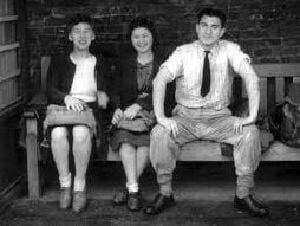
The other brother Montague, seventeen months younger, was slightly physically disabled. He eventually became a medical technician at the Royal Victoria Infirmary at Newcastle upon Tyne, married a non-Jewish woman and appears to have lost touch with the family after Joseph and Tilly died. It was in Hull that Isidore became engaged, but it has so far not been possible to discover the name of the lady. A contemporary of Isidore remembers one of the women of the community saying that Isidore’s mother felt that his looks and education made him a good catch for any local Jewish girl. Rita Charnah, who knew Isidore in Hull, reported that her brother Aubrey Gordon had been a fellow teacher with Isidore at Middleton Street Boys Primary School (records show that Isidore began teaching there in September 1938, aged twenty-two; the school closed in 1941 and the building was demolished in 1994), and that they often played cricket and football together for the Judeans, the local Jewish athletic club. Rita also knew that Isidore was a boyfriend of her cousin Dorothy Marks, also a primary-school teacher in Hull, and that she may have been the mystery fiancée. Other sources suggest the lady might have been Rita Cuckle who, according to her husband, Lesley Simmons, had described Isidore as very handsome with a widow’s peak hairline who spoke perfect French, and whom she had dated on several occasions.
The family moved to Durham in 1922 when Isidore was six years old, and resided at 52/53 Hawthorn Terrace, Durham. An old friend, Dr Nat Cannon (living in Vancouver aged 94, in 2007) remembers [that] the family lived at 6 Cross Street and Isidore’s uncle Isaac Cohen (Tilly’s brother) resided at 9 Cross Street. The Durham City Directory for 1913 listed Joseph and Isaac as ‘general dealers’. Both Isidore and Nat attended St Margaret’s Elementary School (on the honours board at the school, listing the pupils who went on to Grammar School, Isidore’s name was added in 1927) and later Johnston’s Grammar School. Isidore attended the Synagogue at 107 Laburnum Avenue of the small Durham community, where his father was a cantor.
Isidore was a keen athlete, enjoying cricket, football, swimming and cycling, but was especially interested in learning French.
He successfully completed his matriculation, aged sixteen and Higher School Certificate, at eighteen and went up to Armstrong College Newcastle upon Tyne, then part of Durham University, in 1934 to read French, English and Latin. He and Nat Cannon, studying Medicine, with their slight Geordie accents, met on occasion, although Nat was four years older.
As Isidore wrote in his SOE file on the 18th August 1941:- The exciting life of a young student began for me; I studied, I played games, I was interested in everything French language, literature and customs was my special study. In June 1936, at the beginning of the holiday, I decided to go to Belgium with a friend (I corresponded with a young Belgian student at the time). We left over for Ostend, then Brussels. As it was necessary for us to write a thesis for our BA degree, we installed ourselves at the University there – in the ‘Cite estugiantine’ in order to use the books in the library. When the thesis was finished, we went to Bruges and to Blankenberghe, then to the French coast for a few days; finally from Antwerp, we returned to England. In 1937, I obtained my BA Degree (2nd class honours) and in 1938, after a year of study, I obtained the DThPT (Diploma in the Theory and Practice of Teaching) from Kings College Newcastle. I left the University and settled in Hull as a teacher in a Primary School.
Meanwhile, Isidore’s father was bankrupt by 1938 (though he later became a successful cloth merchant) and moved with his family to Hull, where he was able to find a poorly paid job. This was as shomer (literally, ‘guard’ or ‘keeper’, who ensures that food sold in the community’s shops and prepared for weddings, bar mitzvahs and other events, is strictly kosher). They lived at 62 Etherington Drive then later at 137 Clumber Street, Princess Avenue. Joseph died 10th April 1966 and Tilly died 28th March 1956.
Isidore became engaged in Hull, and was teaching at Middleton Street Boy’s School from September 1938. (The school was demolished in 1994.)
Isidore joined the army on the 29th August 1940 (2350538) and trained as a radio telegraphist with the Royal Corps of Signals at Catterick for six months. Here he was seen by a Jewish Army Chaplain, the Reverend P. Cohen, on the 22nd September and given the standard Military Jewish Prayer Book and Chief Rabbi J. H. Hertz’s Book of Jewish Thoughts. Cohen saw him again on the 1st December. Posted to Scarborough. He then was posted to Kent for four months as a signalman. Isidore was commissioned as a First Lieutenant (216306) and finished training on the 10th July 1941, moved to Sheffield with the 12th Light Anti Aircraft Regiment. Stationed with a Royal Artillery battery in Hull. He officially joined the SOE on the 11th July 1941.
On 1st August 1941, Isidore was sent for Wireless Officer Training with SOE. He broke his leg whilst training in Scotland. Placed in Colonel Buckmaster’s F (French) Section, where he appears to have been a successful student. A report of the 7th August 1941 by one of his trainers, Lance Corporal MacAlister, stated that ‘he was in good physical condition. … standing 1.8 meters tall, dark, with black hair, brown eyes and good looking; above average intelligence … and after only 2 weeks had a good knowledge of French and French customs; he enjoys the training but as written some indiscreet letters’ (perhaps to his fiancée or parents?). Again on 14th August, ‘he is self assured and thinks with precision’, and on 28th August, ‘sometimes seems depressed … he went for a long walk yesterday saying he was suffering from nostalgia (?). His French vocabulary is improving and he does excellent work instructing other students in Morse code. colloquial French not good but he is a patient and excellent teacher of wireless and Morse.’
At some stage Isidore met Leo Marks, Chef de Codage at SOE, who taught all the agents the required skills in coding and decoding messages. He later described Isidore as ‘one of Buckmaster’s best operators’. In a second report by a Corporal Edgar on the 23rd October 1941 Isidore is described as ‘good at PT; knows a lot and so this makes him a little unpopular with others in the group’. By the 27th October a cryptic message from SOE said that it had ‘been decided that the progress he [Newman] has made justifies his selection for work of a very responsible nature abroad. . . .kindly take the necessary action and (get him ) posted to us from 1.11.41’. On 1st November he was duly promoted to Second Lieutenant and given the training name ‘Athlete’. On the 16th December he received a postcard from the Jewish Chaplain congratulating him on his promotion. Later he had a spell in hospital, having broken his leg while training in Scotland (the family story, according to Hillel Bender, married to Isidore’s cousin Sheila Cohen, was that it occurred while parachute training, though for SOE agents this usually took place at Ringway, near Manchester). He was visited in a hospital by the Reverend Chait of the Army Jewish Chaplaincy on the 4th and 25th February 1942. Rita Cuckle remembers him coming home on leave with a limp, probably in late 1941, which he attributed to a training or car accident.
Isidore Newman was sent to Wanborough Manor near Guildford, taking on the pseudonym of ‘Matthieu Elliot’ to disguise his identity from other recruits. The course instructors soon noticed his less than perfect French – he’d studied the language at university, but had only spent a couple of weeks on the Continent, travelling across Belgium and northern France – and they also had some concerns over his moodiness during his commando training in Scotland, but there was no question about his technical abilities and he proved himself a determined and dedicated student.
First Mission into France. Isidore was sent into the field in southern France with the code-name ‘Julien’ (Georges Wireless Officer), and Mathieu Elliot, with the false name of Joseph Nemorin, on the 31st March 1942. He was to work with agent ‘Olive’ (or Lieutenant Francis Basin), in Operation ‘Dividend’, with circuit ‘Donkeyman’. Fortunately, the famous SOE agent Peter Churchill (or Raoul or Michel, later married to the agent Odette Sansom, GC) was to accompany Isidore, with the agents Edward Zeff and two others, and has left a vivid account of this episode in his book, which I unapologetically paraphrase in the following paragraphs, since it gives a detailed and vivid picture of a typical clandestine operation. Churchill first met Isidore at the London headquarters of SOE, describing him as ‘tall, dark and in his early 20s’. With him was Edward Zeff, another Jewish wireless operator, ‘short and middle-aged’, also to be inserted into France (Zeff was later captured, but survived the war in a prison camp). They both spoke ‘faultless, rapid French and their appearances’, Churchill was pleased to note, ‘were such that they would pass unnoticed in any French crowd, train or restaurant’. With their French clothes and accessories in their suitcases, Isidore and Zeff were each given a money belt with 100,000 francs and smaller notes for their wallets. They also carried false identity cards and various passes, photographs, old newspaper clippings and local tram tickets as evidence of the cover stories which they had committed to memory.
On the 26th February all three took the train to Bristol and then flew on a Curtis CW20 aircraft to Gibraltar. There they were met by a Captain Benson of Military Intelligence, who took them to the Rock Hotel. Their submarine transport was going to be delayed due to the Malta crises, so they used their time practising landing with the folboat canoes from the sea beside the airfield, and also how to climb down at night from a submarine into a floating boat, in the centre of Gibraltar harbour.
They finally departed at the end of March by submarine P42 (HMS Unbroken, commanded by Lieutenant Alistair Mars), to the Riviera at Antibes in France. The craft was small, but the officers and petty officers were kind in giving up their bunks for the ten-day voyage, for there were two other agents with them to be dropped at another location by Churchill, making five extra passengers. All five agents were given naval overalls for the voyage, to cover their French suits. Despite frequent excursions to the bridge each night for fresh air, Zeff suffered from claustrophobia, but Isidore seemed to enjoy the strong camaraderie with the crew, each admiring the courage required to do the others’ work. After nine days they reached the Riviera coast and patrolled back and forth at night on the surface, allowing Churchill to reconnoitre where they were to land and to pinpoint the bay and buildings he knew from a previous mission weeks before. Next dawn they dived and, using the periscope, Churchill precisely located his landing site at Antibes. That night, by a half moon, they surfaced four miles offshore.
Suddenly Mars spotted a fishing boat coming in their direction, which later turned out to be an SOE felucca trying to land other agents in an uncoordinated operation. Churchill had to abort his landing for that night, causing consternation among the agents. The following day, submerged, the submarine again cruised back and forth looking for the right landing place, while Churchill, to pass the time, drew a plan of the site showing the concrete steps leading up from the rocky beach to circular gardens above and the view along Avenue Maréchal Foch, up to house number 31. This was the rendezvous, the home of the Jewish Resistance leader Dr Louis Levy (‘Louis of Antibes’) whom Churchill knew well. Darkness fell, the town lights went on and the inhabitants slept. At midnight the submarine surfaced slowly. From two miles out they spotted some powerful unidentified lights moving inshore, which later turned out to be highly illuminated French fishing boats. Nevertheless, Captain Mars ordered the folboats to the forward hatch and told Churchill he should go ahead and disembark. He would watch for his pencil torch light on his way back.
This took place on the night of the 21st April as Operation ‘Delay II’ (Churchill calls it ‘Operation A’). Churchill slid down a rope into the folboat with one radio and suitcase already placed on the aft thwart, 1500 yards from shore. A French-speaking agent stood on the bridge to deal with any inquisitive French fisherman. He would say they were a French submarine from Toulon laying mines, and that they had better get away. The machine guns and three-inch gun were also manned in case of need. Churchill intended to land, unload and hide the case and radio in the gardens and then return for the second boat, with Isidore and Zeff and the second radio and case. But he was interrupted by one of the brightly lit fishing boats and immediately paddled hurriedly back to the submarine. There he breathlessly recited to Mars what had happened, but Mars, calmly amused, told him a fishing boat had come to the submarine too and said they were about to make for home – it was safe to return to shore. Isidore and Zeff were already in their boat and waiting for him 200 yards to starboard. Churchill paddled to them and they all set off towards the dark shore. Churchill went too fast, however, and turning, realized he had lost the other boat in the dark. He turned again and after 100 yards found them. He told them sharply to speed up, but Isidore told Churchill that his speed was leaving a highly visible phosphorescent wake and he needed to slow down. They agreed to approach at only 2 knots. They almost ran aground on the treacherous rocks, but finally found the concrete steps. Churchill unloaded his canoe, exchanged his gum boots for plimsolls and turned his boat round ready for a rapid departure.
He then held Isidore’s canoe while they disembarked. After tying the empty canoe to his stern, he carried the case and radio, separately, up the steps – leaving Isidore and Zeff below – keeping one hand free to hold his Colt revolver in case of meeting uninvited guests. He returned to bring Isidore and Zeff up to the gardens, and left them hiding in the bushes while he went to check the location of the Levy house. They would know when he came back as he would whistle the tune of ‘Le Madelon’. Suddenly, two French policemen on bikes approached with headlights on, but they all ducked, and they passed by, oblivious of the hidden men. In the dark, Churchill had difficulty finding the correct road he thought he knew well, searching in all directions and careful to whistle the tune each time he passed Isidore and Zeff. It was 3 am and light was approaching. Suddenly he found the Avenue and went straight to no. 31, where Dr Levy’s name plaque was clearly fixed to the wall. Relieved, he returned to his comrades and explained where they had to go and that they had to return before dawn for the other radio and case that he would now fetch and hide. They all shook hands; nothing was said but Churchill wrote ‘there was a world of feeling in our handclasps’. Churchill returned to the submarine for the second radio and case, but the current had forced the vessel nearer to shore and sideways. Using his flashlight he soon found them, however. Second-in-command Lieutenant Haddow (killed later in the War) helped him load the radio and case into the folboat and told him to hurry back as dawn was fast arriving. As Churchill again approached the steps he noticed several shadowy figures moving around. He drew his revolver and placed it on the bow with lanyard attached, then turned the boat in case he had to make a quick retreat. Then he spotted a bald head which could only have been that of his old friend Dr Levy (three years later Levy was betrayed and died on a forced march between Nazi death camps). Warmly shaking hands and without taking breath, Levy with good humour asked Churchill for the false baptismal certificates he had ordered for his daughters (Levy had bought a house in his daughters’ names and needed the certificates in case the Germans should try and confiscate it from him as a Jew. They were later dropped by parachute and had the desired effect.) Churchill replied with equal humour that he had brought agents and radios, so why worry about paperwork? Peering around, he demanded to know who these other men were with Isidore and Zeff. ‘Some of the gang to watch the fun’, said Levy. Churchill agreed with Levy to take agent Bernard (Emmanuel d’Astier, a French naval officer) back with him in the folboats. They all shook hands and Churchill disappeared into the night, Others in the welcoming party had included Henry Frager (‘Paul’, a French architect and agent who served as an artillery officer in both World Wars and was later betrayed and executed by the Nazis) and Guillain de Benouville.
In their slightly different account they remembered, ‘from our little boat I watched the submarine surface slowly, with tears in my eyes … from England they had come to fight on our side … for France … the sailors threw a rope to us and pulled our boat alongside. The three agents jumped down, shook hands and stuffed packets of cigarettes into our pockets. We embraced them, patted their shoulders, their faces. … you must remember that for us this was the first sign of action against the German conquerors of Europe by our friends, the free Anglo-Saxons. “What a joy”, cried Henry Frager, and we all repeated his words.’ Isidore described the mission in a report written on his return from France. The first two weeks, which were quiet, were spent finding a suitable safe house for his radio transmissions, not too surrounded by other buildings. But after a short time his French agent Olive was arrested and replaced by ‘Baptiste’ who took up residence in the house opposite. This agent was careless with security matters and Isidore reported his unease to his colleagues, the agents ‘Hilaire’ and ‘Arnaud’ (the radio operator
Adam/Adolphe Rabinovitz, another Jewish SOE agent, who worked for Churchill after Isidore left for England; later murdered by the Gestapo). On one occasion, Baptiste had openly called on Isidore at 9.30 pm, behaving in a highly suspicious manner in the street and unnecessarily arousing the curiosity of an Italian woman living nearby. A second agent, ‘Carte’ (a wellknown French artist, André Girard), came as a replacement, but he too proved difficult, insisting Isidore send messages only as he, Carte, submitted them, leaving no room for Isidore’s own training and initiative in abbreviating them. Owing to his behaviour with Newman and others, he was not used by SOE again.
One evening the police arrived at Isidore’s house and Carte warned him to go to a known safe house, belonging to a Dr Picot in Cannes. But Picot’s wife refused to take the risk and Isidore was forced to move on to yet another unsuitable house, under surveillance by the police, belonging to the agent ‘Baron’. Ultimately, by night’s end, he was forced to find his own residence.
Isidore sought assistance from the agents ‘Romano’ and ‘Audouard’ of the Resistance group ‘Croupier’ which had given him excellent help in the past. Carte, however, had fallen out with this group and objected, but as Isidore had been looked after for months in Audouard’s house he ignored Carte, who then threatened never again to help him At this point, Raoul (Churchill) who until then had been friendly and helpful, became authoritarian, accusing Isidore of taking too long to decipher messages, among other things. He ordered him to transmit only in the early morning, even though he knew this to be the most unsatisfactory time to do so.
Police surveillance increased and Isidore suggested he take a two week break, allowing Arnaud to fill in for him. But Raoul refused, blaming Isidore for arguing with Carte, despite Isidore’s protests about Carte’s unreasonable behaviour towards him. Raoul then ordered Isidore back to London by the next felucca, for breaking with Carte, accusing Isidore of being dangerous to the discipline of the group – clearly an absurd charge. Isidore asked to be moved to another group, but Raoul refused and said ‘No, you will take the boat. If you don’t take it, I will’. He ordered Isidore to pass his set, codes and crystals to Arnaud, presenting him with a major dilemma, as orders from London were that the wireless operator is always master of his own set.
Isidore contemplated leaving the area and contacting London himself to ask for instructions, but eventually gave in. Raoul ordered him to speak to nobody and to leave for the group ‘Antibes’ at Marseilles to await the felucca. As the boat did not arrive, Isidore went to Arles to the agent ‘Ulysse’ to try to contact London. When Carte and Raoul found out they were furious, even though the Arles group wanted to keep Isidore as their wireless officer, swapping him for Ulysse. This was turned down and, very unhappy, Isidore began his return to London, reaching Britain on the 23rd November 1942.
Extracting Isidore was carried out as Operation ‘Watchman/Overgrow/Dubonnet’ on the night of 3/4 November at Port Miou. With him were John A. R. Starr (the younger brother of the agent George Starr), the agents ‘Richard’, his son and ‘Quintet’ Jaboume. Being inserted were George Starr, Marcus Bloom, Mary Herbert, Mme M. T. le Chêne and Odette Sansom – a famous team. In his debrief report Isidore wrote how he had witnessed Carte’s bad treatment of the agent ‘Hilaire’ after he had broken his leg in his parachute jump into France, leaving him to recover in an unoccupied house with insufficient food, as a result of which his morale suffered badly. Hilaire later refused to work further with Carte, finding his own house and withholding the address from Carte. Isidore noted too that Romano had also been badly treated by Carte, who had refused help from Romano’s enthusiastic ‘Croupier’ group, who had found many safe houses for agents in southern France and were devoted to helping the Allies. He failed to recognize their huge potential.
On the 9th March 1944, Newman was arrested by the Gestapo, following the capture of Claude Malraux. As well as these two, a total of some 80 members of the SALESMAN circuit were taken by the Germans. In the same roundup eighteen tons of arms were also seized.
At the beginning of September 1944 Newman’s group was transferred to Mauthausen concentration camp, along with three other ‘F’ Section inmates, Sidney Jones, Marcus Bloom and Georges Clement. During 6th and 7th September Newman and his group were shot at or near the camp’s quarry, along with 40 agents from SOE’s Dutch section.
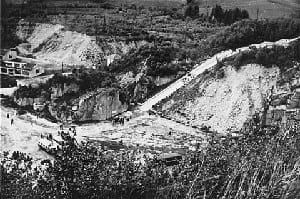
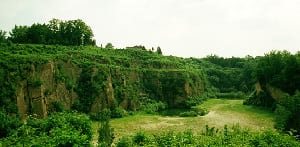
Isidore’s end was similarly tragic to that of Marcus Bloom, another courageous British Jewish SOE officer. From the fortress camp of Ravitsch on the Polish–Silesian border near Breslau, Isidore was taken to Gusen, near Linz in Austria, one of many satellite camps of Mauthausen, probably in August 1944, and then to Mauthausen itself at the beginning of September. A French captain, Rousset (already an inmate at Ravitsch) reported seeing forty-seven Allied agents arrive together in April 1944, among them Bloom and Newman. He said they were wearing blue prison uniforms with a white triangle marked ‘I’ on the back, and were kept together in the same wing. In August they were marched west to Gusen as the Russians advanced. The agents remained a tight-knit group and were much admired by the other prisoners for their dignified and disciplined behaviour. Following the failed attempt on Hitler’s life on the 30th July 1944, Keitel issued orders to Nazi camp commandants on the 18th August to deal severely with ‘terrorists and saboteurs’. So on the 2nd September the agents were taken from Gusen to the dark, granite fortress of the Mauthausen death and labour camp. Section 16 of the camp record for that date states, ‘arrivals … 47 allied soldiers; 39 Dutch, 7 Britons; 1 USA’. Isidore was listed as prisoner number 96535 in documents found after the war. On the third afternoon, each agent was ordered to open his shirt and the numbers from 1 to 47 were painted on their chests.56 On the morning of the 6th September he and his comrades were formed up outside their cavernous cell under heavy guard and marched towards the notorious camp quarry and down the 180 steps into its bowels, where the other emaciated camp inmates stood in silent witness. An SS officer moved forward and screamed at the first man (a Dutchman) in English, ‘You will go over there and pick
up a big stone and put it on your shoulder. You then run up the stairs.’ As the Dutchman climbed, the officer shouted ‘Feuer!’ and the prisoner fell dead. This horrific charade was designed to comply with Keitel’s order that the men should be shot ‘while trying to escape’. Marcus Bloom and Isidore Newman were murdered in the same way at Mauthausen death camp on the 6th September 1944, together with the forty-five others, mostly Dutch agents, and have no known grave. The Jewish Chronicle announced Isidore’s death on the 13th July 1945.
See also SOE Profiles by Nigel Perrin, for a more detailed history of his operations as an SOE agent.
Isidore Newman was awarded a posthumous M.B.E. in 1946, and is commemorated at the Brookwood Memorial in Surrey, the SOE memorial at Mauthausen and the ‘F’ Section memorial at Valenay in France. and on the Roll of Honour of the Pryme Street Synagogue in Hull (erected by the Hull branch of AJEX in November 1994, fifty years after his death). He is also remembered on a Dutch war memorial with many Dutch SOE agents and Marcus Bloom. (The writer has not been able to determine its location, but it is possibly at Mauthausen camp itself).
Maurice Buckmaster’s more detailed appreciation of Isidore was published in the Hull Daily Mail in November 1946, and reproduced in the same paper on the 13th September 2004, near the sixtieth anniversary of Isidore’s death:
At great personal risk he continued for many months to transmit and receive Morse messages to and from Supreme Allied HQ … essential to the successful execution of our part of the war effort. This consisted of supplying liaison officers, arms and ammunition and explosives to French patriots who would thus be able to co-ordinate their efforts to liberate their country. Having successfully completed his first mission in the south east of France, he returned to London and volunteered to return again to another part of France. … After carrying out invaluable work in reconstituting a previously decimated resistance group in Normandy, he was arrested by the German forces and executed. Never did he betray any secret information despite
intense pressure on him to do so. His colleagues have spoken in glowing terms of his readiness to help at all times and of imperturbable sangfroid. I am happy to record this tribute to a very brave man of whom the French Resistance chiefs, as well as his British compatriots, are and always will be proud.
General Gubbins’s citation for Isidore’s MBE concludes: ‘For his courage and devotion to duty during his two clandestine missions in Occupied France, it is recommended that Captain Newman be appointed a Member of the Order of the British Empire (Military Division)’. This was gazetted on 31 January 1946 and announced in the Jewish Chronicle on the 2nd February. Isidore was also given a posthumous Mention in Despatches. The family received several letters from members of Isidore’s French Resistance colleagues, praising his work. An official War Office letter to the family said: ‘I have known your son since he joined this department in the summer of 1941 and have taken pride in his work and career. He was one of the keenest and ablest of men and has done an important job … [He] made a very important contribution towards the liberation of Europe, with the minimum loss of lives to our Allied Armies and the civilian population of France’
With thanks to the Jewish Historical Society for using extracts from an excellent story; Martin Sugarman; AJEX; SOE Files HS9/1096/2; Captain Isidore Newman SOE, Martin Sugarman, Jewish Historical Studies, 2007; SOE Personnel Files, HS9/1096/2; The British Newspaper Archive; The National Archives;
Also after the War, Isidore’s uncle Isaac endowed a prize for French at Durham Johnson school in his memory. This fell into disuse for some years, but was revived at a ceremony in the Gala Theatre, Durham, in September 2006, as an award for the leading Sixth Form linguist.
Isidore Newman is remembered at Durham on D47.025 and D47.167.
First Name: Isidore
Last Name: Newman
Service Number: 216306, 2350538
Which War: Second World War 1939-45
Died: 07/09/1944
Age: 28
Rank: Captain
Regiment: General List
Served in: Army
Decorations: Member of the Order of the British Empire, Mention in Despatches, Croix de Guerre, Medaille de la Resistance Francaise