Memorial

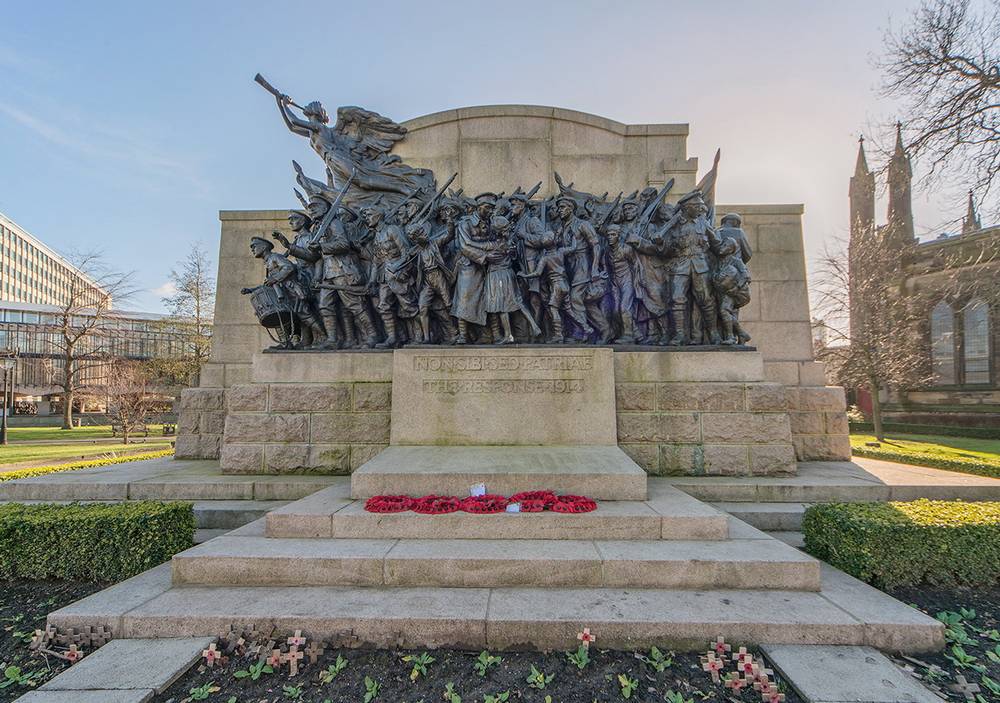
The Response 1914-18 St. Thomas’s Churchyard

Newcastle upon Tyne

Memorial Name: The Response 1914-18 St. Thomas's Churchyard (NUT018)

NEWMP Ref No.: NUT018

Parish: Newcastle upon Tyne

Original Location:

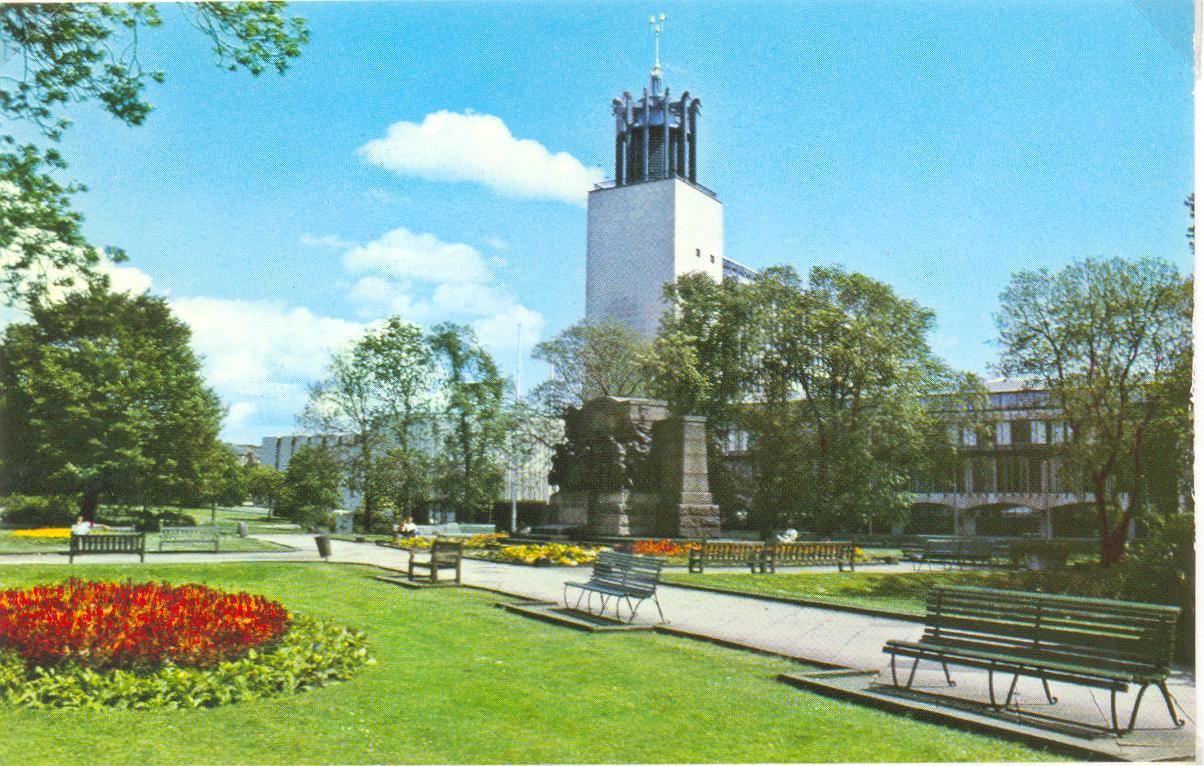
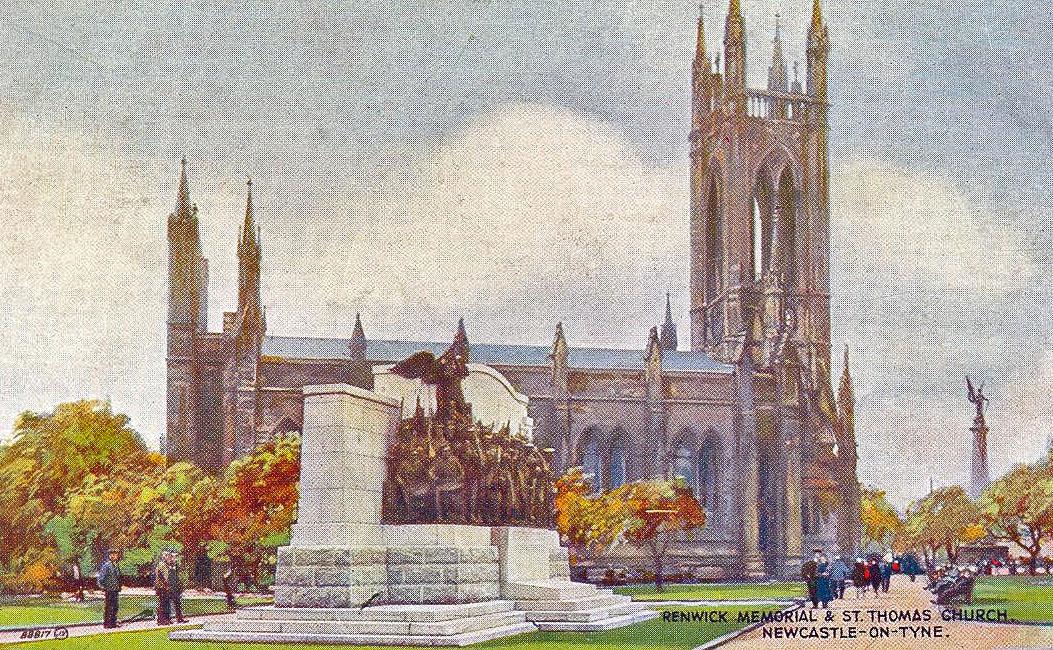
Church of St. Thomas the Martyr, Barras Bridge / St. Mary’s Place (facing Barras Bridge).

In the Churchyard/public gardens.

Which War:

1914-18

Dedication, Creation or Publication date:

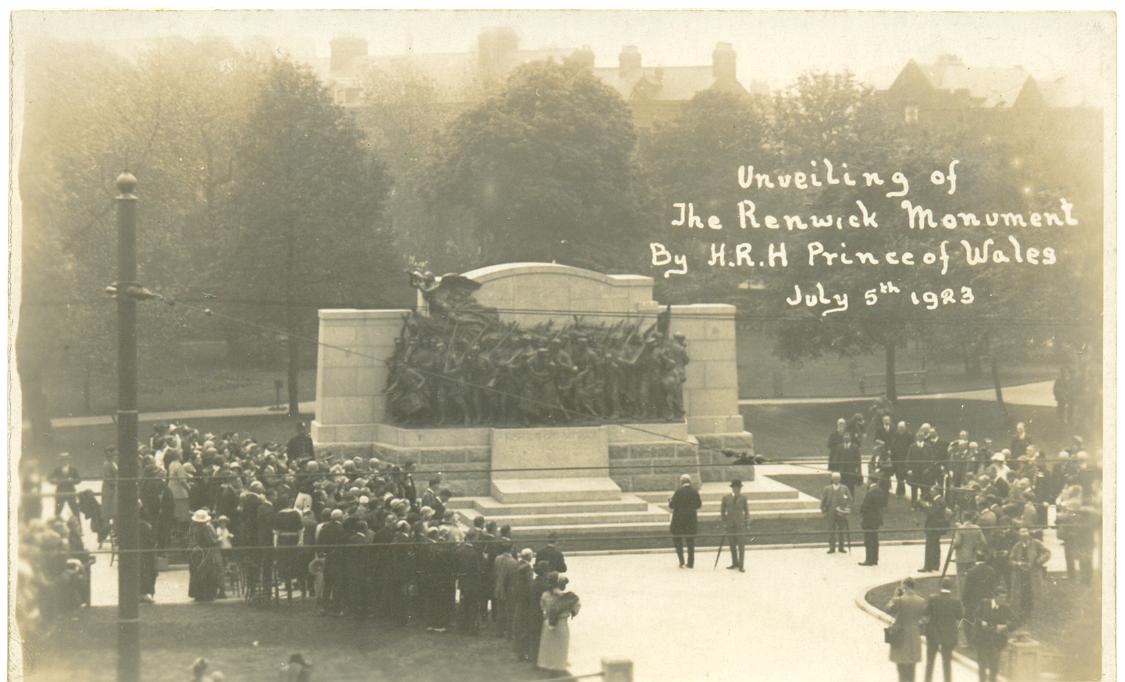
Unveiled 5th July 1923 by HRH Prince of Wales.
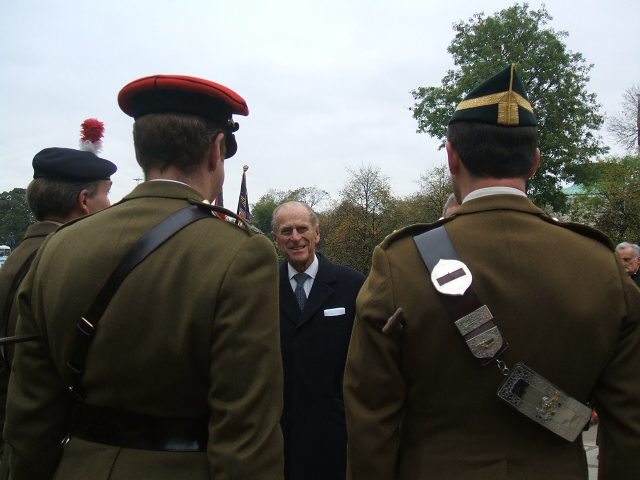
Rededicated after restoration on 25th October 2007
in the presence of the Duke of Edinburgh and several descendants of the Renwick family.

Materials Used:

Black Bronze figures on pink shap granite base and surround.

Who Commissioned:

Sir George and Lady Renwick

Cost:

Estimated at £2,700

How Money was Raised:

The Renwicks provided the memorial, and the Corporation provided the site.

Sculptor, Artist or Designer:

Thomas Ditton, founder.
Designed by Sir W. Goscombe John, R.A. and A.B. Burton.

Ownership and Maintenance: Newcastle City Council

Inscription:

Front :
Non Sibi Sed Patriae
The Response 1914

Reverse
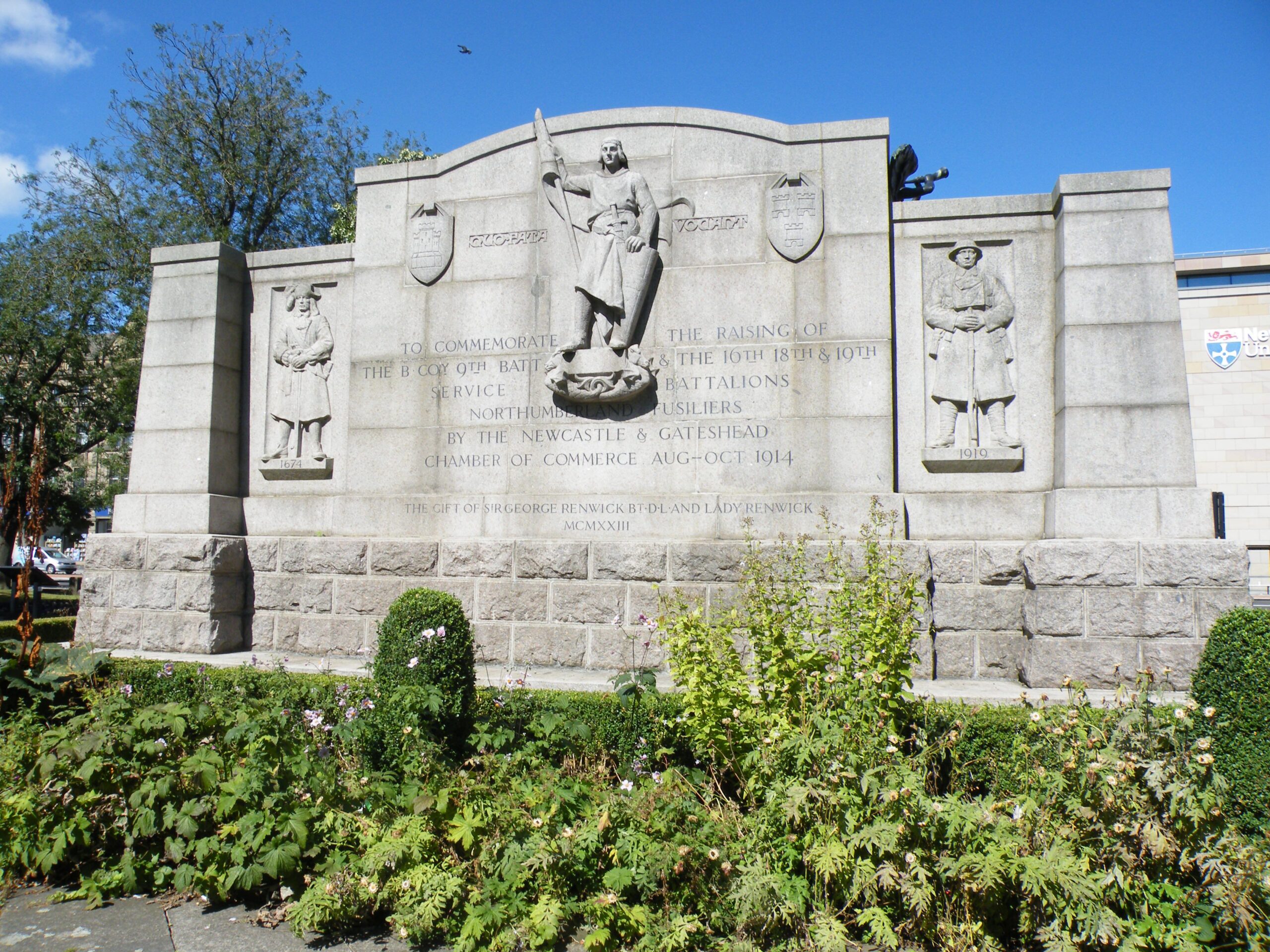
Quo Fata Vocant

To commemorate the raising of
the B. Coy 9th Batt. & the 16th, 18th and 19th
Service Battalions
Northumberland Fusiliers,
by the Newcastle & Gateshead
Chamber of Commerce Aug- Oct. 1914

The gift of Sir George Renwick Bt. D.L. and Lady Renwick
MCMIXXIII

Memorial Description:

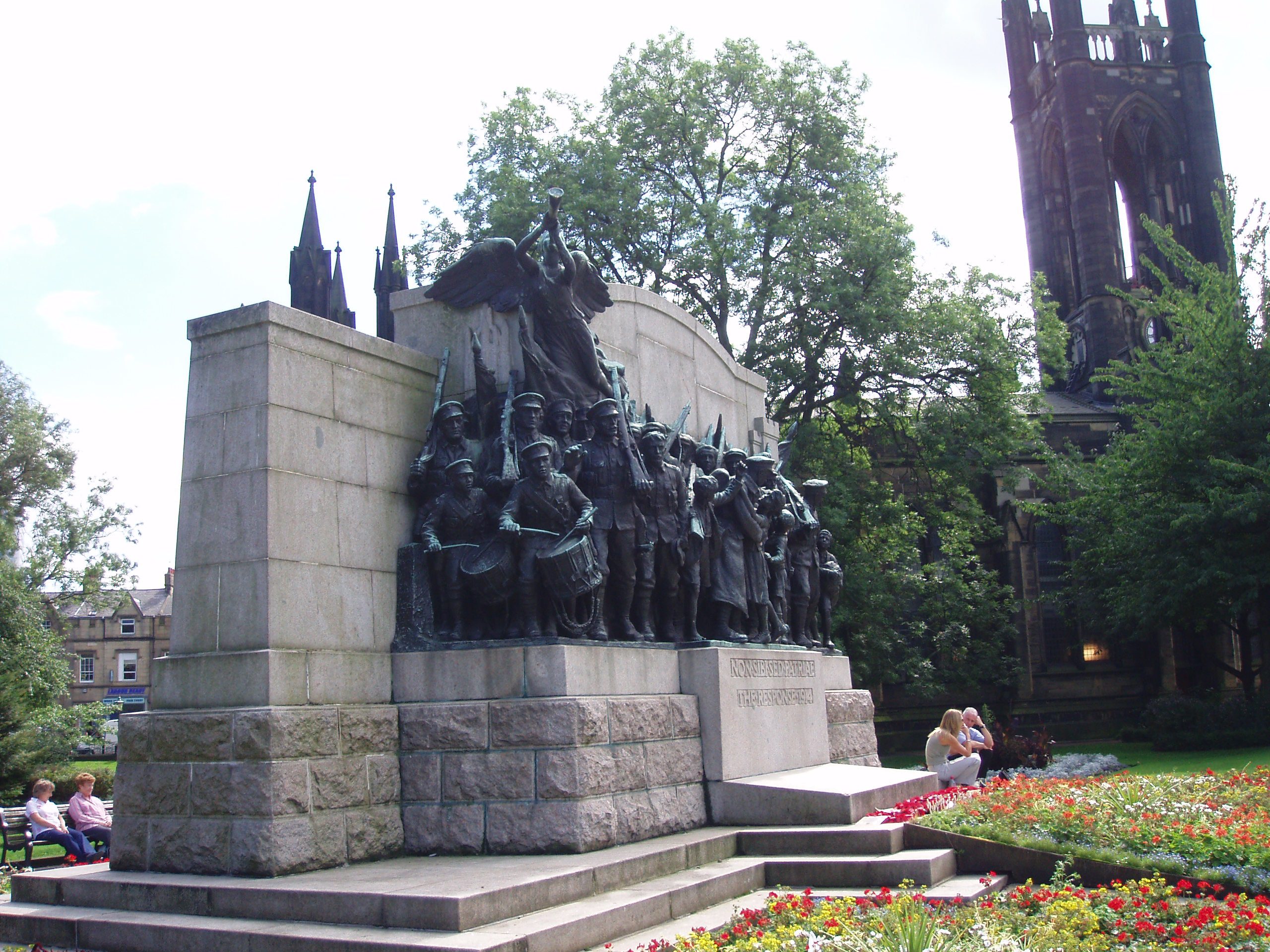
Memorial 42 feet x 23 feet wide x 18 feet high (12.8m x 7.01m x 5.40m).

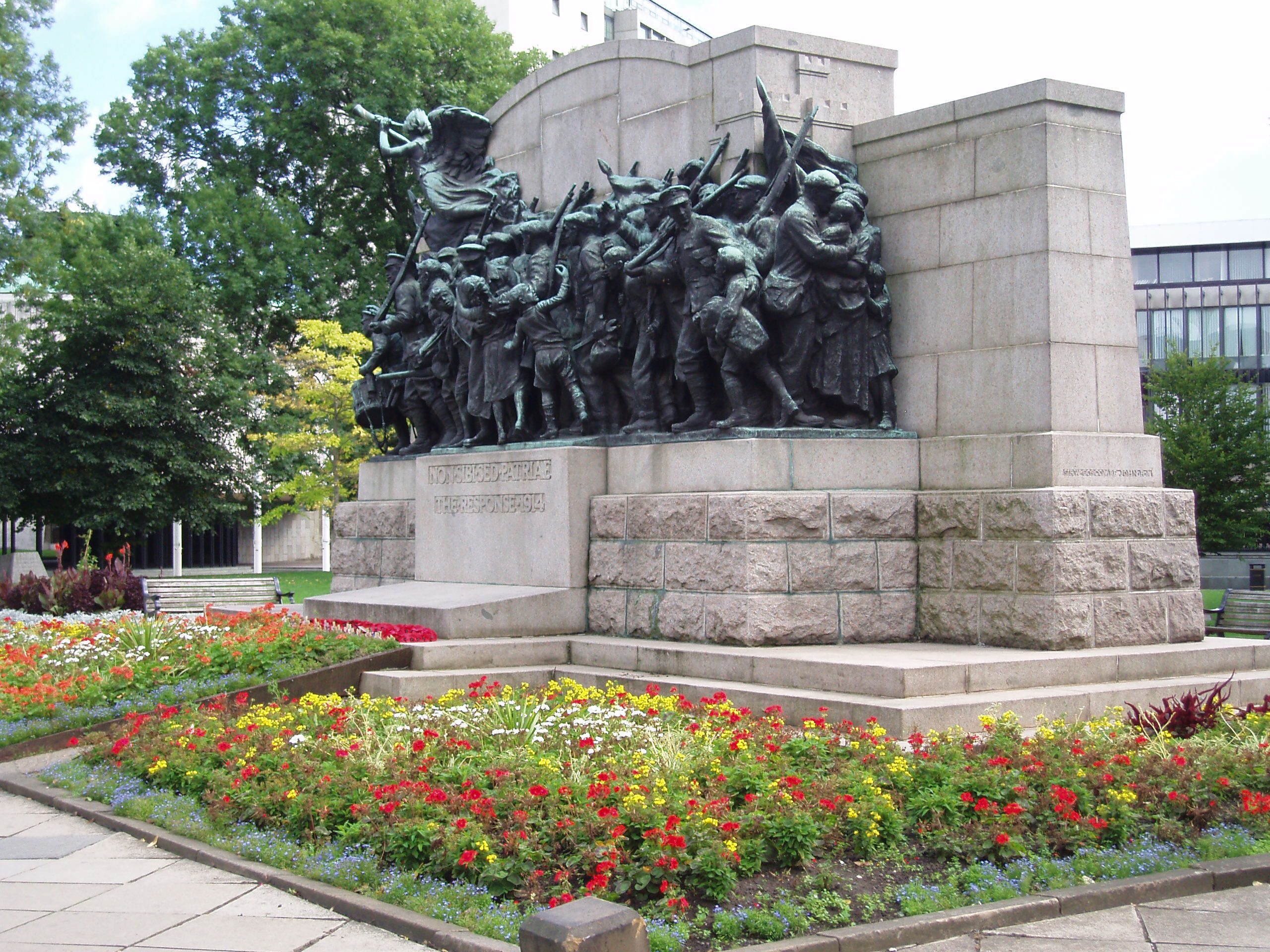
The Bronze is on a granite background with flanking side and round-hewn base, below which are several spreading steps.

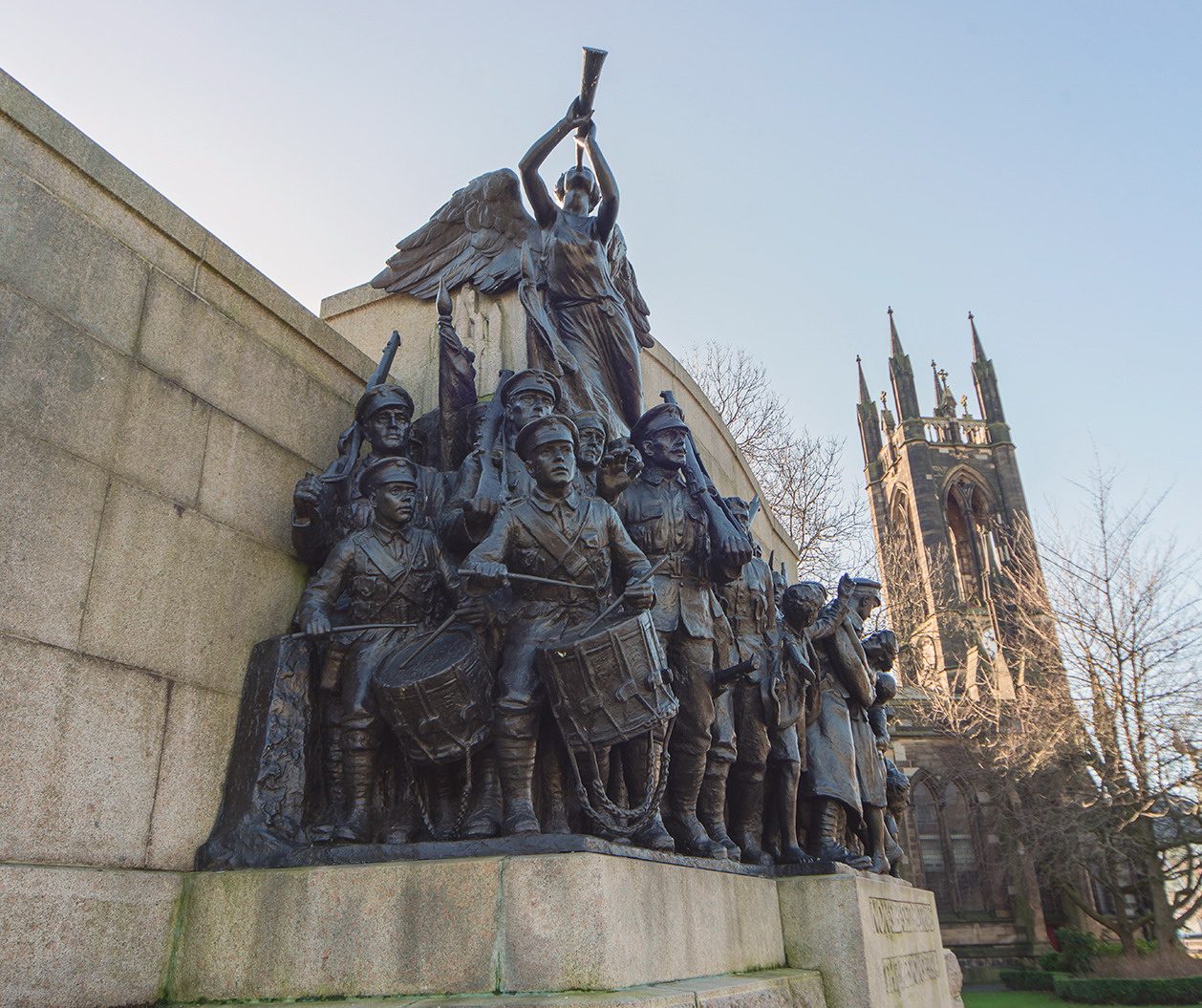
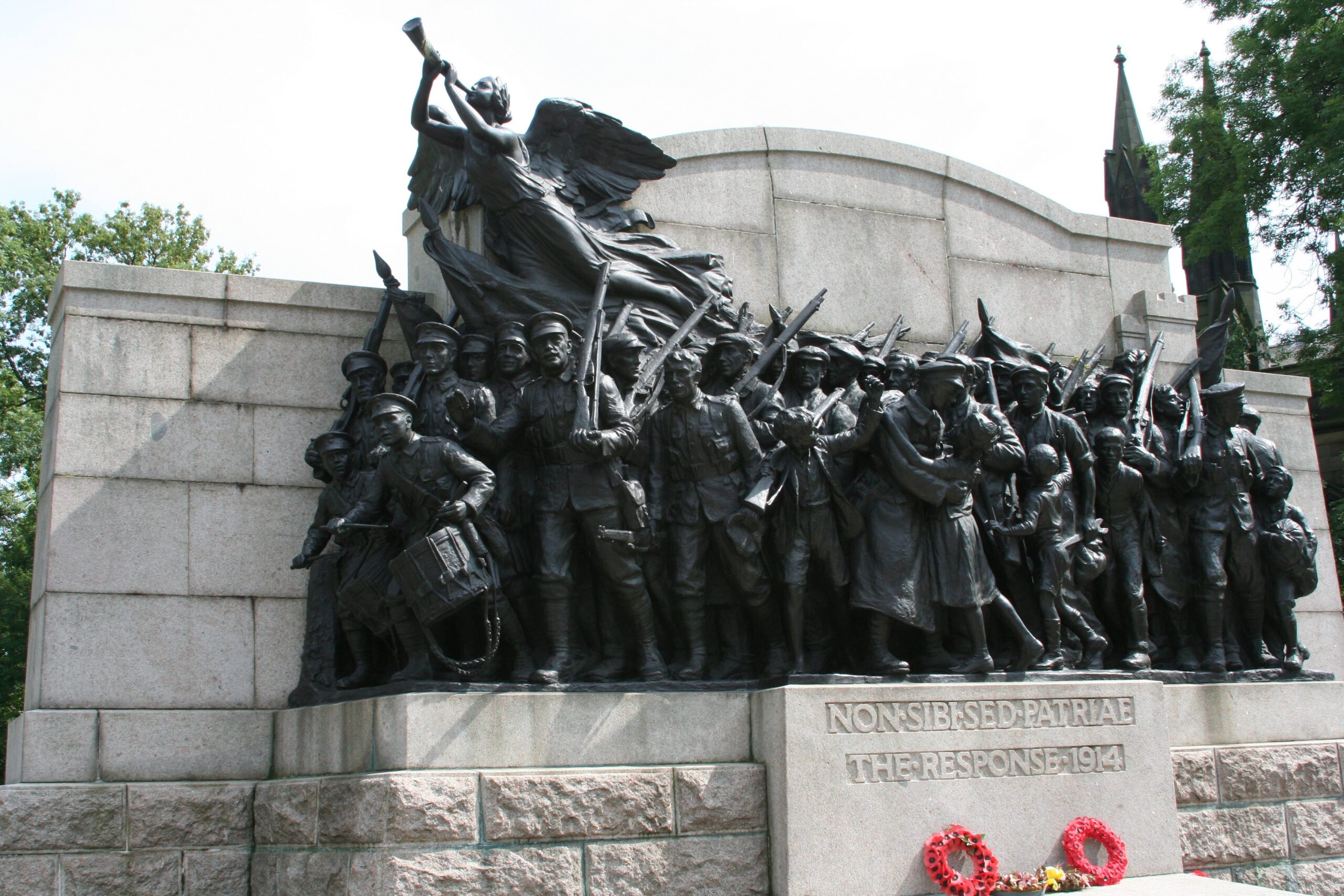
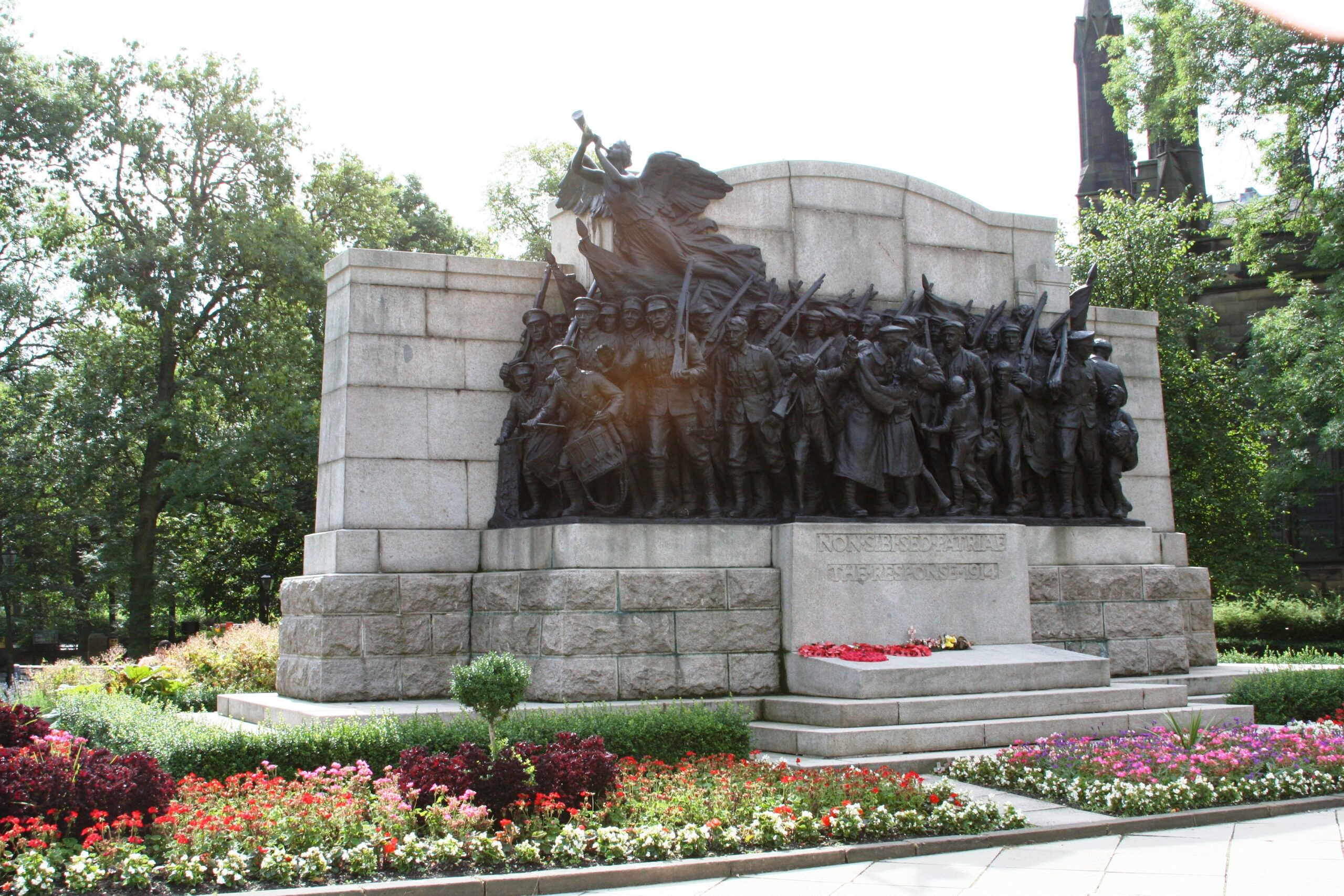
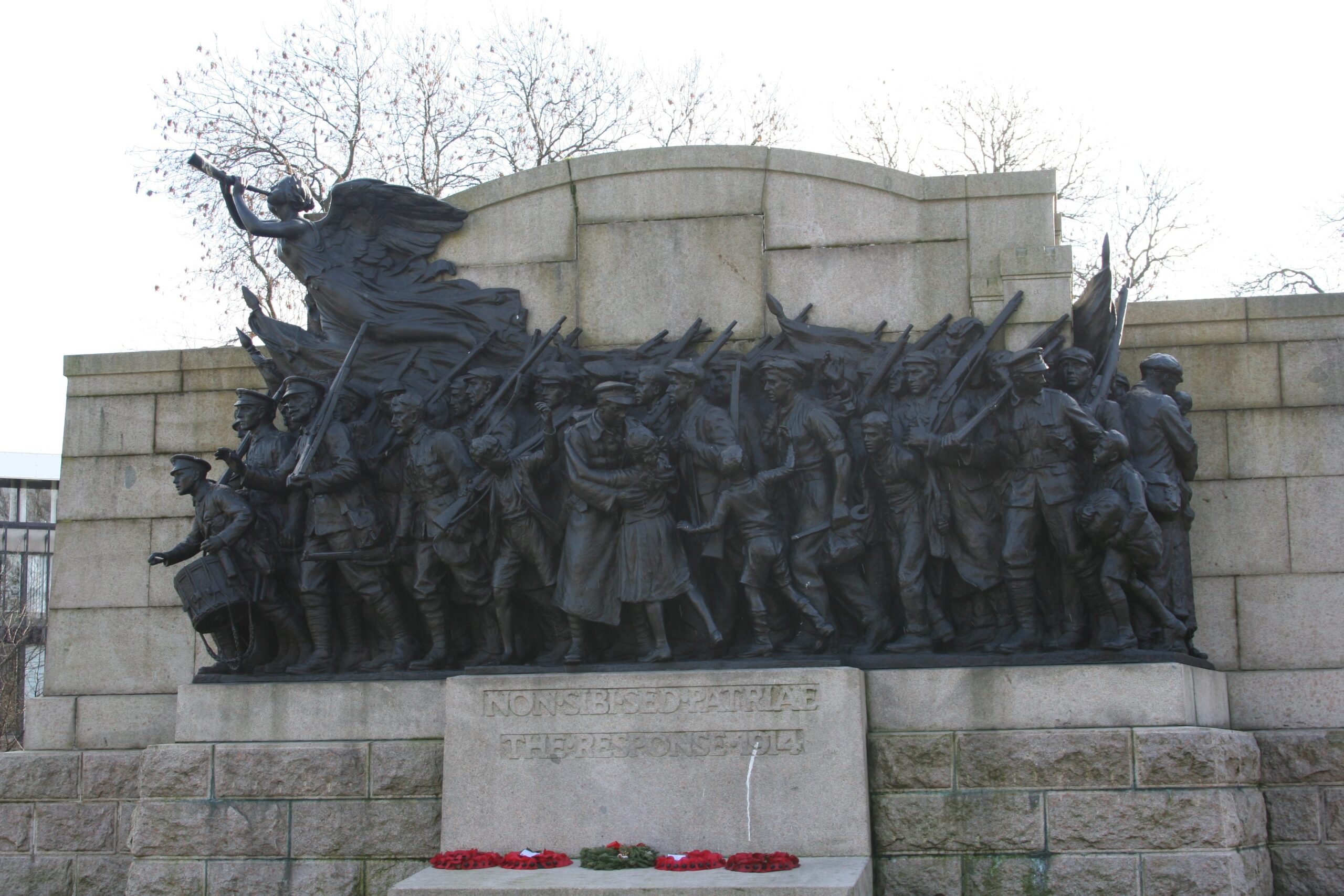
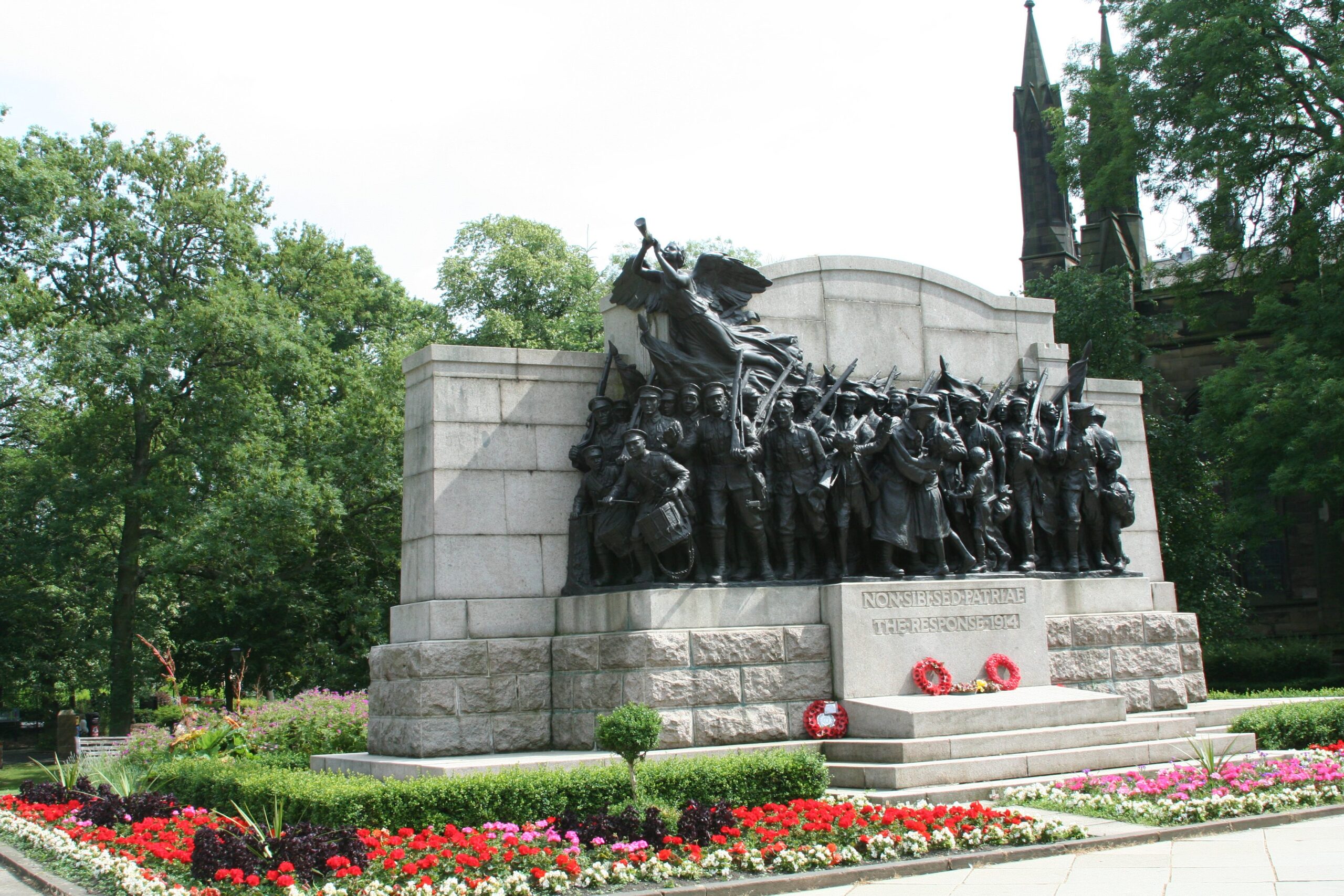
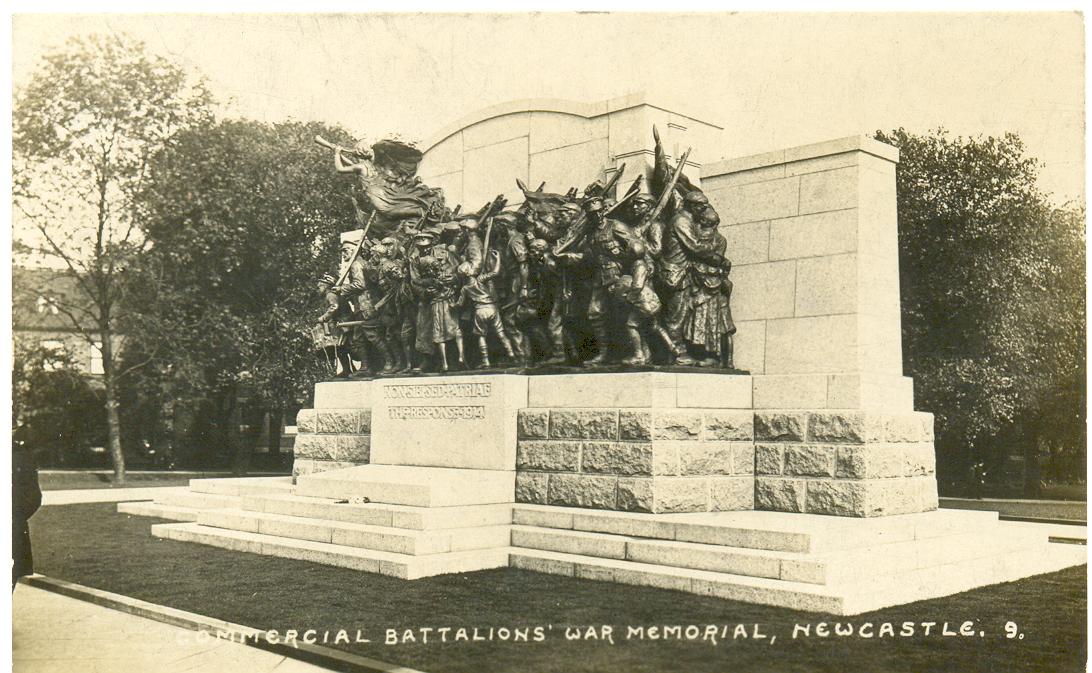
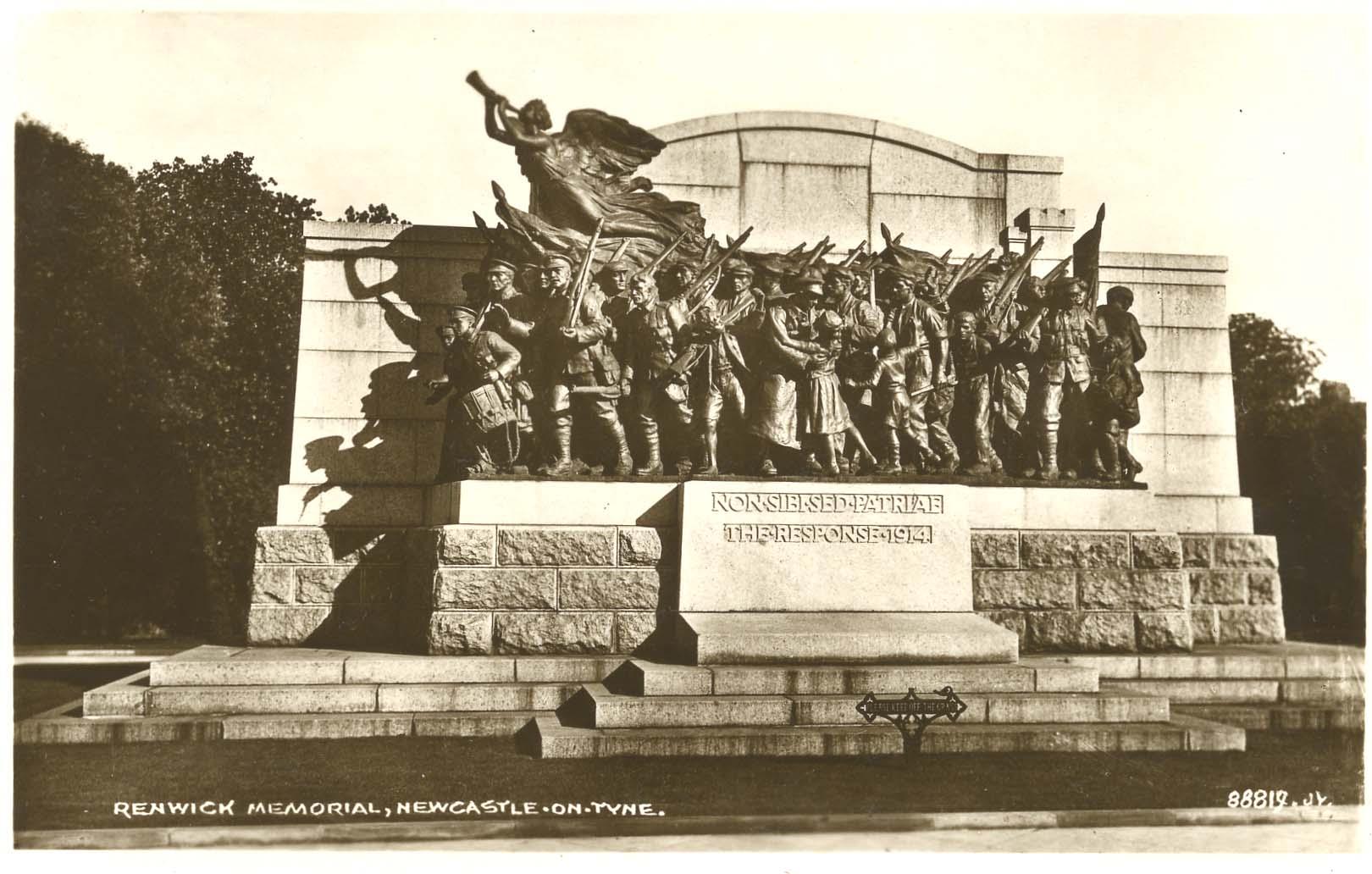
The sculptured portion of the monument consists of a large bronze group 23 feet x 7 feet (7m x 2.13m) rising to 12 feet (3.66m) on the top of the figure ‘Renown’.

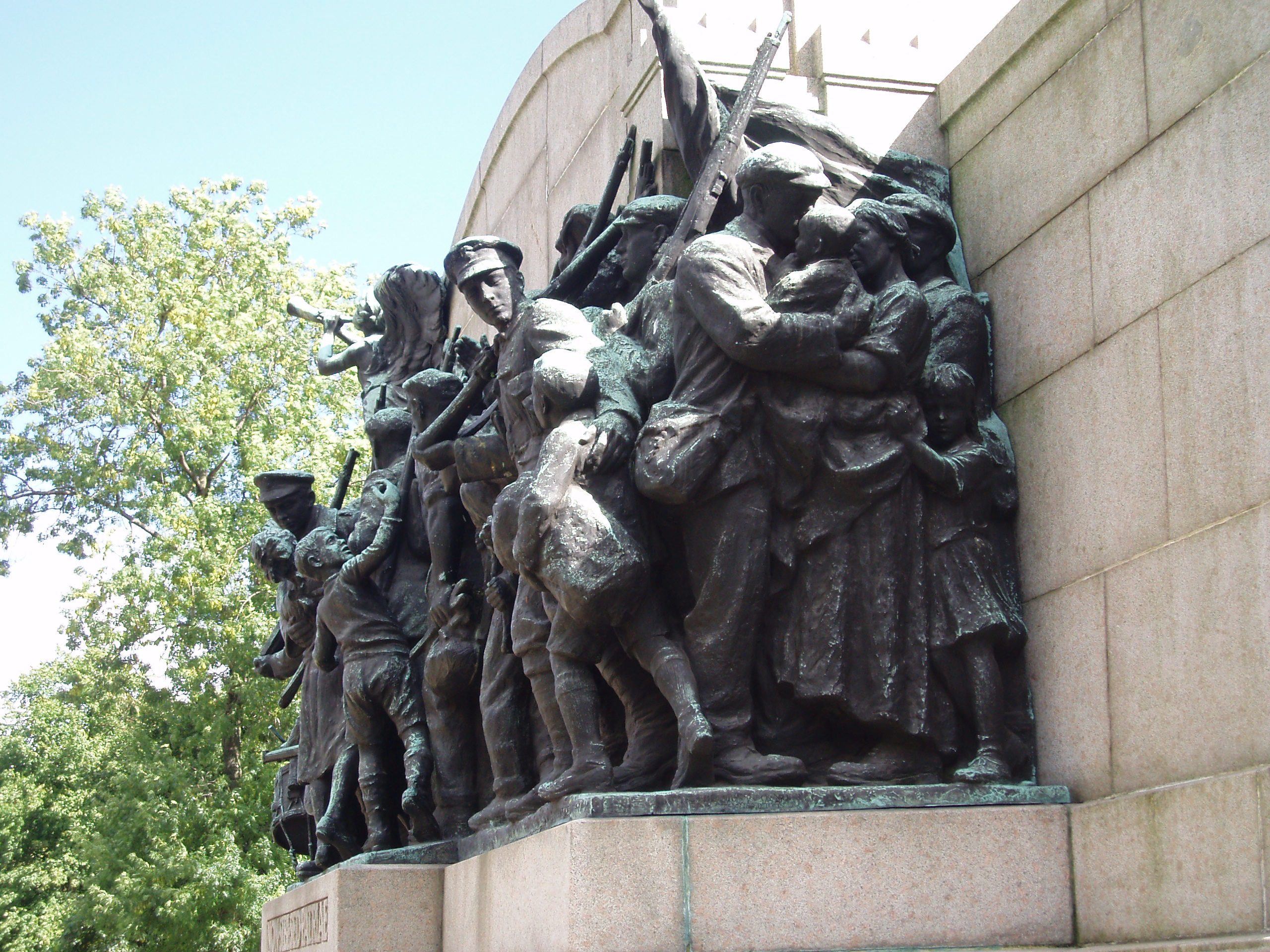
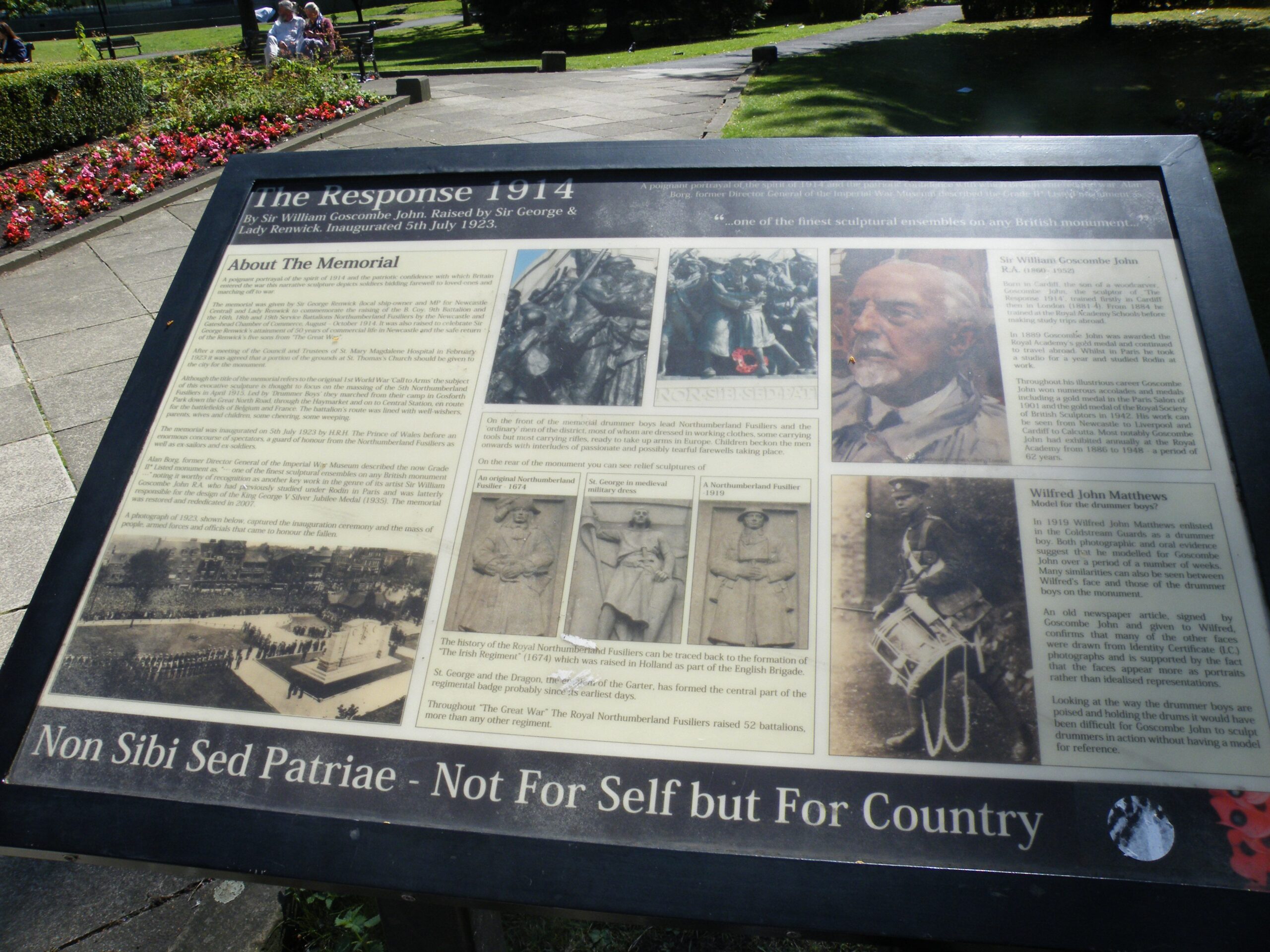
The bronze panel depicts the ‘rush to the Colours’ in the early months of the war.

One man is taking leave of his wife and baby, a boy is carrying his father’s rifle, another is carrying his father’s kit bag. They are being led by an angel blowing a horn (known as the figure of Renown).

Beneath them is the motto “Non Sibi Sed Patriae” (“Not for himself but for his country”), “The Response 1914” formed by carving out the background and leaving the letters standing proud.

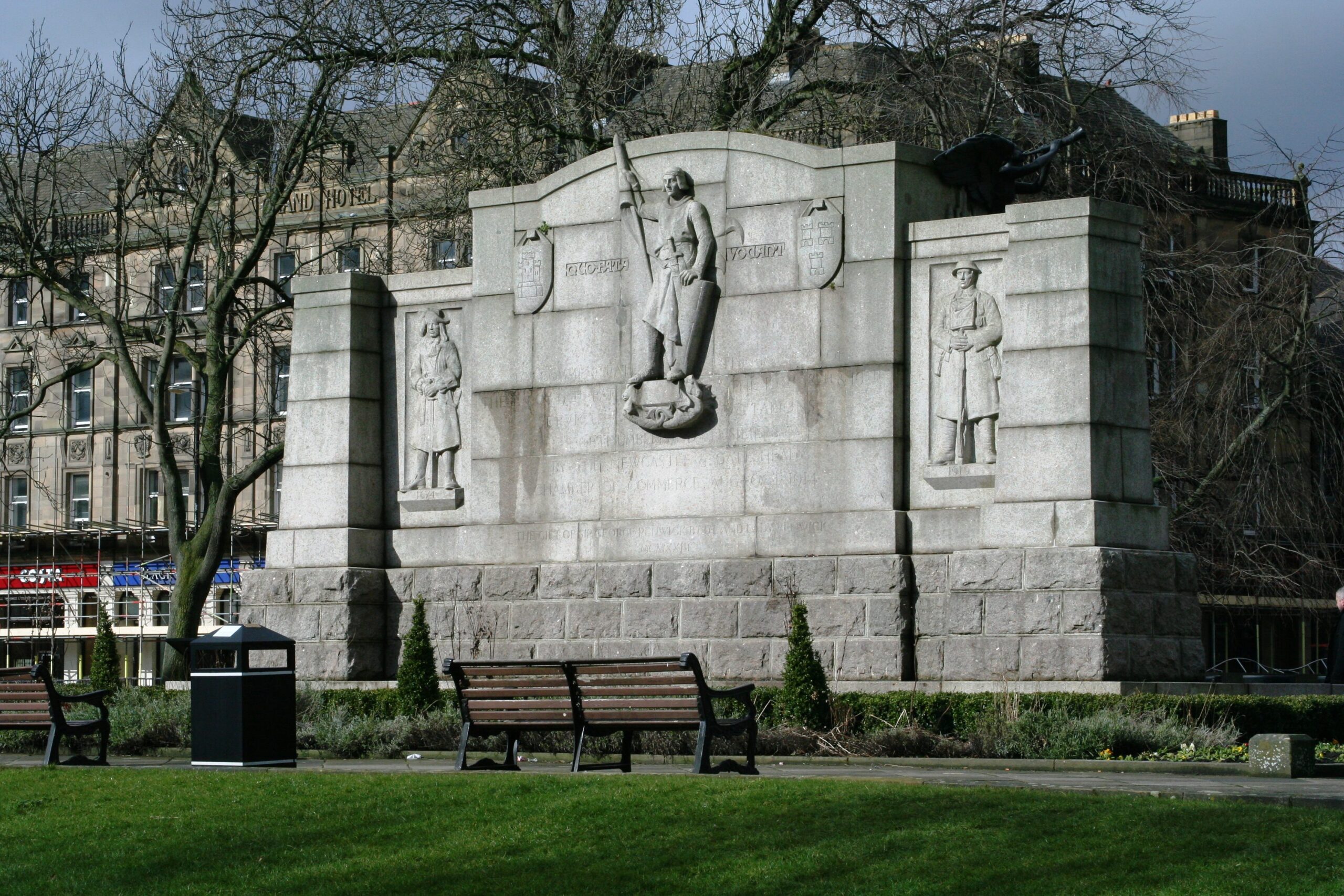
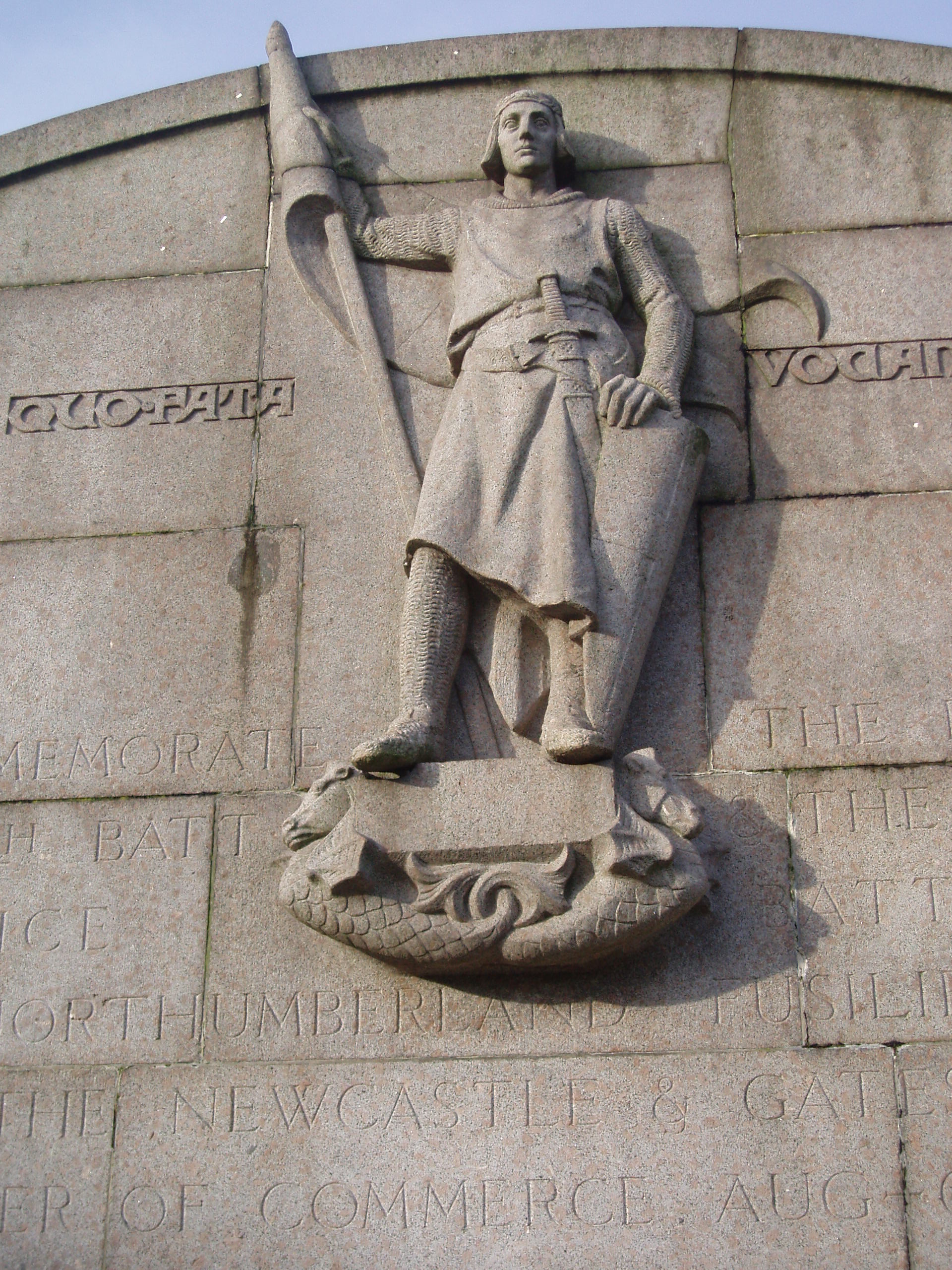
On the reverse is St. George with a shield on each side, all in half relief. The shields represent the coat of arms of Newcastle and Gateshead.

Between St.George and the shields is the regimental motto “Quo Fata Vocant” (“Wherever the fates call”) in raised letters on a sunken background.
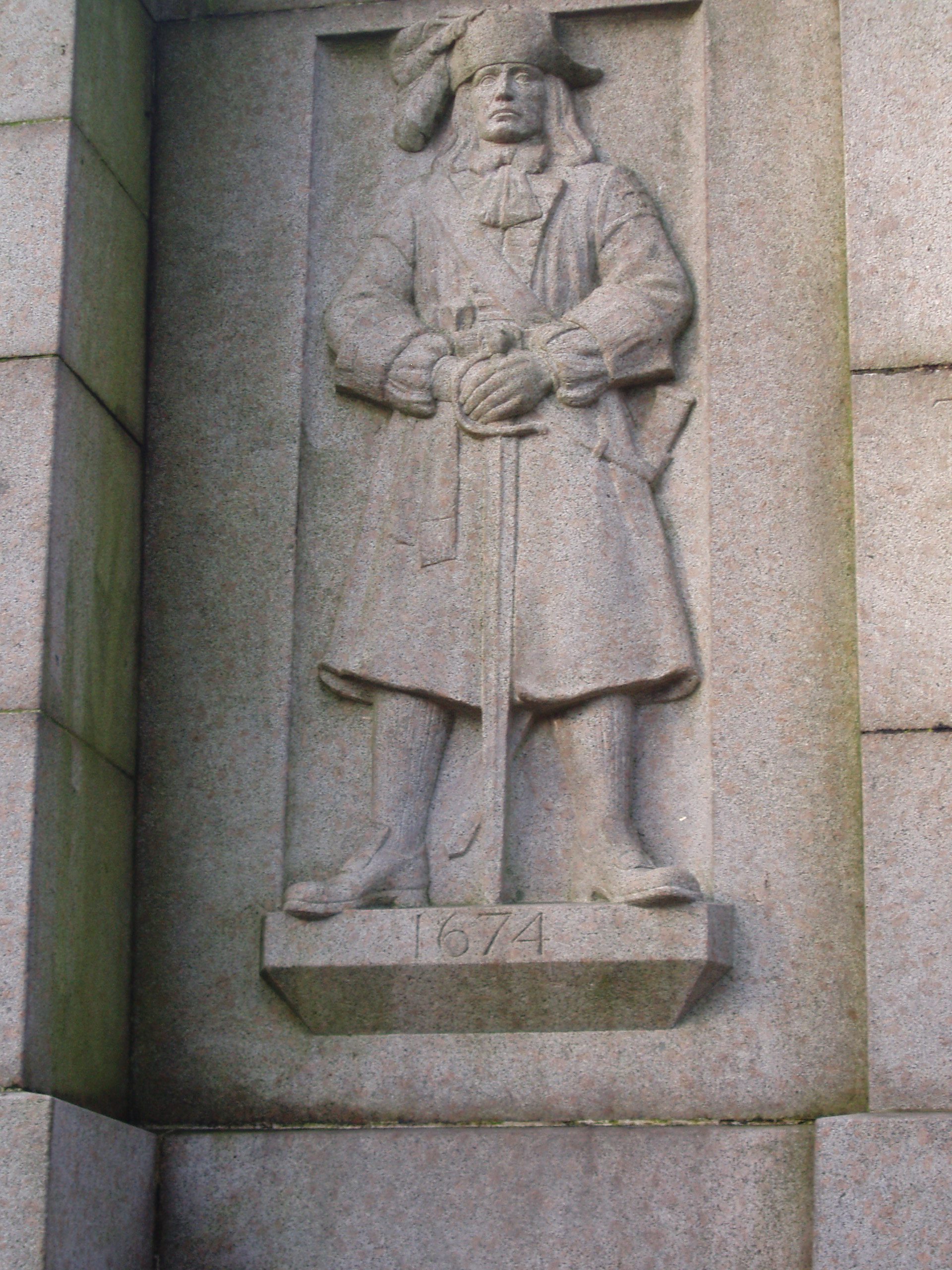
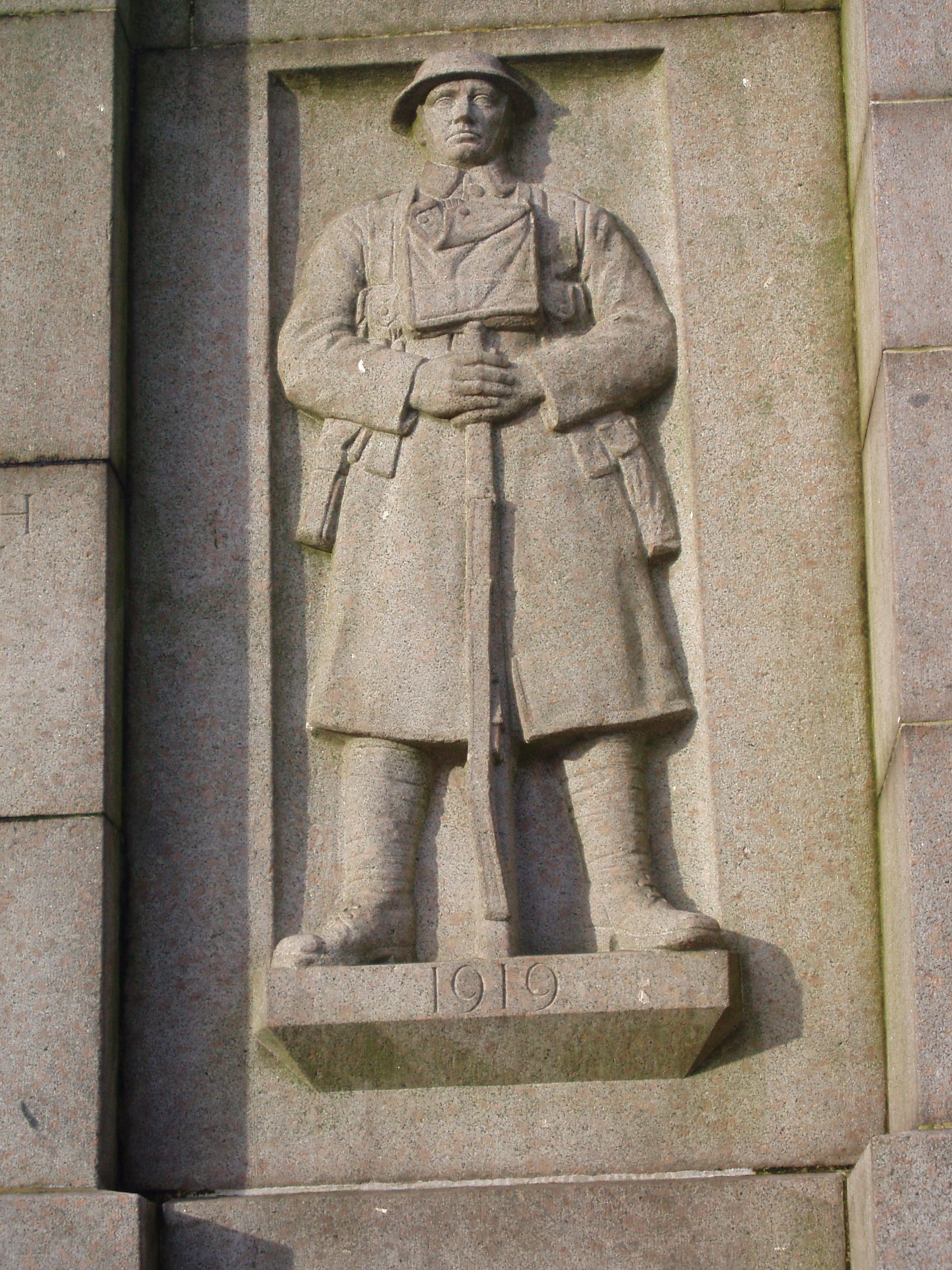
On each side, in a recess, is a soldier carved in half relief.

The one on the left is dressed in the uniform of 1674, the year the Northumberland Fusiliers Regiment was founded.

The one on the right is wearing the 1914-19 uniform.

The inscription is in Roman capitals on either side of St. George’s feet and below him.

Names:

None

Notes:

1. This monument was raised to commemorate three events :
a. The raising of ‘B’ Company of the 9th Battalion Northumberland Fusiliers by the Chamber of Commerce Military Committee;
b. The safe return of the five Renwick sons from the war;
c. Sir George Renwick’s attainment of 50 years’ commercial life on Newcastle Quayside.

2. The guns carried by the soldiers are recognisable. We were told that some have Lee Enfield Rifles, others have German Mausers because there were not enough Lee Enfields to go round, so guns captured in previous engagements were handed out. However, the two types of guns depicted on this memorial are Lee-Enfields: one is the short-magazine version, the other is the standard version.

3. The positioning of the memorial has caused comment. It shows the angel leading the men northwards away from the railway station. Rumour has it that it should have faced the other way but there was disagreement.

4. An appeal was lunched on February 28th 2000 to raised funds for the memorial to have its first thorough cleaning since it was erected. After that, it would be maintained regularly by Newcastle City Council.

5. The bronze was brought from London on the back of a lorry, the journey taking 36 hours. The bronze casting was executed by Mr A.R. Burton, Thames Ditton, Surrey.

6. According to Alice Tidmas, two drummer boys were based on Joe Hardcastle and Joe Willis, both of whom survived the war. Mrs. Tidmas was Joe Hardcastle’s niece, her mother was Joe Hardcastle’s sister.

7. “The monument will face the west, and be parallel with the roadway, from which there will be a splendid view when the present iron railing and shrubbery have been cleared away. Other improvements to be carried out whilst the work in connection with the monument is in hand include the pulling down of the post office in Barras Bridge and the widening of the road.”

8. One of the sites favoured by Sir John was the pinfold which constituted part of the grounds of the Royal Grammar school, just within the gates leading from the North Road. Other sites were to be inspected, including Brandling Park, and the other between the Post Office and the turning into Lovaine Place.

9. The man depicted as leading the Response is said to be Sir George Renwick himself. The figure of ‘Renown’ actually  symbolizes the fame of the regiment.

10. The names listed in Shakespear’s History of the 18th Northumberland Fusiliers are relevant to this memorial. See NUT075.

11. The bronze depicts various types of Tyneside workers in their characteristic garb, as worn during the ‘rush to the colours’ in the early months of the war.

12. The Prince of Wales, who unveiled the Memorial, also visited St James’s Park to watch 42,000 children stage a display of red, white and blue flags in a variety of combinations.

13. The shap granite masonry is the work from  William Kirpatrick Ltd Trafford Park, Manchester.

14. The memorial was renovated in 2007.

15. An artwork by Andy Farr in 2014 features the memorial but with two modern children, Fergus and Erin Sleight replacing two of the central figures to bridge the 100 year divide.

16. In June 2015 a memorial plaque was unveiled at Authuile, near Thiepval, where many of the Commercial battalions fought.


External Links:

Historic England Listing

Sources:

Photos & 2007 re-dedication: J. Brown; Tony Harding; Lonely Tower;
old postcards: F.A. Fletcher; Tony Harding; John S. Perry Collection

Illustrated Chronicle
20/06/1922 reports visit;
23/06/1922 carries photos of plaster cast of the memorial; 24/06/1922 reports choosing of sites;
29/11/1922 reports costs of clearance of site;
04/01/1923 reports visit of Sir Goscombe John to survey the site

Newcastle Daily Chronicle
10/01/1919 contains a transcript from the War Office to the Lord Mayor of Newcastle of the services performed by the 16th N.F. following its disbandment;
24/01/1919 includes an appeal from the Chamber of Commerce of the names of all from the 16th NF who fell;
10/05/1919 contains notice of the award of the 1914 Star; 07/06/1919 reports closure of temporary club room at the Health Food Café in Northumberland Street;
16/02/1922 reports consideration by Grammar School for the memorial to be sited there;
20/06/1922 reports proposed visit by Sir Goscombe John to inspect sites & includes close up photos of details;
24/06/1922 states that the preference for a site was the pinfold at the Grammar School

Newcastle Weekly Chronicle
18/02/1922 reports on sites for memorial;
24/06/1922 reports Sir Goscombe John’s visit;
02/06/1923 describes proposed design;
07/07/1923 reports unveiling.

Northern Echo
08/04/1920 reports delay in creating the memorial because of the scarcity of bronze;
18/10/1922 reports that Sir George is erecting a memorial;
03/01/1923 reports visit of Sir Goscombe John to site;
30/06/1923 shows picture of memorial in course of erection;
06/07/1923 reports unveiling

Shields Daily News
10/06/1922 reports that Sir William Goscombe John was to visit to choose a suitable site;
07/09/1922 report about Sir George’s intentions to provide a monument, his insistence that they should accept the fact gratefully and provide a suitable site free.

South Shields Gazette
22/06/1923 reports visit by Sir Goscombe John, his approval of the site now that the railings had been removed, and that the Post Office building had to be demolished. He realised that the building might have historic associations, but its removal was essential to complete the beauty and dignity of that important approach to the city.

The Journal
27/02/2007 reports launch of appeal for funds for restoration;
15/05/2007 reports that £14,000 had been raised;
22/09/2007 reports proposed rededication on 25th October by HRH Duke of Edinburgh;
26/10/2007 reports rededication;
10/11/2014 reports upgrading to English Heritage Listing Grade I.

St. George’s Gazette
Vol. XLI (1923) 31st July, page 112, carries mention of the presentation of the memorial.

Tyne and Wear Archives
Visit of King George, 1917. Ref 604/90

Newcastle Council Reports
1921-22 page 974 6th Sept. 1922 reports acceptance of Sir George & Lady Renwick’s gift of a war memorial.

Newcastle Council Reports
5th July 1023, page 15 to 17. A full description of the monument and the King’s visit.


Newcastle Central Library
photo c1970

Catalogue of Sculpture, Monuments and Memorials in Public Places in Newcastle upon Tyne (Newcastle City Council 1985)

At the Going Down of the Sun, British First World War Memorials Derek Boorman, published by the author, 1988, ISBN 0 9513654 01

A Guide to the Public Monuments and Sculpture of Tyne and Wear (Ayris, Jubb, Palmer, Usherwood, Specialist Conservation Team Publication, 1996).

Lost Shipyards of the Tyne Ron French and Ken Smith, 2004, Newcastle City Libraries ISBN 1-85795-122-0) page 72 carries a brief mention of Sir George Renwick’s connection with the Tyne.

Tyne & Wear Archives Specialist Conservation Team
report 2007-8

The Glorious Dead. Figurative Sculpture of British First World War Memorials. Geoff Archer, Frontier Publishing; 2009. ISBN 978 1 872914 38 1

Newcastle Battalion of World War One:16th (Service) Battalion of the Northumberland Fusiliers. Ian Johnson; 2014; published by the author 2014.

Best of British magazine
The November 2023 carries an article called “The Ultimate Response” by Roger Harvey.

Research Acknowledgements:

F. McDonald (Newcastle City Council, 1985);
Ralph W. Gould;
Philip Thirkell;
F.A. Fletcher;
David Heslop (Tyne-Wear County Archaeologist);
James Pasby;
John Swan Perry;
Tony Harding;
Ken Blythe;
Alice Tidmas;
Dorothy Hall;
Patrick Easen;
Michael Mulhern;
Tony Henderson;
Ian Johnson

Research In Progress:

If you are researching this memorial please contact 2014@newmp.org.uk

If you know more about this memorial, please send the details to NEWMP.

War Memorial Indexes

County Durham Index

Newcastle Index

Northumberland Index

Over The Tees Index

This is a work in progress. Interested in helping, contact 2014@newmp.org.uk 

Exploring the North East’s History
Your Search Is Underway!

Please bear with us while we retrieve the information you're searching for. With access to over 1 million records, your search results will include Memorials and Names of individuals within the Counties, Districts, and Parishes of the North East of England. We've also provided filter options to help you narrow down your search. This may take a few moments, and we appreciate your patience!

NEWMP is a non profit organisation and we rely on donations to help us to keep the site running and updated. If you would like to donate you can do so by clicking here. Your help is greatly appreciated.