Notes: 1. Barrington was a small mining village made up of a few rows of terraced houses, located between Bedlington and Choppington, in Northumberland. The houses were built for miners and their families who worked at Barrington Colliery, which opened in 1821. By 1914 Barringron Colliery employed 846 people (741 working below ground and 105 on the surface). The colliery closed c.1948. The colliery and most of the houses, which had outside toilets, were later demolished. Whilst the village no longer exists, the name still present in Barrington Road, which runs from Bedlington and Choppington, and in Barrington Industrial Estate.
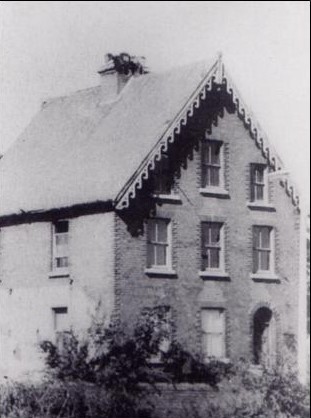
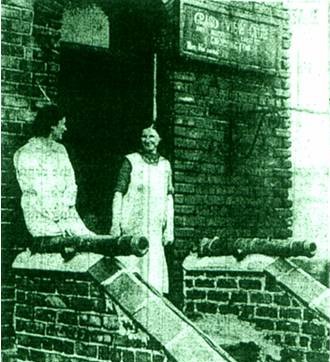
2. In 1869, John Burns, the brick and tile manufacturer, built a large house as residence for himself at Choppington Station. It was built to the German plan, and became known as the “Jarmin Hoose”. It was a beautiful house, and had a set of cannons on each side of the main doorway. During 1900 the works finally closed. About the same time, a group of miners from Barrington and Choppington got together under the leadership of William Temple. Temple was a scholar and a miner, with the others they decided to purchase the “Jarmin Hoos, and convert it into a Workingmen’s Social Club, the purchase was completed during November 1901. The building was then renamed The Barrington and Choppington Workmen’s Club and Institute Ltd, with William Temple being the secretary. It was operating successfully for many years. However between the wars the membership began to decline. Eventually it was discontinued and the premises were sold on to a local publican. Later the house was converted into flats, but sadly this once beautiful building was demolished during September 1958. Source: johndawsonjune1955.