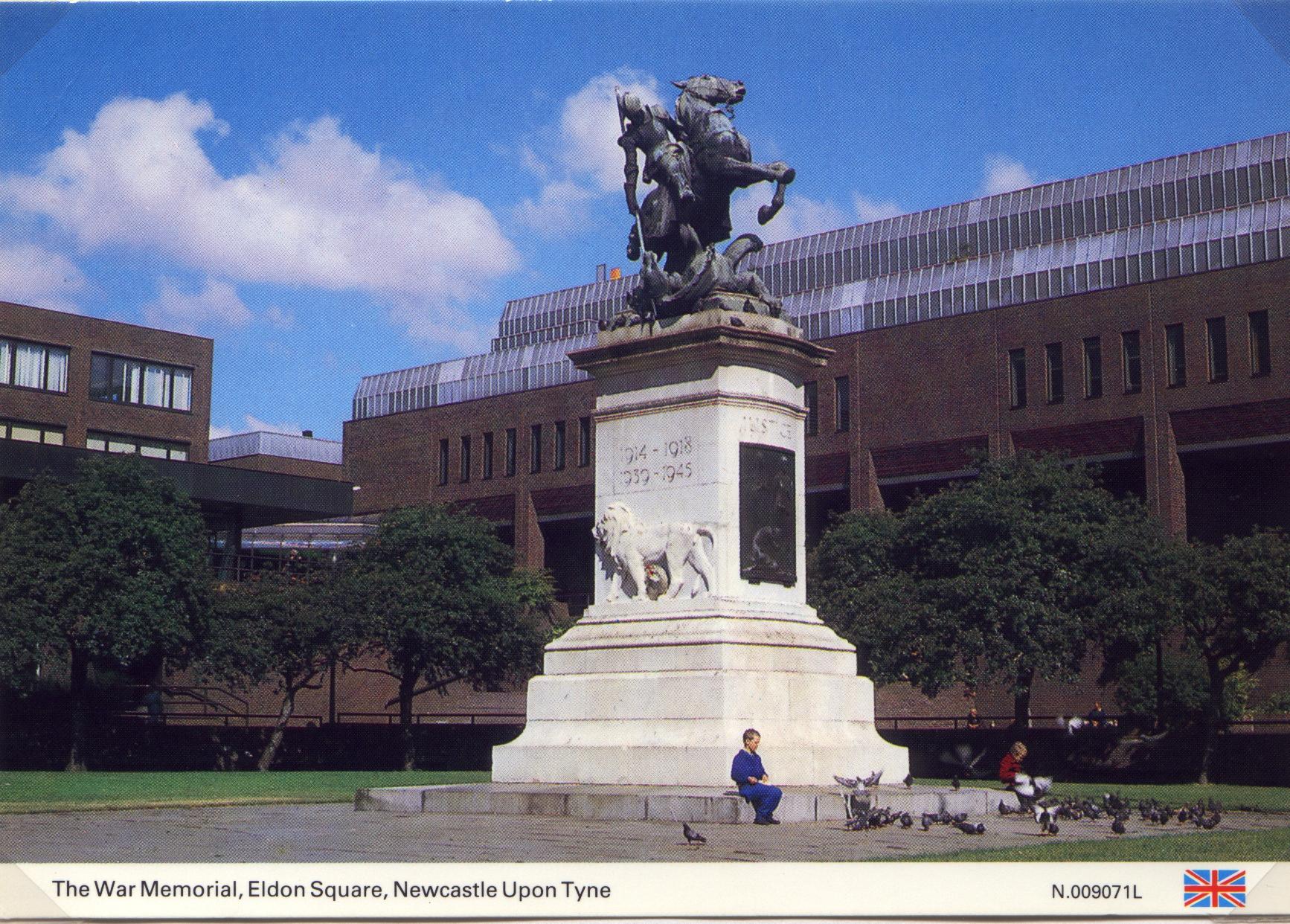
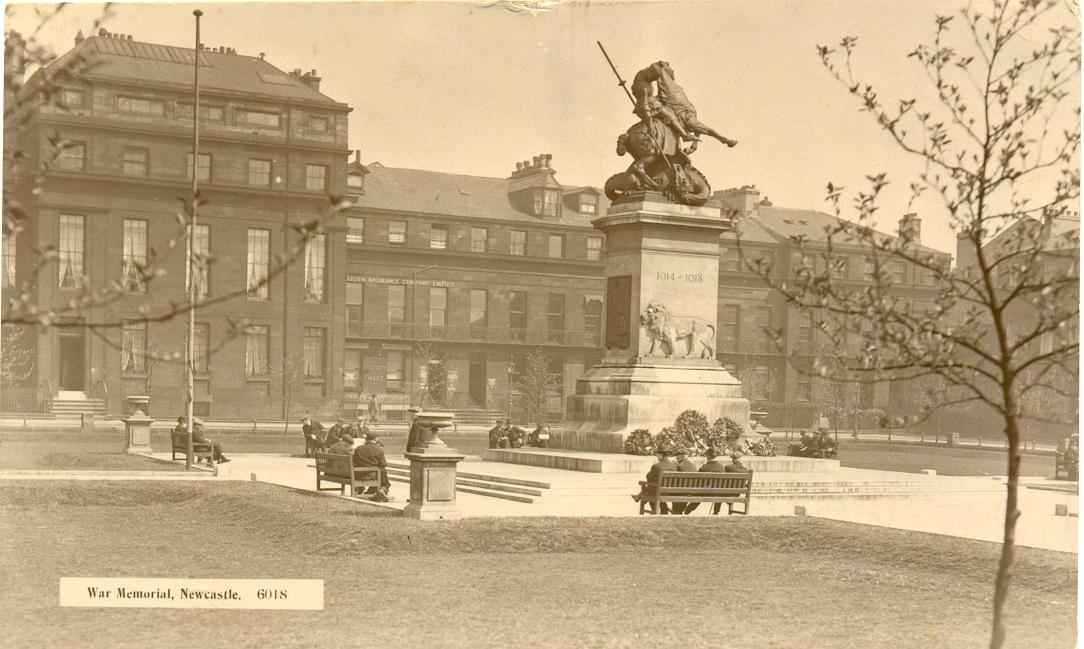
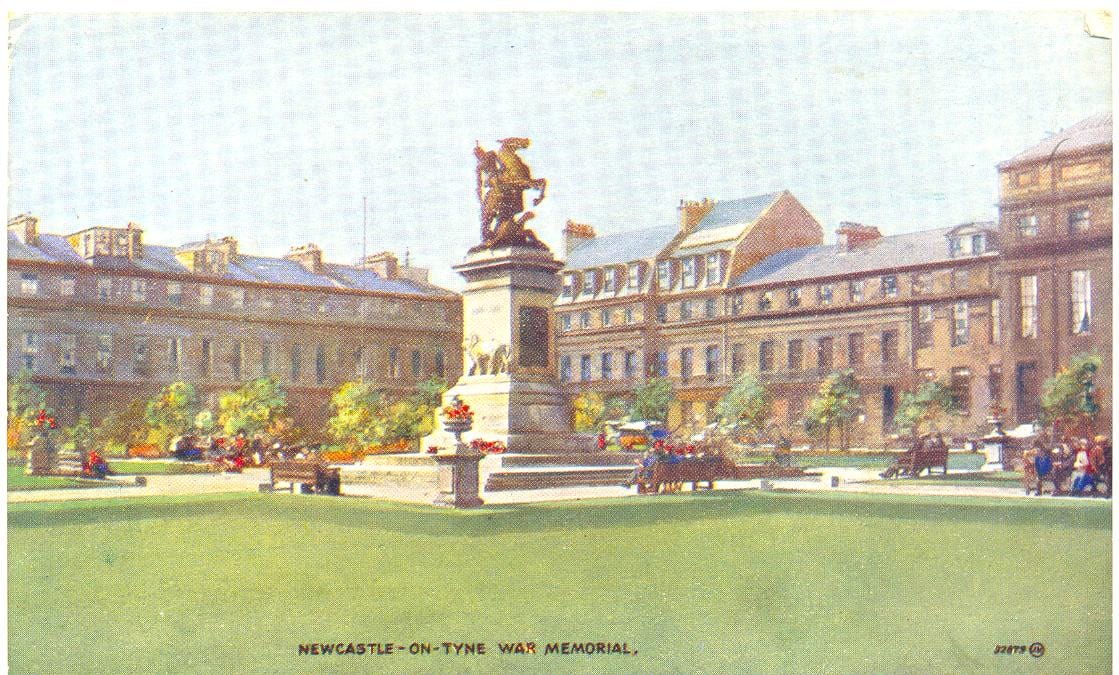
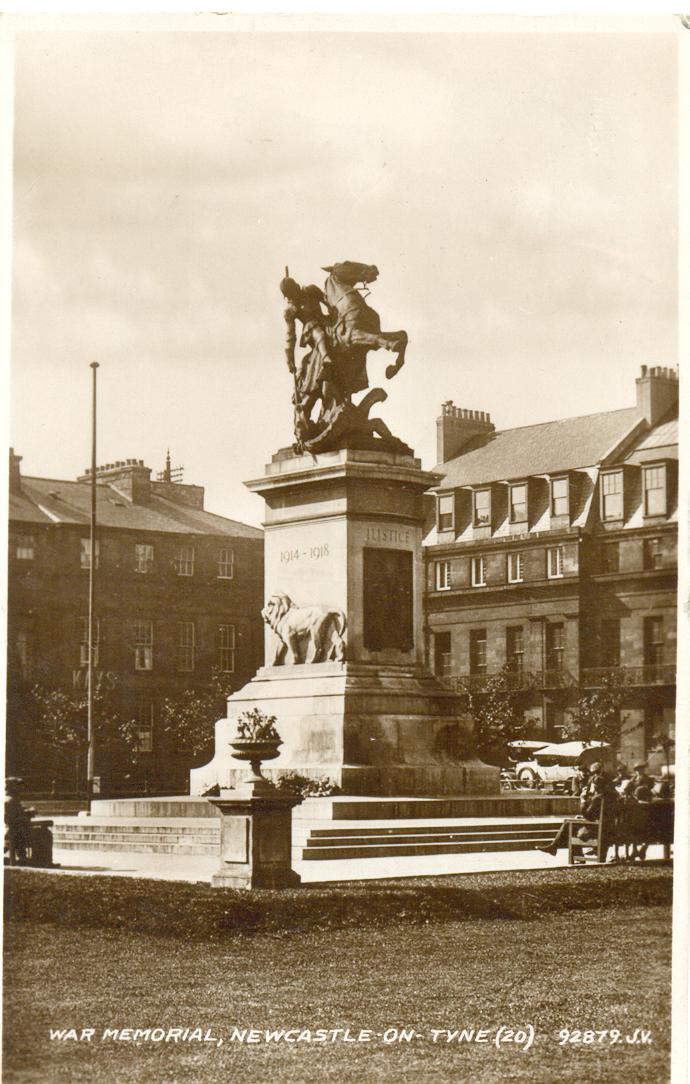
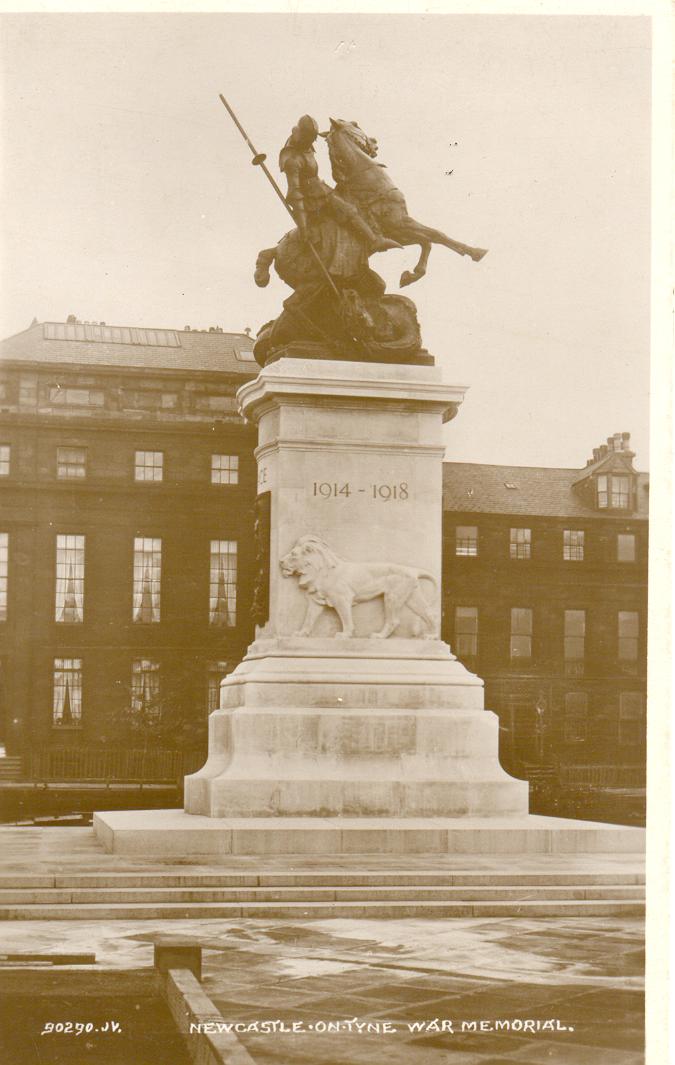
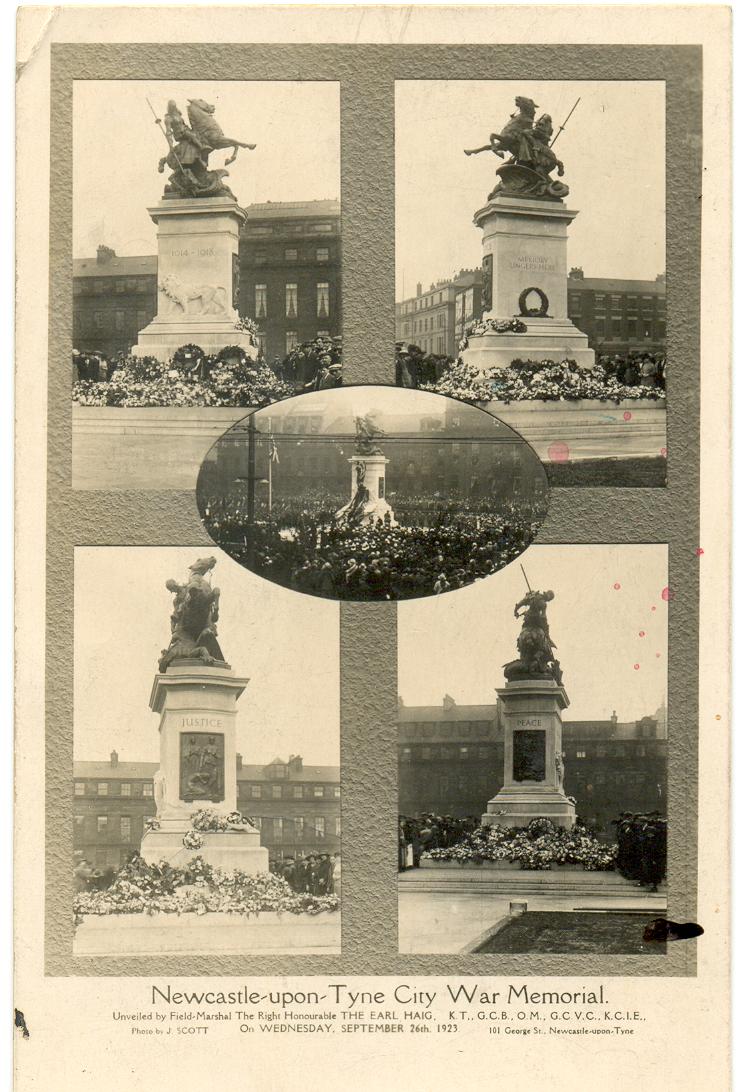
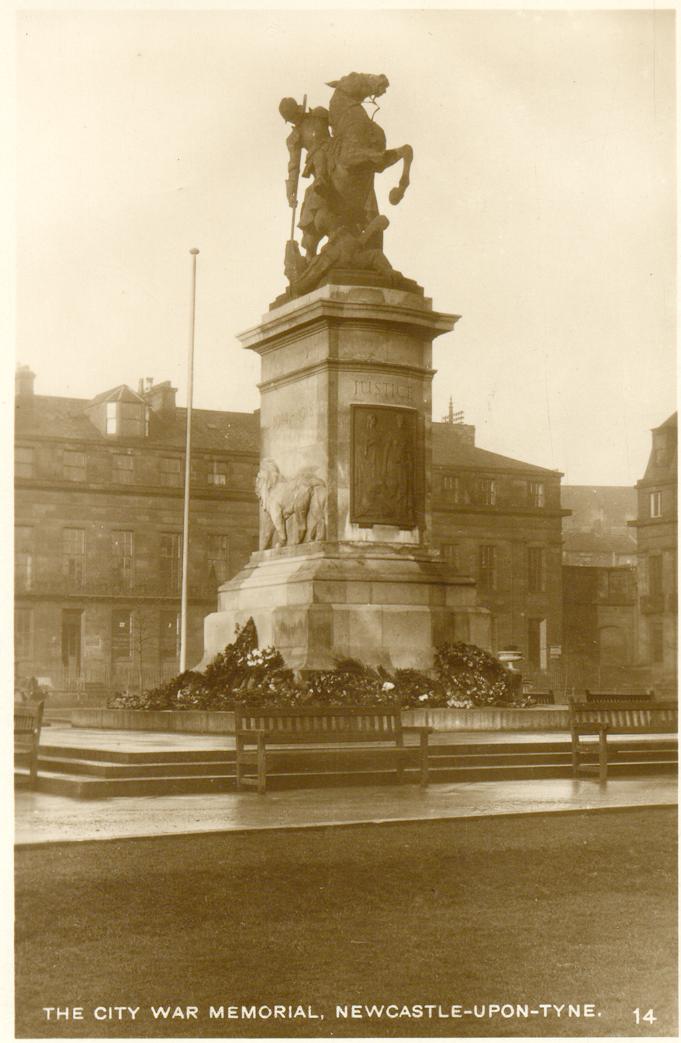
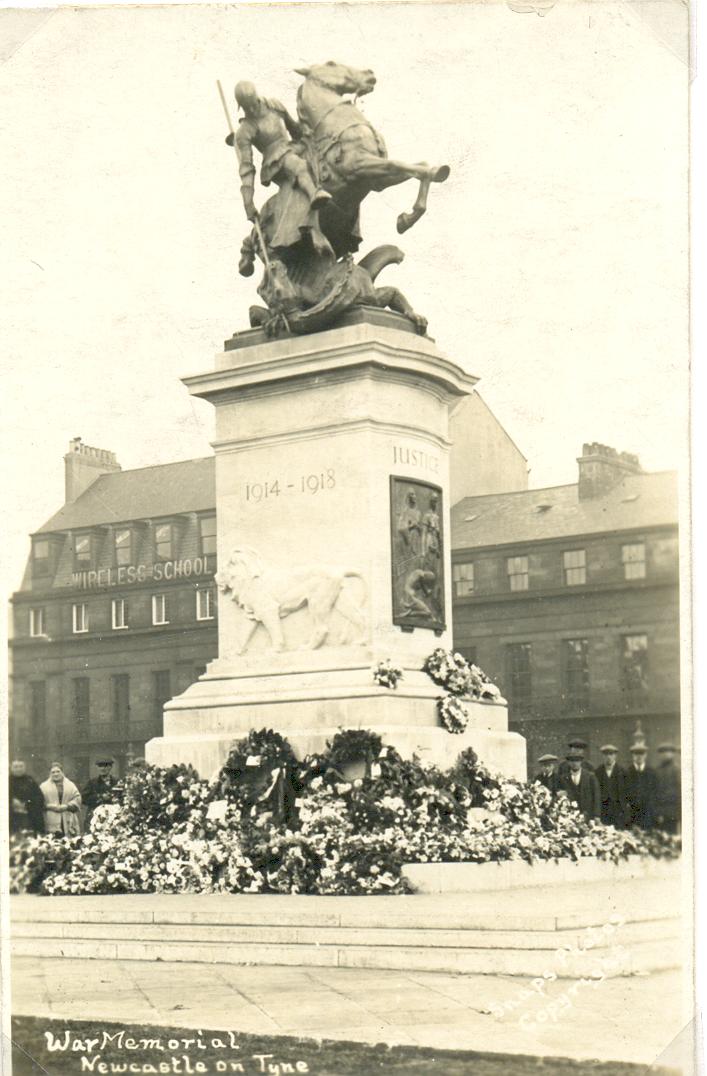
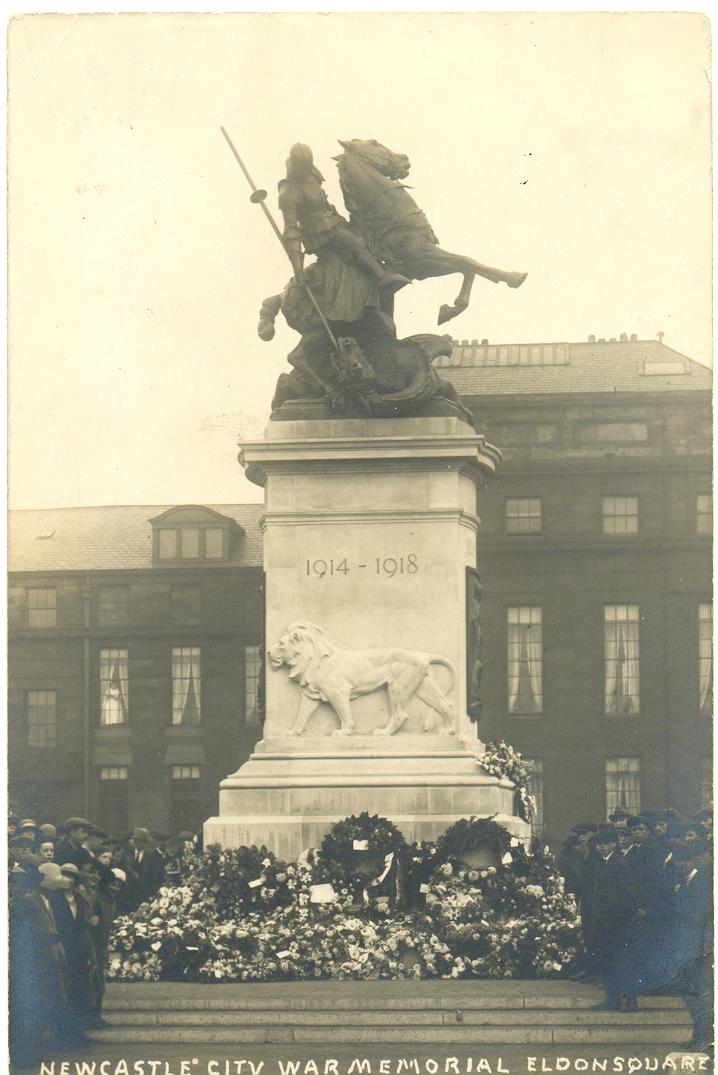
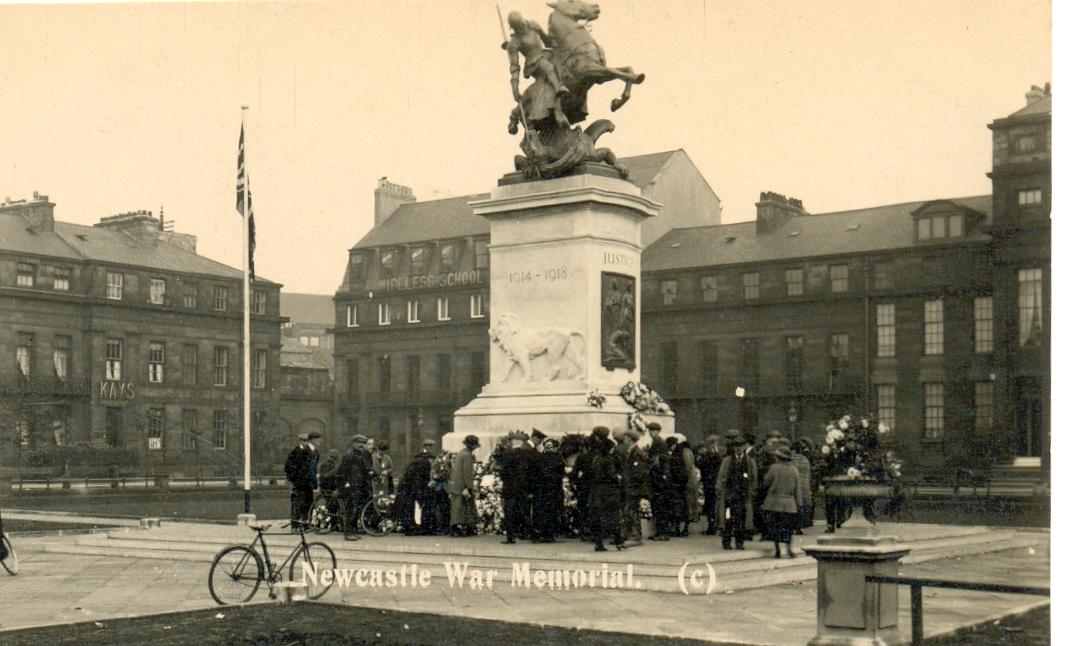
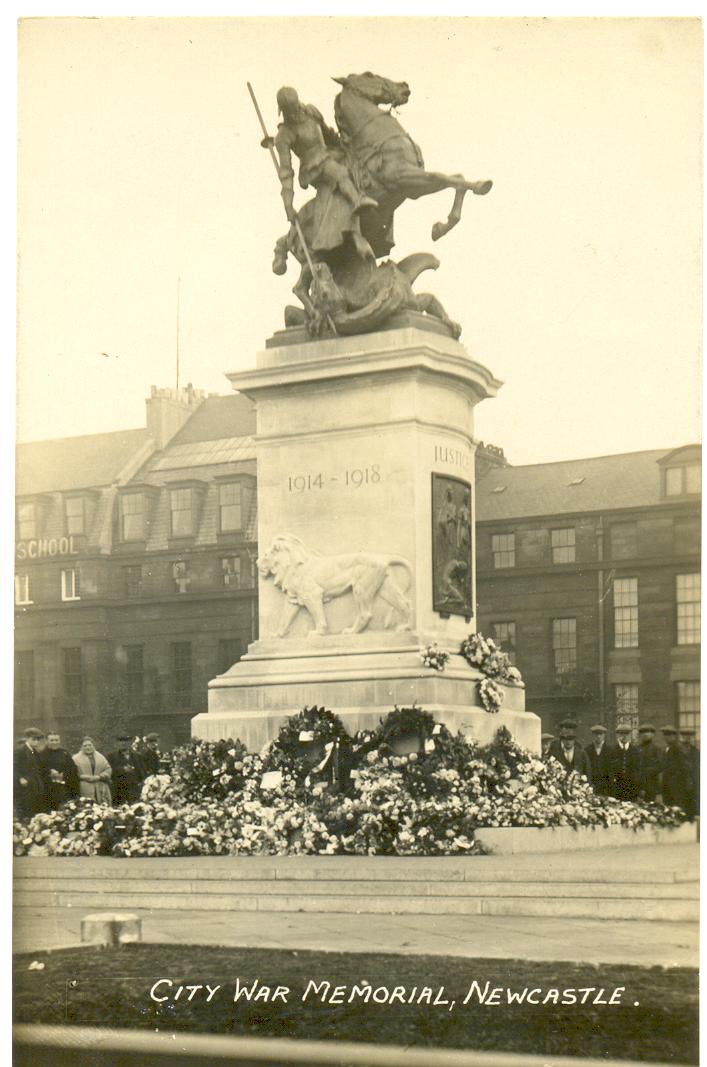
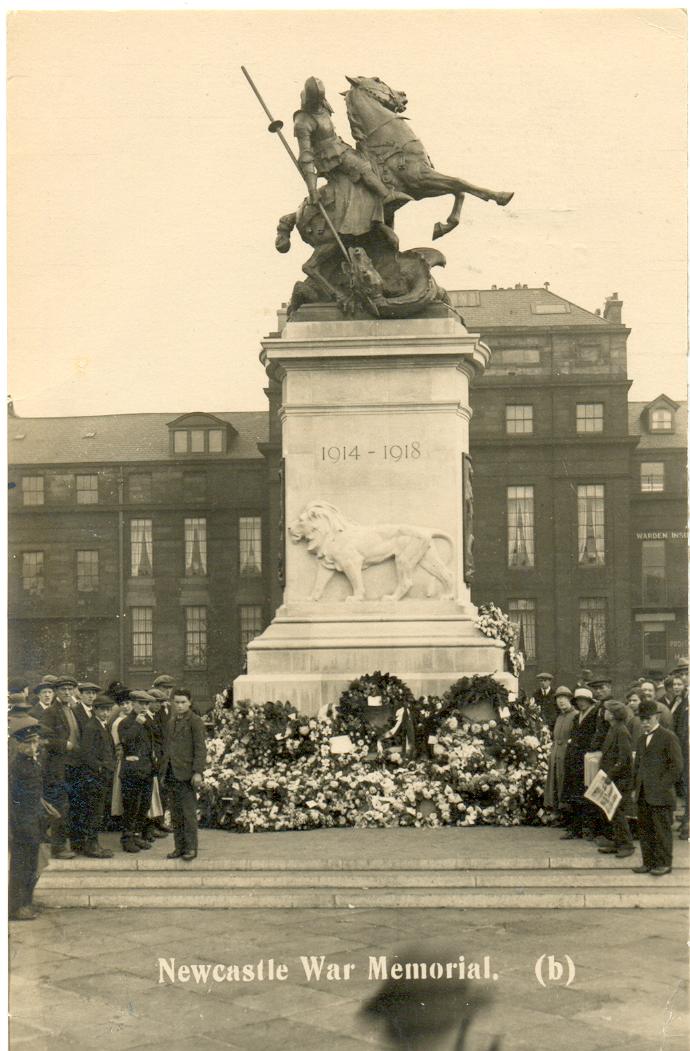
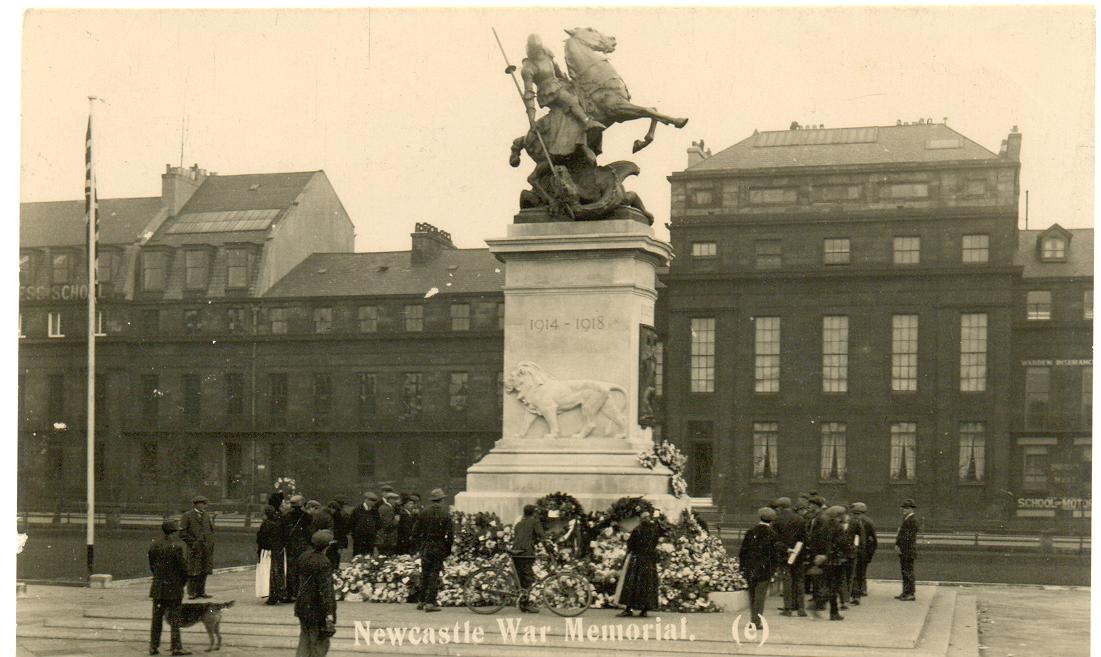
Notes: 1. “The Newcastle War Memorial Committee yesterday unanimously decided, on hearing the report of the deputation which had been to London, to commission Mr. Alfred Drury, R.A., A.R.C.A., to design the memorial. Mr. Drury will visit the site at an early date and later submit his design for the approval of the Committee. Every effort is to be made to complete the memorial by Armistice Day 1922, but it is expected to have the stone work ready for this year’s anniversary”. Shields Daily News Saturday 08/01/1921.
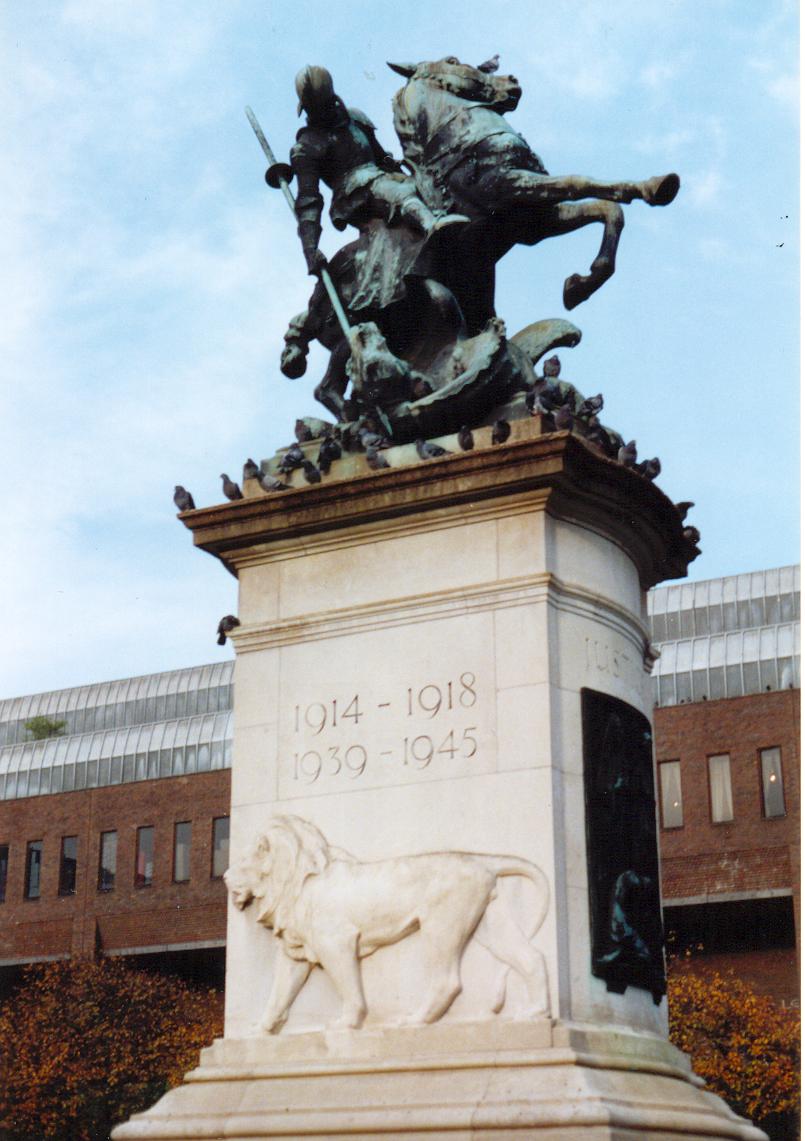
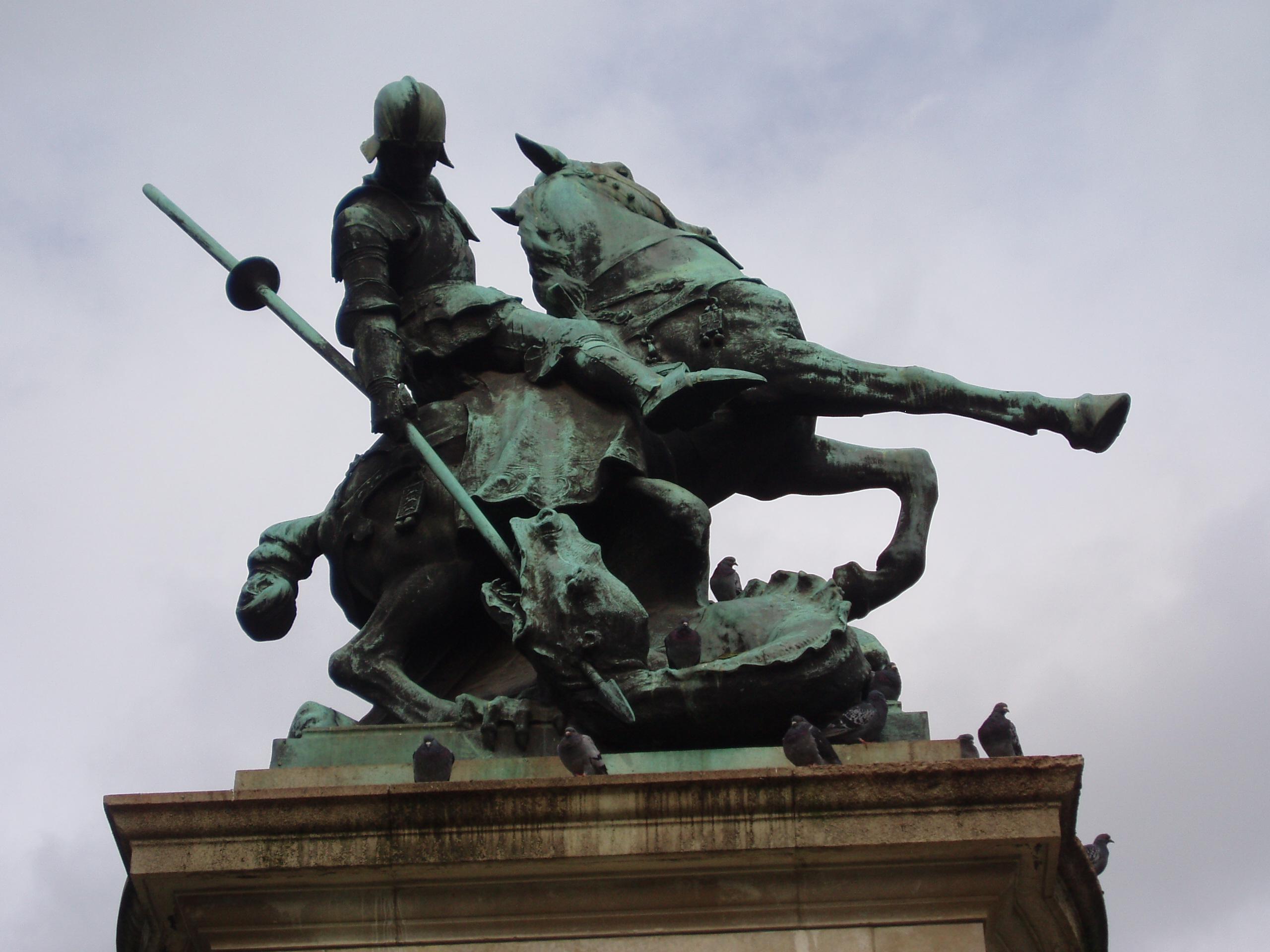
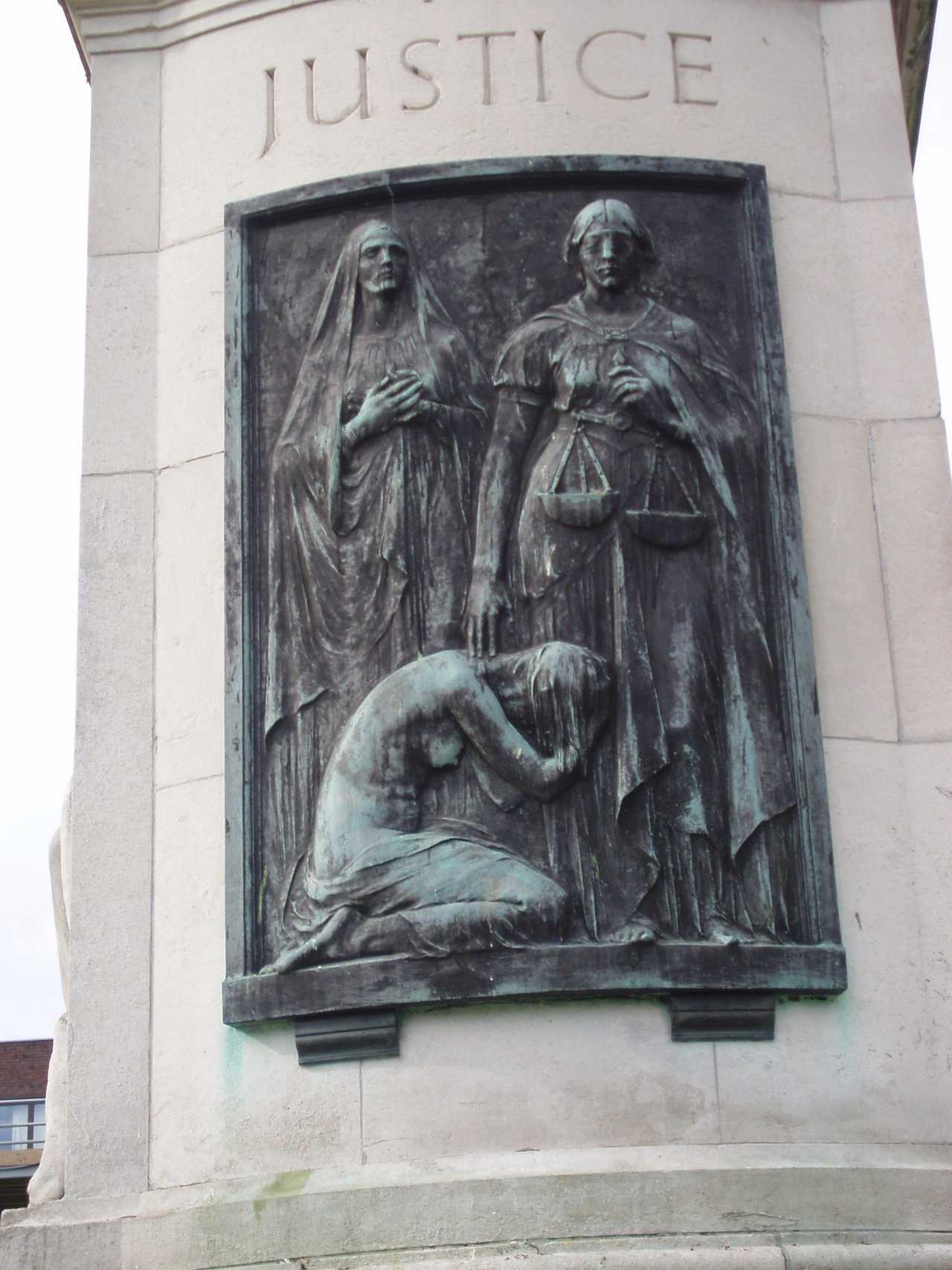
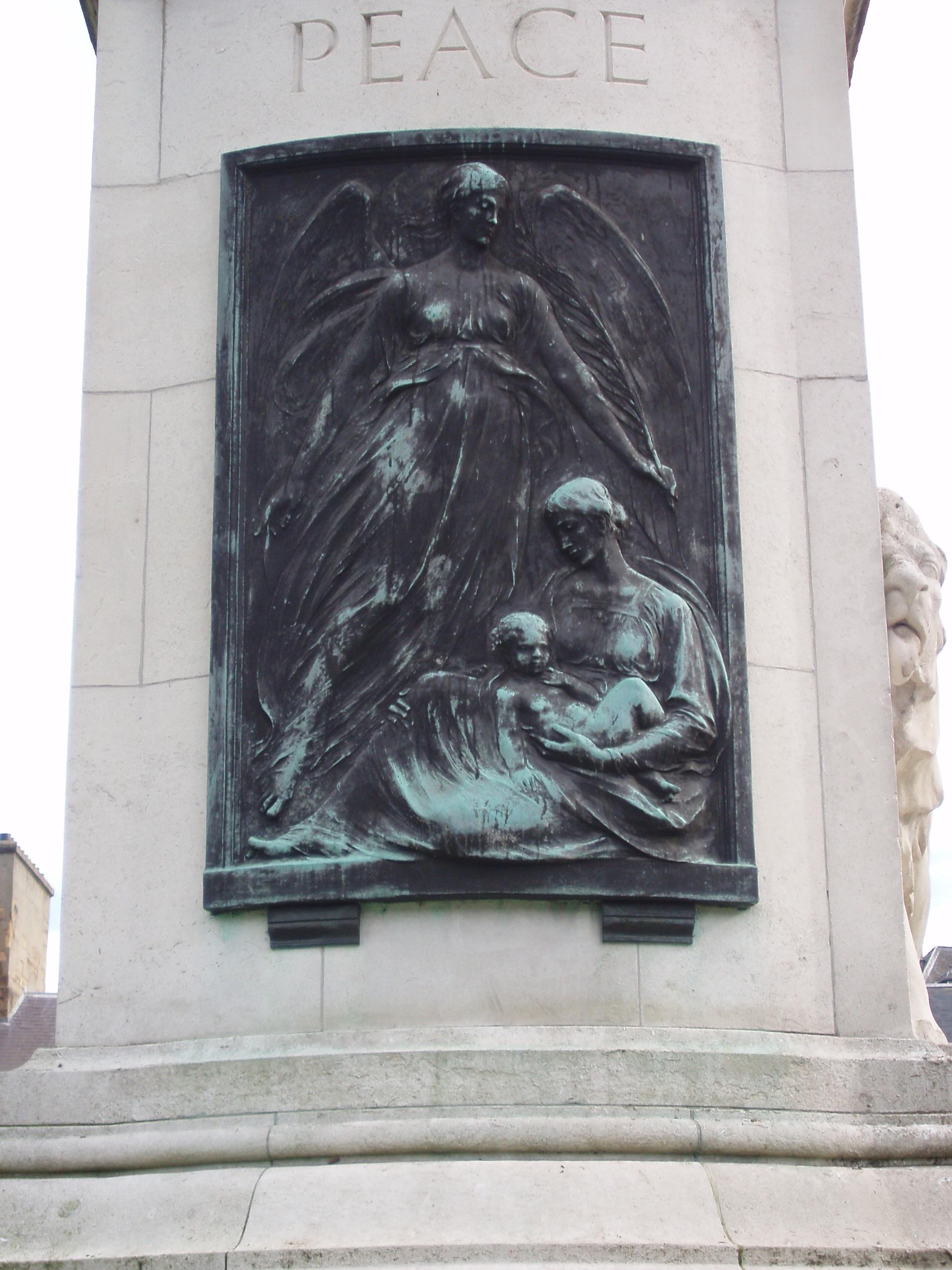
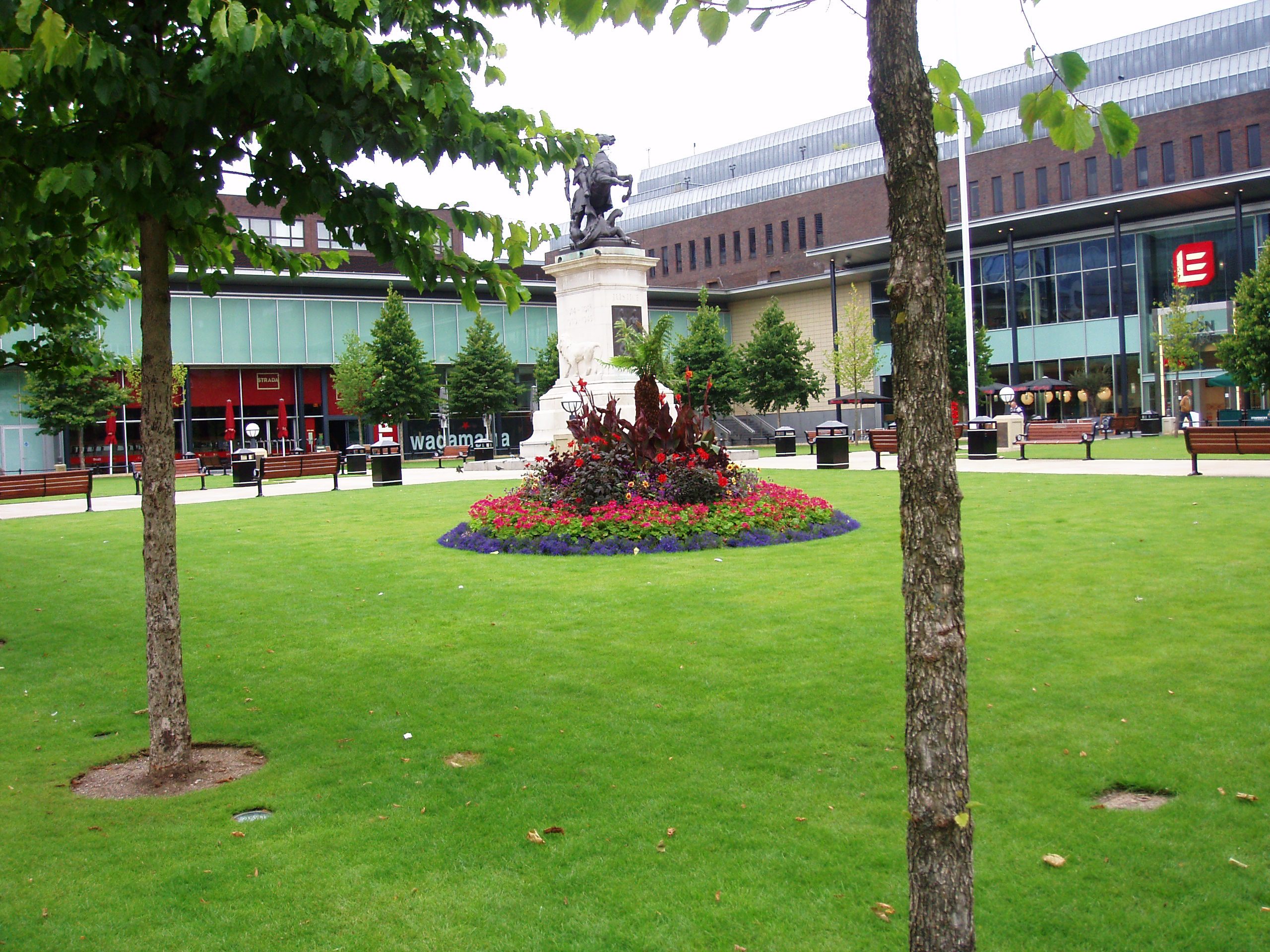
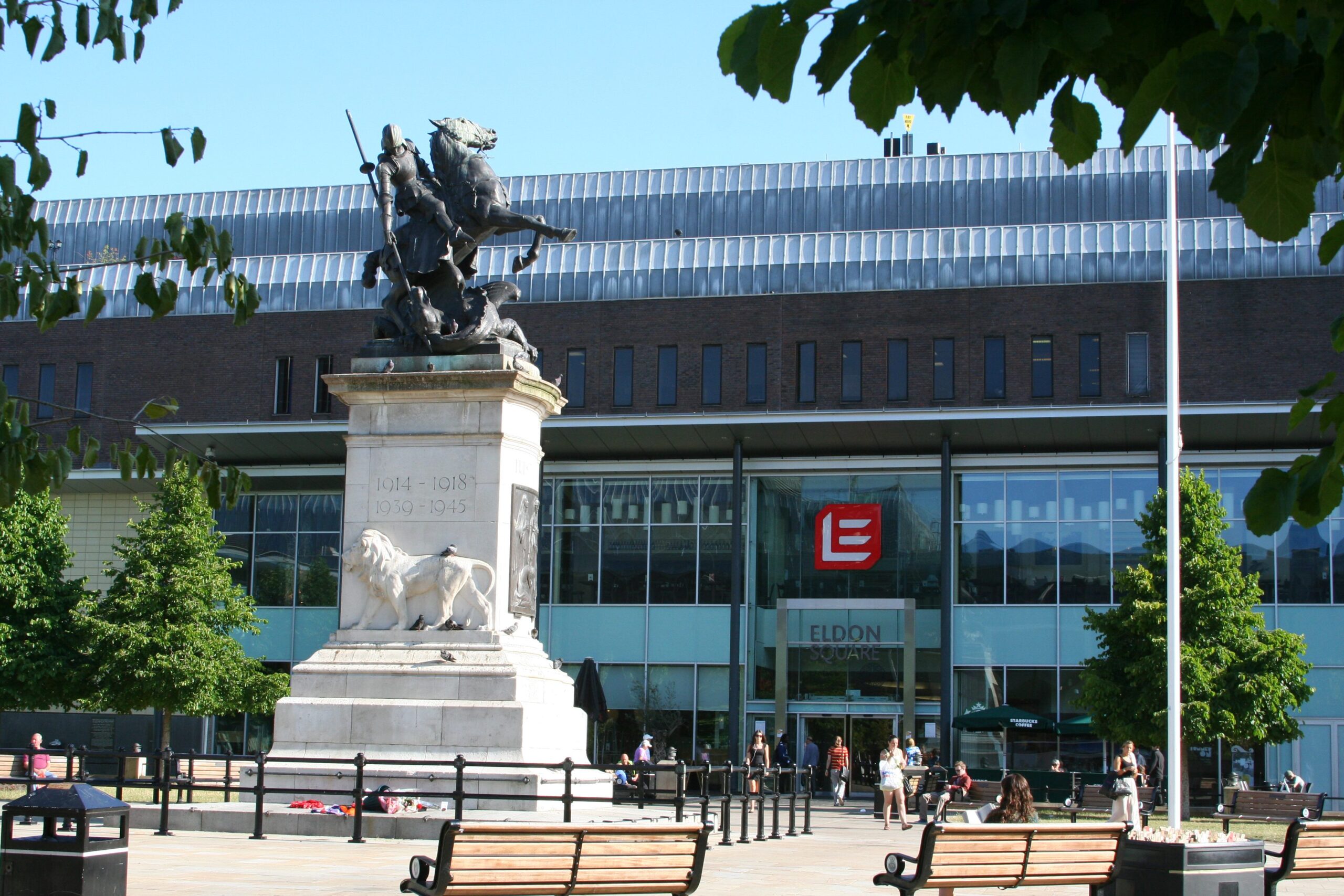
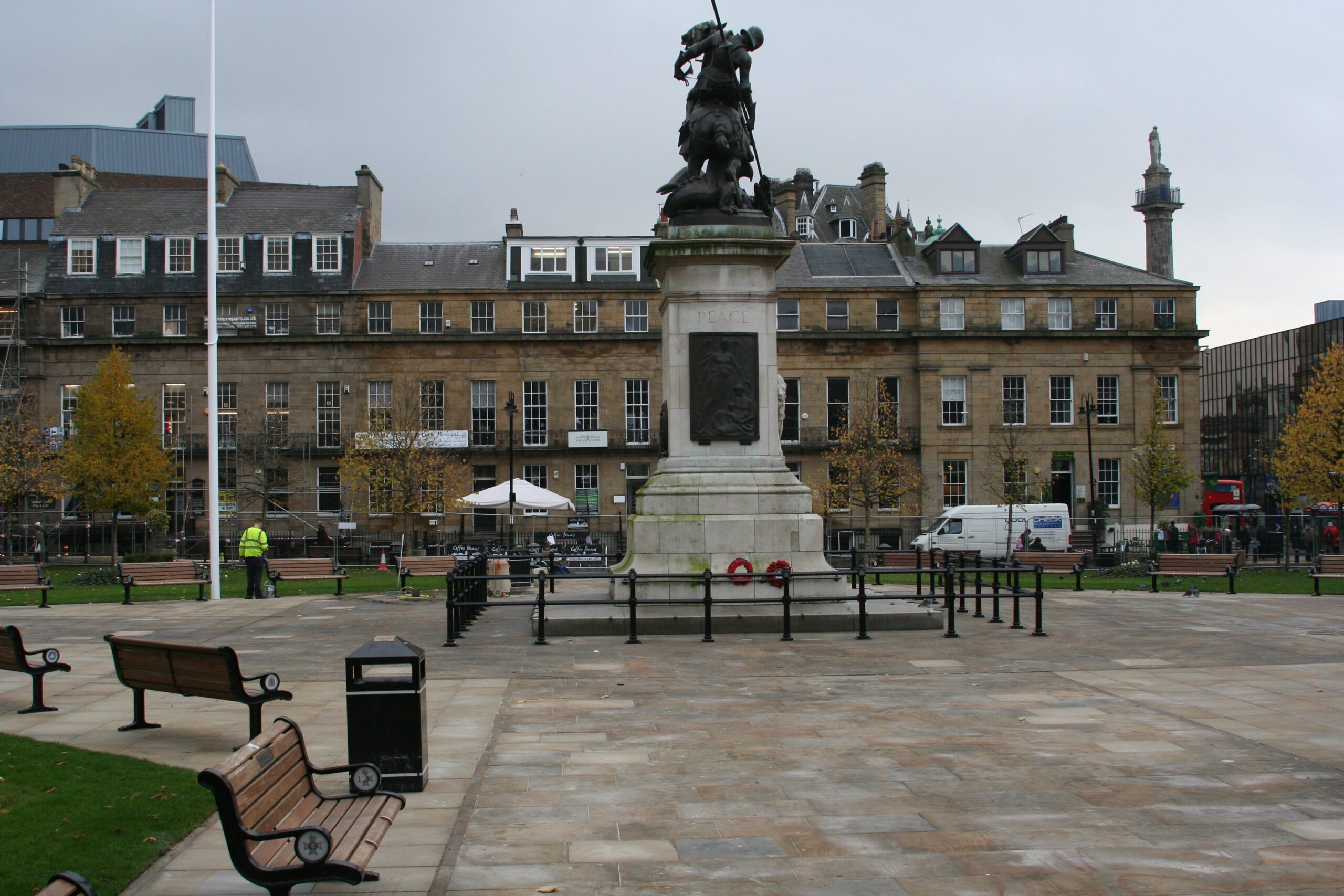
2. Mr. Drury’s design “will consist of a stone platform, with steps leading up to it, giving ample room for ceremonial functions, such as the laying on of wreaths on anniversary days. On the platform will stand a handsome pedestal, 14 feet 6 inches in height, and carried out in Portland stone. On the one side of the pedestal will be a figure of ‘The Future’ represented by a mother and child, for whom the gallant dead made the supreme sacrifice. A figure of ‘Immortality’ will adorn the opposite side of the pedestal. Standing on the pedestal will be a bronze equestrian figure of St.George, ten feet in height, represented in the act of slaying the dragon”.
Northern Echo 03/03/1921
3. Mr. Drury withdrew his acceptance of the Commission. An attempt by the Laing Art Gallery to incorporate two bronze allegorical figures designed by Mr. Drury into the memorial designed by Mr. Hartwell were rejected.
4. Stephen H. Aitchison of Lemmington Hall, Alnwick gave 1,000 shillings (£50).
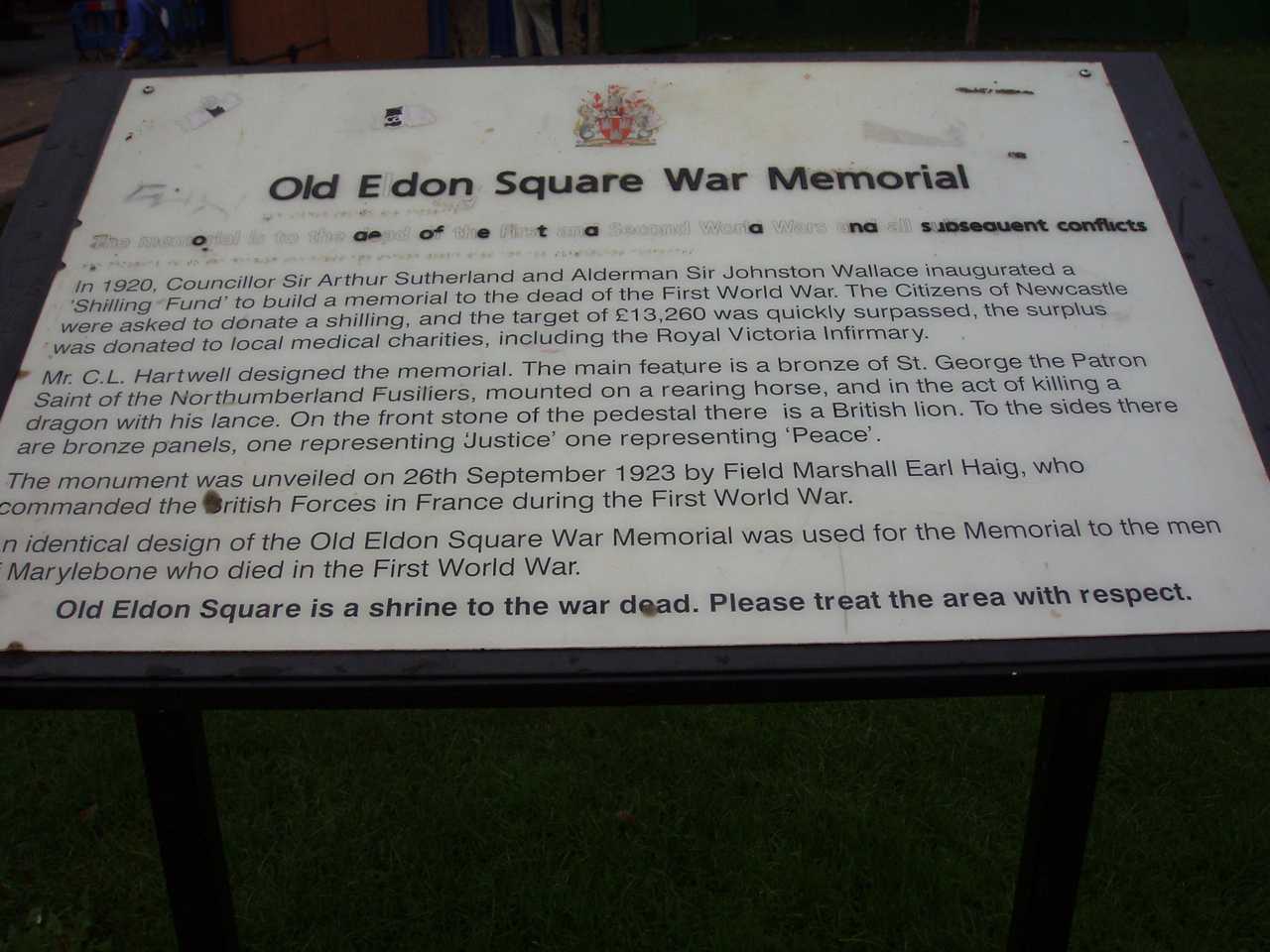
5. The cost of the Monument was defrayed out of a Shilling Fund instituted in December 1920. The unexampled success and popularity of this fund was soon evident for about the middle of January 1921, the whole of the money had been subscribed.
6. Among proposals at the unveiling was to be a request for residents surrounding the square to allow elderly and disabled to watch from their windows.
7. It was proposed that surplus funds (£3,164 5s 5d) should be handed over to the Royal Infirmary. A suggestion that they be used for needs of ex-servicemen from the Northumberland Fusiliers was rejected since discrimination could not take place. Endowments for beds at the RVI was proposed. See NUT225
8. The memorial is the second cast of a sculpture designed and executed by the artist to commemorate the men of Marylebone in London killed in the Great War and situated close to Lord’s Cricket ground.
9. St. George also features on the badge of the Royal Northumberland Fusiliers.
10. One of the original designs was for a catafalque on top of a tall plinth.
11. The Lord Mayor of Newcastle, Mr A. Munro Sutherland “suggested the building of a City Hall as a memorial to the noble citizens who had laid down their lives”. He estimated the probable cost at £500,000 and indicted that if someone would donate £100,000 the scheme could begin and that he would donate £10,000 towards the second £100,000. Illustrated Chronicle 11/01/1919, page 3
12. Dr Fortune, a candidate for Benwell Ward on Newcastle City Council suggested “that Newcastle should commemorate the great peace victory by holding an international exhibition each year, the Corporation to become the chief guarantors.” Illustrated Chronicle 20/01/1919, page 7
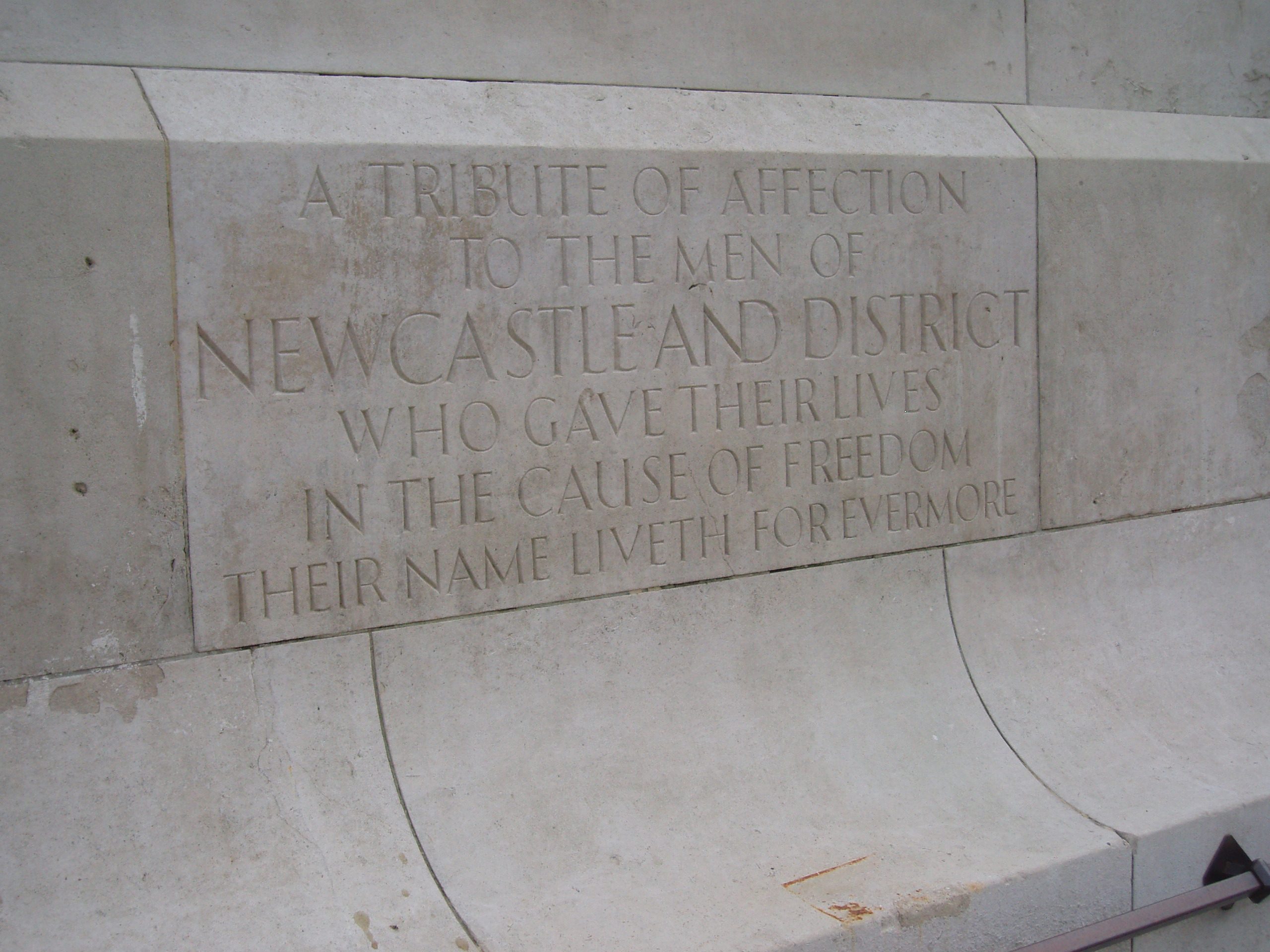
13. Philip Thirkell wrote in 1990 to Newcastle City Council to say that the inscription was worn and illegible. It was attended to.
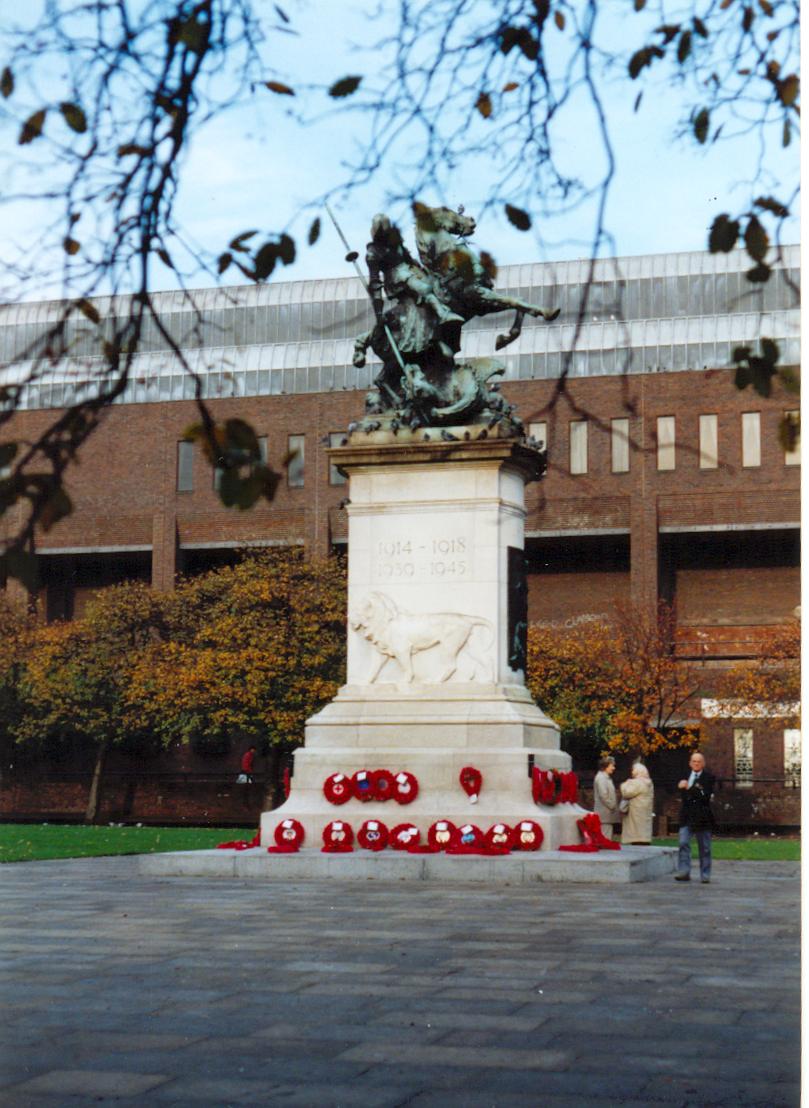
14. Suggested future development of the square c1990 had included the removal of the statue to another situation. Public outcry forced the idea to be abandoned.
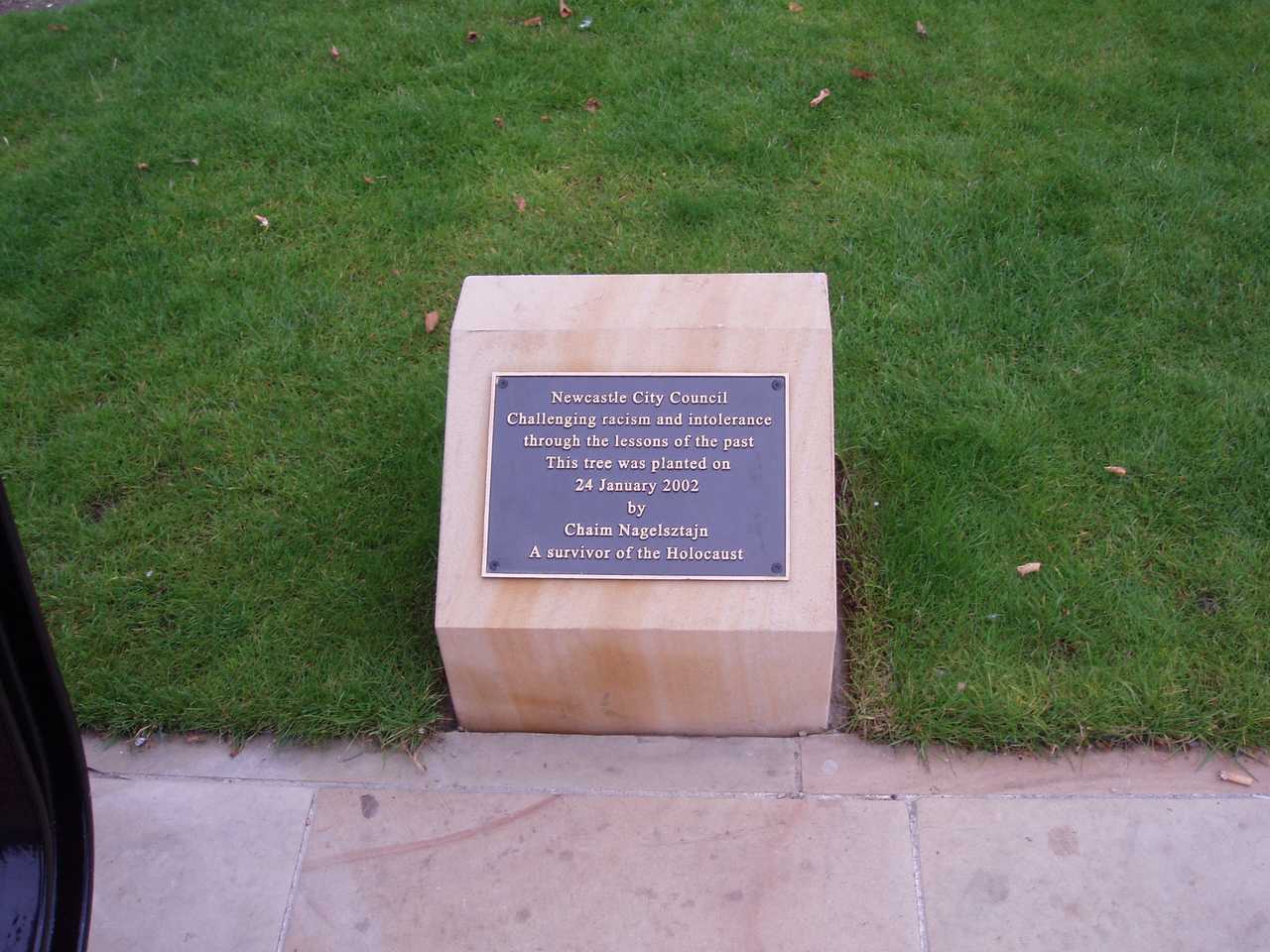
15. A tree was planted in 2002. As part of the restoration, a plaque on a raked pedestal was placed beside it, which states:
Newcastle City Council Challenging racism and intolerance through the lessons of the past.
This tree was planted on 24 January 2002 by Chaim Nagelsztajn A survivor of the Holocaust
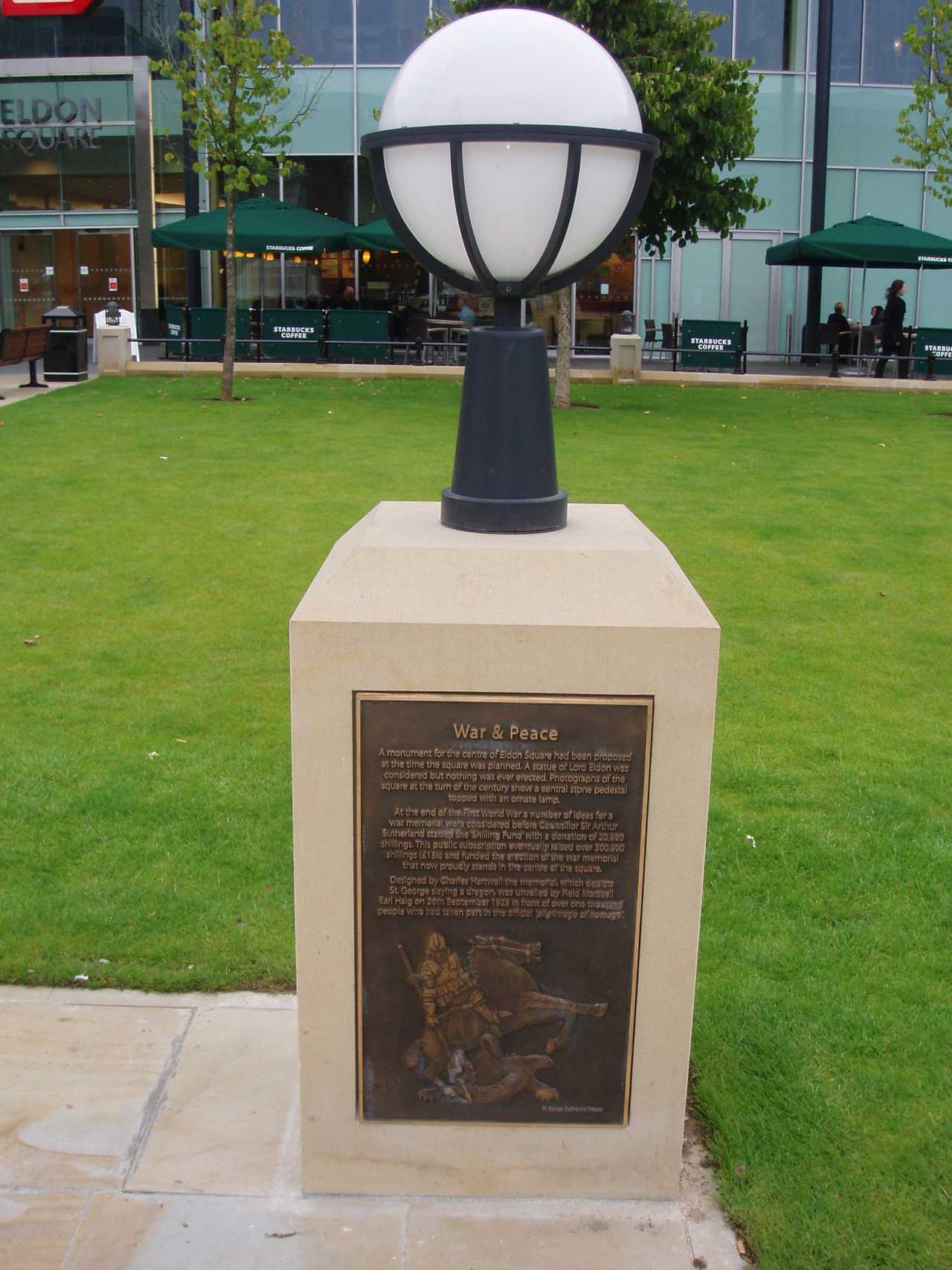
16. As part of the 2007 restoration, a square pedestal surmounted by a lamp was placed in the square. On the pedestal is a bronze plaque bearing a picture of St. George slaying the dragon, and the words:
War & Peace
A monument for the centre of Eldon Square had been proposed
at the time the square was planned. A statue of Lord Eldon was
considered but nothing was ever erected. Photographs of the
square at the turn of the century show a central stone pedestal
topped with an ornate lamp.
At the end of the First World War a number of ideas for a
war memorial were considered before Councillor Sir Arthur Sutherland started the ‘Shilling Fund’ with a donation of 20,000 shillings.
This public subscription eventually raised over 300,000 shillings (£15k) and funded the erection of the war memorial
that now proudly stands in the centre of the square.
Designed by Charles Hartwell the memorial, which depicts
St. George slaying a dragon, was unveiled by Field Marshall
Earl Haig on 26th September 1923 in front of over one thousand
people who had taken part of the official ‘pilgrimage of homage’.
17. The memorial was restored in 1991 following vandalism in 1990. Further major restoration took place in 2007, and is now part of the Newcastle City Council’s rolling programme of maintenance.