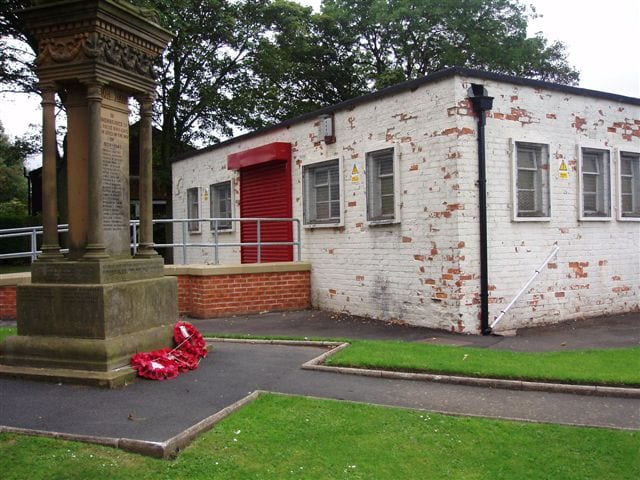
Notes: 1. The site became a miners’ welfare scheme in the 1920s, but has recently been purchased by Blyth Valley Council for community purposes.
2. This was part of a war memorial scheme by the directors of the Seaton Delaval Coal Company.
3. After all costs, the balance was distributed to relatives of the fallen. £4 was given to each widow; £1 to each child; £4 to widowed mothers of unmarried sons; £2 to mothers of married sons; £3 to each ex-serviceman who had lost an eye or a limb.
4. “They were to have four acres of land for a recreation ground, providing for tennis, bowling, football, and also a monument with the names of the soldiers who had fallen in the war. The pavilion was not expected to be used for dancing alone, but for the fullest possible use by the inhabitants of the locality.”
5. The Seaton Delaval Coal Company had been very generous to the local people, due to Lieut. Col. Pollard. On the occasion of the opening of the pavilion, he was given a ‘smoker’s companion’, and his wife was given a silver bonbon dish.