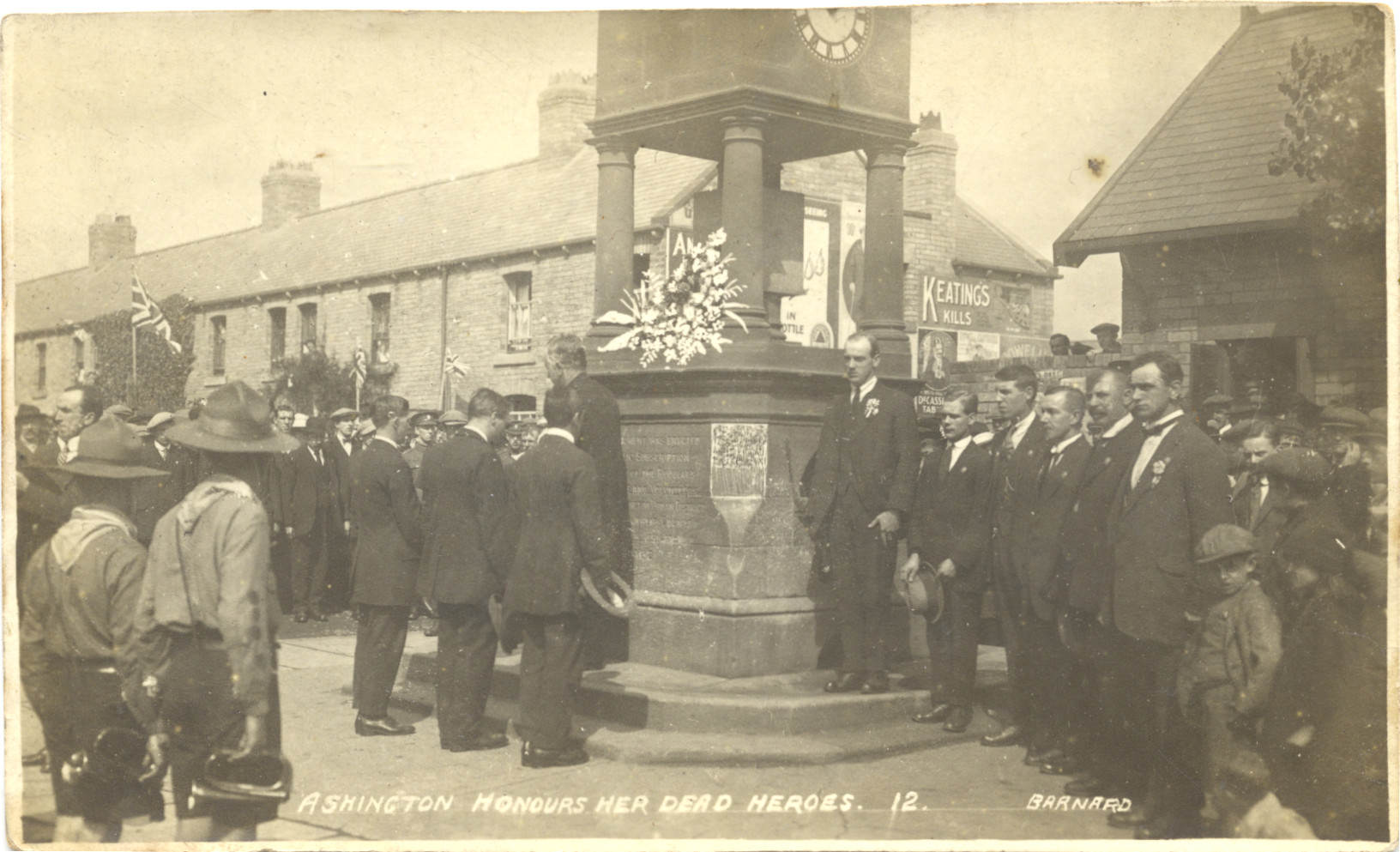
Notes: 1. Morpeth Herald 01/11/1902 reports Mr Milburn stating, there were 22 Regular Soldiers – one died and one was killed; 18 Reservists one killed and 24 Volunteers one died.
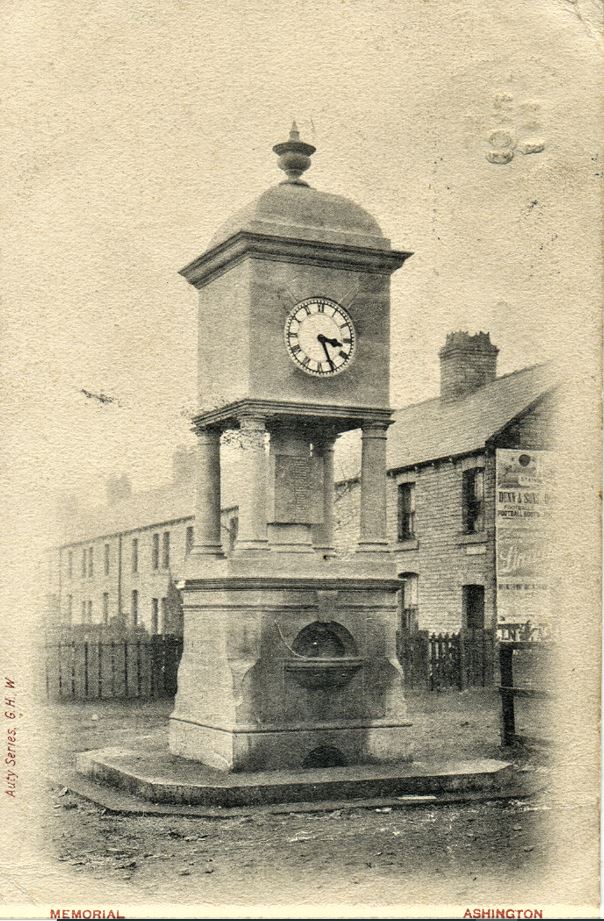
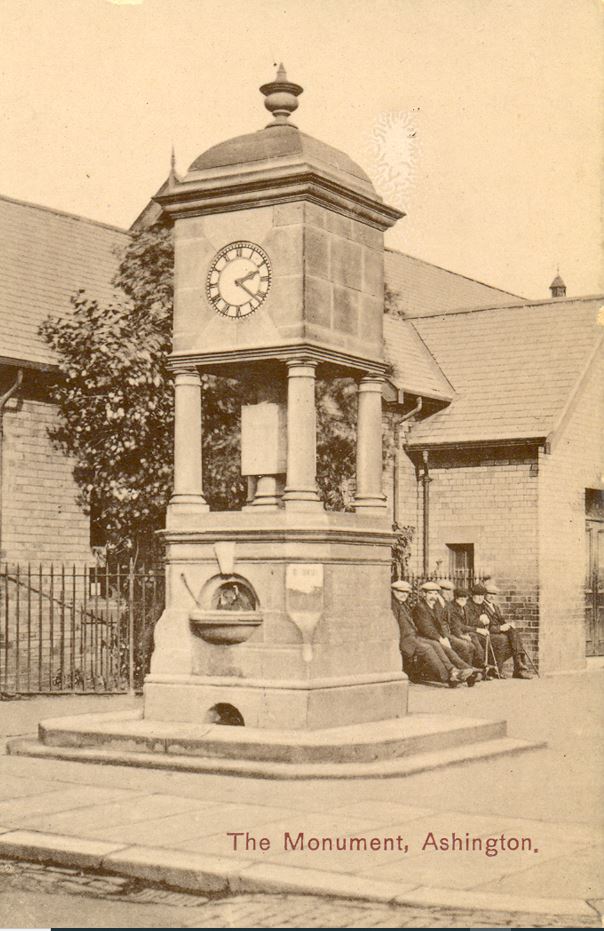
2. It is thought that some of the component stones are in the garden of one of the Councillors, believed now to be dead, who lived in a big house at the east end of South View, by Ashington Villa. Our researcher was told that the stones had been taken away and put on the tip, but they were rescued by the niece of the man who threw them out. The plaques with the names “should be under the French window”. at the big house, where the pillars were said to be used to support bird baths.
3. The grandfather of Mrs. Edna Ralph was one of those named on the monument.
4. The Health Authorities kept putting a ban on the drinking of the water, which came straight from the pit, and was not healthy. Until the Health Authority brought water from the Fontburn Reservoir, water was obtained from a standpipe in each terrace.
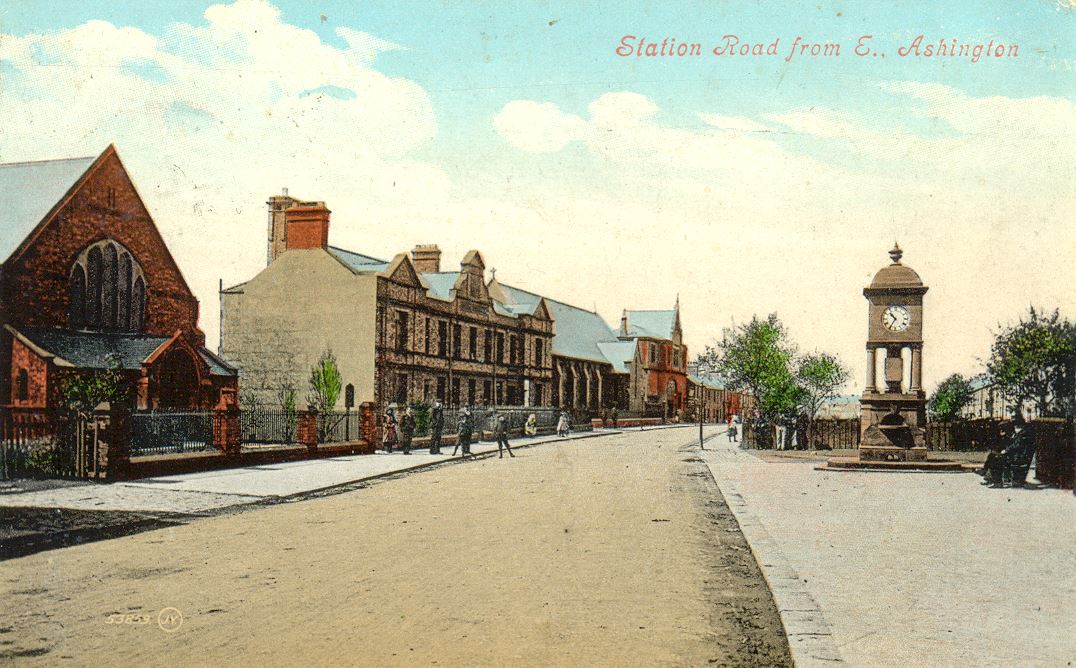
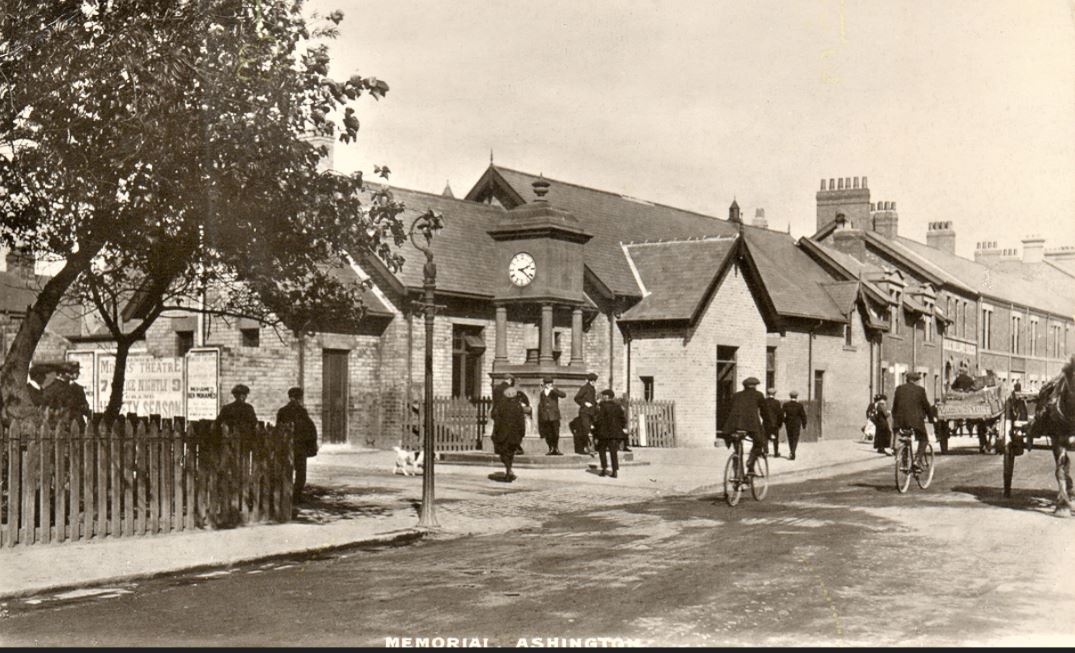
5. Various theories as to why it was taken down in 1943 included access for new coal depot. The most likely explanation is that it was considered to be a street hazard in the blackout in wartime.
6. “It was reported by the Surveyor at last Thursday’s meeting of the Ashington Urban Council that his staff had been able to decipher 81 names of those inscribed on the Boer War Memorial but there was one name they could not make out. The chairman asked the Press to give further publicity to the matter in the hope that some member of the public will be able to supply the missing name. A bottle containing a medal and a sheet of paper had been found in the structure but the paper had fallen to pieces and was of no assistance. Consideration of a plaque was deferred mean time.”
7. In 1919 a drumhead service was held to commemorate those who fell in 1914-18. At this service a wreath was laid by the Countess of Ravensworth in memory of those who fell in the Boer War. The collection taken at this service would form the nucleus of a fund which would be used to raise a memorial for the men who fell in the Great War. Another service was held in the following year when it was announced that the Great War Memorial would be an extension to the hospital.