Every Name a Story
Peter Goggins
Every Name a Story
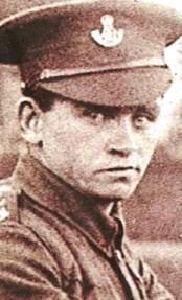
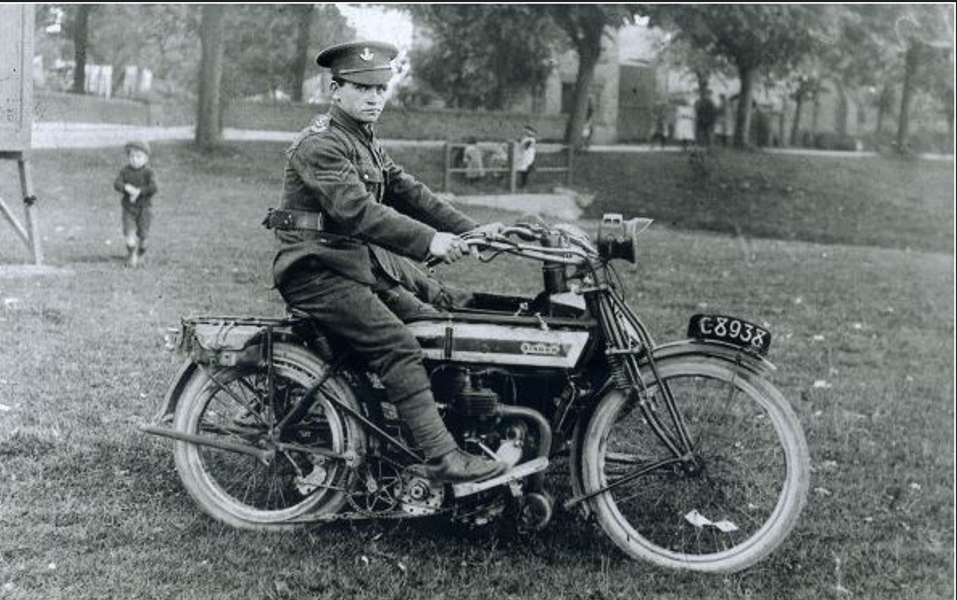
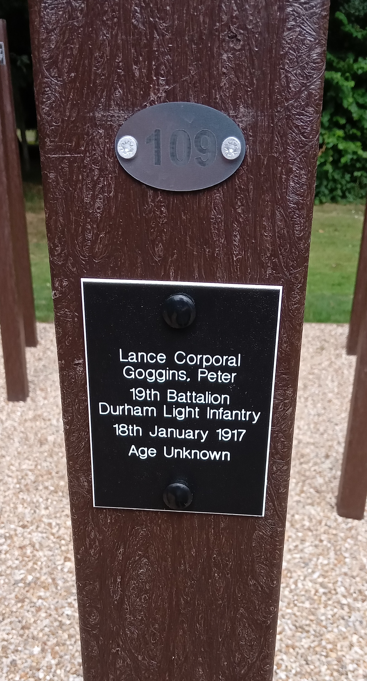
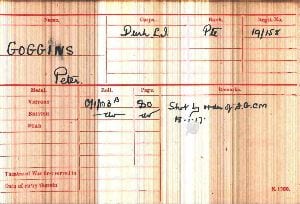
In St. Pol Communal Cemetery Extension, France is the Commonwealth War Grave of 19/158 Lance Corporal Peter Goggins, serving with the 19th Battalion Durham Light Infantry who died 18/01/1917.
Peter Goggins was born in 1893 at Seaham Colliery, the youngest son of eleven children of Peter and Bridget Goggins. He was the husband of Margaret Goggins, of 58, South Street, South Moor, Stanley, Co. Durham.
Lance Corporal Peter Goggins was shot at dawn on the 18th January 1917 for desertion, at the same time as Lance Corporal McDonald, (Millfield, Sunderland) and Lance Sergeant Stones (Crook). All three lie side by side in St. Pol cemetery.
Shot At Dawn; Putkowski and Sykes; Leo Cooper; 1989; ISBN 0 85052 295 1
Blindfold and Alone: British Military Executions in the Great War; Corns and Hughes-Wilson; Cassell; 2001; ISBN 304 36449 5
Enid Hoseason has submitted the following:-
Peter Goggins was born in 1893 and his birth was registered at Easington in County Durham.
His father also named Peter was a coal miner and his mother was Bridget. Peter was the youngest child, he had siblings James b. 1875, Mary Jane b 1876, Catherine 1879, John b. 1880, Elizabeth b 1884, Ellen b 1886, Bridget b 1887 and Margaret b 1891. The family occupied three rooms in Seaham. Also living with the family in 1891 was a boarder, Tom Goodman who was also a coal miner.
By 1901 the family had relocated to 22 Alice Street, in Ryhope, Peter’s father had died in 1897, and his oldest brother James was listed as the head of the family. Peter’s mother was recorded as working in the fields with Catherine and Elizabeth. James and John worked in the coal mines, whilst Elllen, Bridget, Margaret and Peter were still at school.
The 1911 census shows that Peter’s mother, his brother James and sister Bridget as well as Peter were now living at 31 Back John Street, Seaham Harbour. Peter and James were coal miners and Bridget was a field worker.
In the last quarter of 1915, Peter married Margaret Rowley at Lanchester, his religion is listed as Roman Catholic. Peter was working at South Moor Colliery, near Stanley in County Durham. There is no trace of Margaret after the CWG record of 1917.
Peter was a small man and could not enlist until the 19th Battalion of the Durham Light Infantry was formed in 1915.
As the first enthusiastic rush to enlist in Kitchener’s New Army slowed, the War Office agreed to reduce the minimum height for recruits by 3 inches (7.5cm) to 5 foot (152cm). The result was the formation of Bantam battalions. In County Durham, a Parliamentary Recruiting Committee, formed in December 1914 to encourage more volunteering, agreed to raise a Bantam Battalion. And, on 13 January 1915, the War Office gave permission for a Durham Bantam Battalion. This was to be known as the 19th (Service) Battalion Durham Light Infantry (2nd County).
In early March 1915, the first Durham Bantams assembled in West Hartlepool before moving to Cocken Hall over 1,000 strong in May, after the 18th Battalion DLI had moved out. A month later, however, 19 DLI moved again to Masham in North Yorkshire, as part of the 106th Brigade of the newly-formed 35th Division.
There are no service records available, an extract from the Putkowski and Sykes book, “Shot at Dawn” relates the events of November 26th 1916. Joseph Stones and his officer Lieutenant Munday, left the trenches to patrol the rim of Kings Crater. They were set upon by a German raiding party who then shot Lt. Munday. Stones dropped his rifle and made off, Without orders, Stones and a Private made their way towards the rear in order to give the alarm, however, the two men were detained by the military police. A Corporal Stevenson went out and rescued the wounded Lieutenant. Amongst those who made off was a party of six men headed by Lance Corporals Goggins and McDonald all of who ended up in the hands of the military police.
After a delay Stones was tried on Christmas Eve, on a charge of shamelessly casting away his rifle. Also tried were the two lance corporals. Aggravating their offence was the fact that they had tossed aside their rifles. The three men, Stones, Goggins and McDonald all received the same death sentence.
An extract from an eye witness account taken from a pamphlet published by Ernest Thurtle MP, regarding Peter Goggins, John McDonald and Joseph Stones reads as follows:
“Come out, you” ordered the corporal of the guard to me. I crawled forth. It was snowing heavily. Stand there, he said pushing me between two sentries, Quick March, and away we went, not as I dreaded to me first task of pack drill, but out and up the long street to an R.E. dump. There the police corporal handed in a chit, whereupon three posts, three ropes and a spade were given to me to carry back. Our return journey took us past the guard room, up a short hill until we reached a secluded spot surrounded by trees. Certain measurements were made in the snow, after which I was ordered to dig three holes at stipulated distances apart. I began to wonder, could it be spies…….. The next scene is a piercingly cold dawn, a crowd of brass hats, the medical officer, and three firing parties, Three stakes a few yards apart and a ring of sentries around the woodland to keep the curious away. A motor ambulance arrives conveying the doomed men. Manacled and blindfolded they are helped out and tied up to the stakes. Over each man’s heart is placed an envelope. At the sign of command the firing parties, twelve to each, align their rifles on the envelopes. The officer in charge holds his stick aloft and as it falls thirty six bullets usher the souls of three of Kitcheners men to the great unknown. As a military prisoner, I helped clear the traces of that triple murder. I took the posts down, I helped carry the bodies towards their last resting place. I collected all the blood soaked straw and burnt it. Acting upon police instructions I took all their belongings from the dead mens tunics (discarded before being shot) a few letters, a pipa, some fags, a photo. I could tell you of the silence of the military police after reading one letter from a little girl to ‘Dear Daddy’, of the blood stained snow that horrified the French peasants, of the chaplain’s confession that braver men he had never met than these three men he prayed with just before the fatal dawn….. I could take you to the graves of the murdered.
The victims of the above execution were a sergeant and two corporals of the Durham Light Infantry. Their company had made an attack on Kings Crater, near Arras and captured it. The enemy counter attack and recaptured the crater. The captain in charge was killed, and as he was dying to told his men to get back to their own trenches. The next morning they were all put under arrest and the three N.C.O’s were court martially, sentenced to death and shot at Roellecourt, near St. Pol.
Ernest Thurtle was an American born British Labour politician. He saw service in the army in World War 1 and was badly injured. He married Dorothy Lansbury the daughter of George Lansbury, leader of the Labour Party in the 1930’s. Thurtle was the MP for Shoreditch, London from 1923 – 1931 and from 1935 until his death in 1954.
Thurtle’s greatest achievement in Parliament was to bring about the abolition of the death penalty for cowardice or desertion in the British Army. With over 300 British soldiers shot by firing squad after brief trials during World War I, Thurtle first introduced the measure for abolition in 1924, which became Labour Party policy in 1925 and eventually approved by the House of Commons by the Labour government in 1930. Supporters of the measure included T. E. Lawrence, also known as Lawrence of Arabia, but the abolition was first rejected by the House of Lords, which was encouraged in their resistance by various retired generals, including Lord Allenby. The House of Commons insisted, and the measure was enacted.
The argument that it would reduce the determination of the soldiers was countered by the fact that Australia had always made it clear when it joined the war effort that none of its men would be executed for these crimes. No Australians were shot for cowardice or desertion, but it was clear that their troops had been as effective as any others in the war. Thurtle continued to be involved in ex-servicemen’s associations.
These three soldiers are buried at St. Pol Communal Cemetery
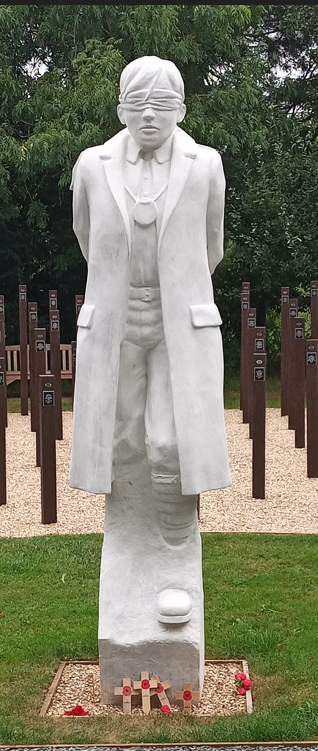
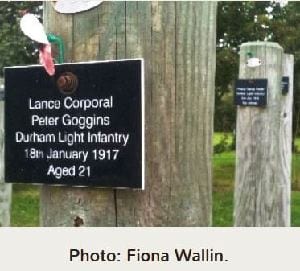
In memory of the 306 British and Commonwealth soldiers executed after courts-martial for cowardice and desertion during WW1, a memorial at the National Arboretum has been created. The memorial portrays a young British soldier blindfolded and tied to a stake ready to be shot by a firing squad. It is surrounded by a semi circle of stakes on which are listed the names of every soldier executed in this fashion.
On the 7th November 2006, the British Government agreed to give a posthumous pardon to all those executed for military offences on the First World War.
However, in August 2006 the then Defence Secretary, Des Browne, reversed this decision. He stated that he did not want “to second guess the decisions made by commanders in the field, who were doing their best to apply the rules and standards of the time”, but that “it is better to acknowledge that injustices were clearly done in some cases, even if we cannot say which – and to acknowledge that all these men were victims of war”. In 2007, the Armed Forces Act 2006 was passed allowing the soldiers to be pardoned posthumously, although section 359(4) of the act states that the pardon “does not affect any conviction or sentence.”
Peter Goggins is remembered at South Moor on S129.01, at Stanley on S135.03 and in the D.L.I. Book of Remembrance page 8.
First Name: Peter
Last Name: Goggins
Service Number: 19/158
Which War: First World War 1914-18
Died: 18/01/1917
Rank: Lance-Corporal
Regiment: Durham Light Infantry
Served in: Army
Unit/Ship: 19th Battalion
Links to Source Material