Every Name a Story
Thomas Hopper
Every Name a Story
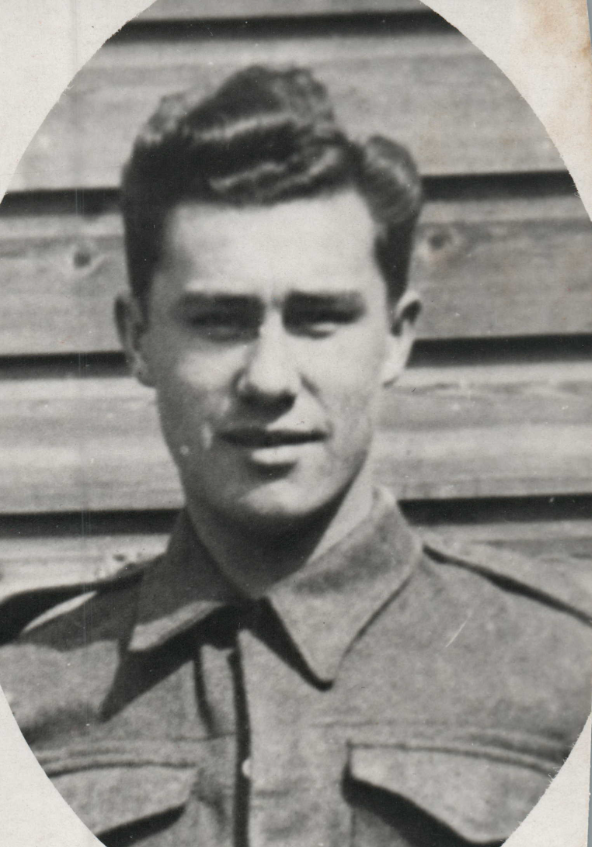
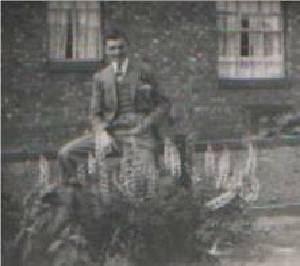
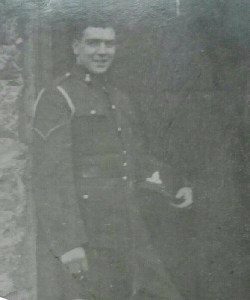
On the Rangoon Memorial, Myanmar, is the name of 1469665 Lance Bombardier Thomas Hopper serving with the 8th Heavy Anti-Aircraft Independent Battery, Royal Artillery who died 17/04/1942.
Thomas was born on the 24th July 1919 at 17 Webb Street, Wheatley Hill, in his grandparents’ house, He was the eldest son of five children to a William Hopper, born 26th April 1896, died 26th November 1960, and his wife Mary (nee Anderson), Hopper, born 7th January 1897, died 8th September 1978 at Cherry Knowles Hospital. They were married 24th October 1917. [*Thomas was their first child. He weighed in at 14lbs].
The other children were:-
- John ‘Jack’ Hopper, born 17th October 1923, died 1988. In 1939, he was residing at 6 Front Street, Durham and was an Underground worker.
- Violet May Hopper, born 12th April 1926, died 2007. In 1939 was residing at 6 Front Street, Durham, but was at school. She married a Carr.
- James William Hopper, born 21st 1932, died 2001. in 1939, was residing at the same address but at school.
- Esther Hopper, born 12th December 1920, she was born weighing 7lbs. Died 16th September 2007 at Alnwick Hospital. Also in 1939, same address but at school.
*Esther, my mam, followed him 17 months later weighing much less, the average 7lbs. The family lived at 50 New Elvet, Durham. His father was a Saddler Journeyman who was probably travelling at the time; hence Mary went to her parents’ home to give birth.
In 1921, the mother Mary Hopper, was visiting her parents at 7, John Street, Wheatley Hill, Wingate, Durham, a John Anderson, born 1859, who was a Colliery Labourer above ground at the Thornley Colliery, owned by the Weardale Coal Co, but was out Of Work, his wife Jane Ann Anderson, born 1858, son John Anderson, born 1901, Coal Miner a Setter Cage Attendant, at Thornley Colliery, owned by the Weardale Coal Co, but also out Of Work. Granddaughter Mary Ellen, born 1915, Thomas Hopper, grandson born 1919 and an Esther Hopper, granddaughter born 1921 were visiting as well.
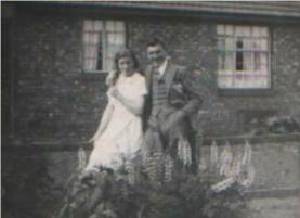
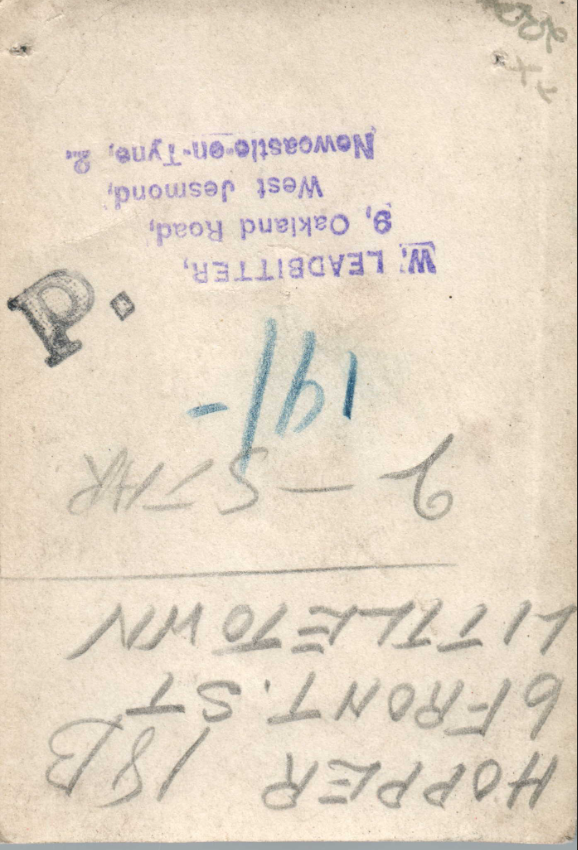
In civilian life Thomas was an employee at Elemore Colliery. He was engaged to a Miss Florrie McArdle and lived at Littletown before he went to war. The father resided at 7 Front Street, Littletown, Co Durham in 1939. Then moved to No 6 Front Street.
The family moved to various places in Durham and Thomas was the eldest of 5 children.
*Thomas had lost an uncle <a href=”http://www.newmp.org.uk/article.php?categoryid=99&articleid=1174&displayorder=76″>Thomas Hopper</a> killed in WW1, his father William’s older brother. After Thomas was killed in WW2 one of his younger brothers, Norman, married and had a son, who he also named ‘Thomas Hopper’. My Gran was so worried about this, believing that history would once again repeat itself. So far so good that has not happened and young (well not so young now) Thomas lives to keep their memories alive with me, his cousin.
Thomas attested on the 12th June 1939, at Durham into the regular army for 12 years, 4 years with the colours and 8 years with the reserves. He was 5 feet eight and half inches, 147lbs, Fresh complexion, Blue eyes and dark brown hair. On the 13th June he passes his medical examination. His army number is 1469665 and his rank was a Gunner.
He was initially posted to the 16th Field Training Regiment at Exeter on the 3rd September 1939. [Many training regiments were formed in UK in 1939-40, most had been disbanded by late 1943 on completion of the army’s expansion, thereafter the need was reduced to training reinforcements. There were 12 field training regiments (numbered 2, 3, 4, 5, 6, 7, 8, 9, 10, 11, 12 and 16)].
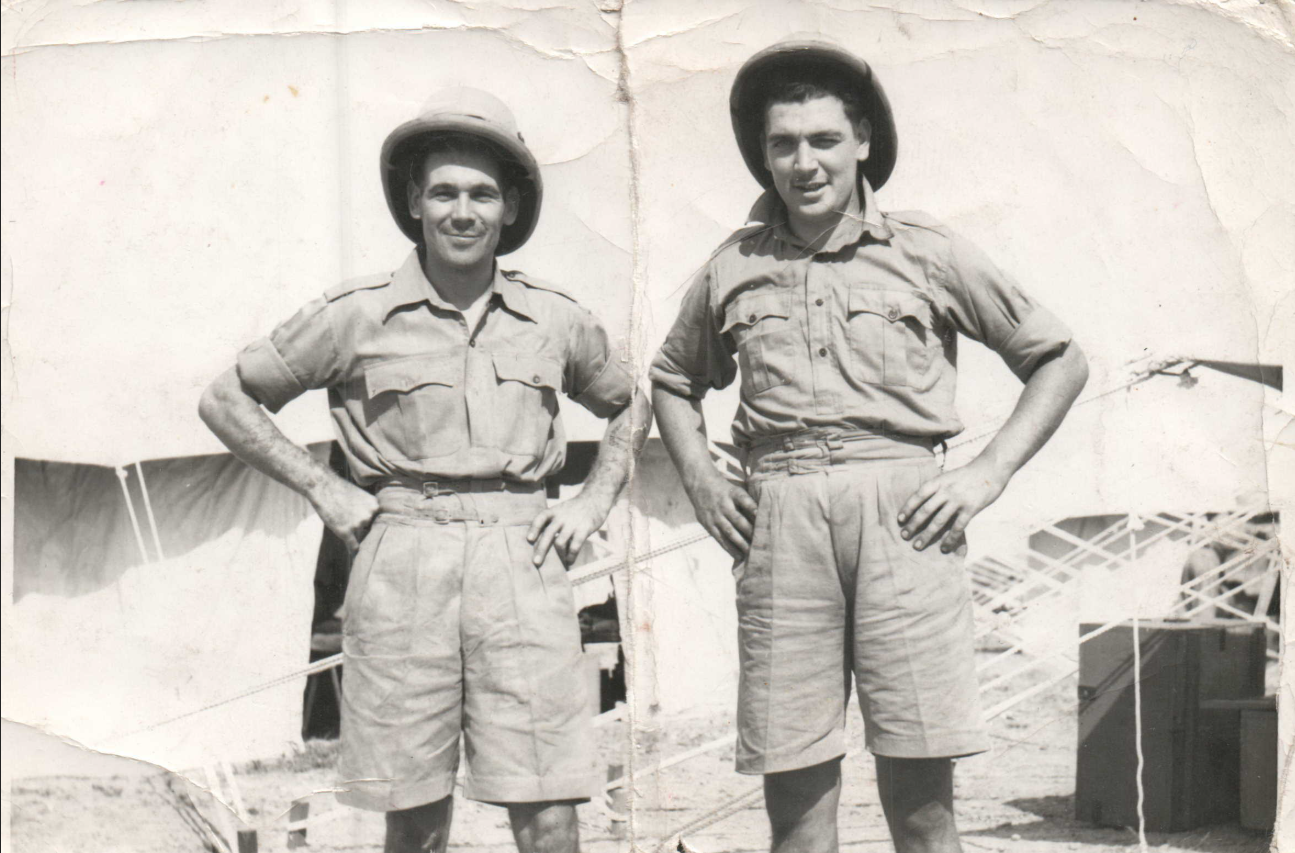
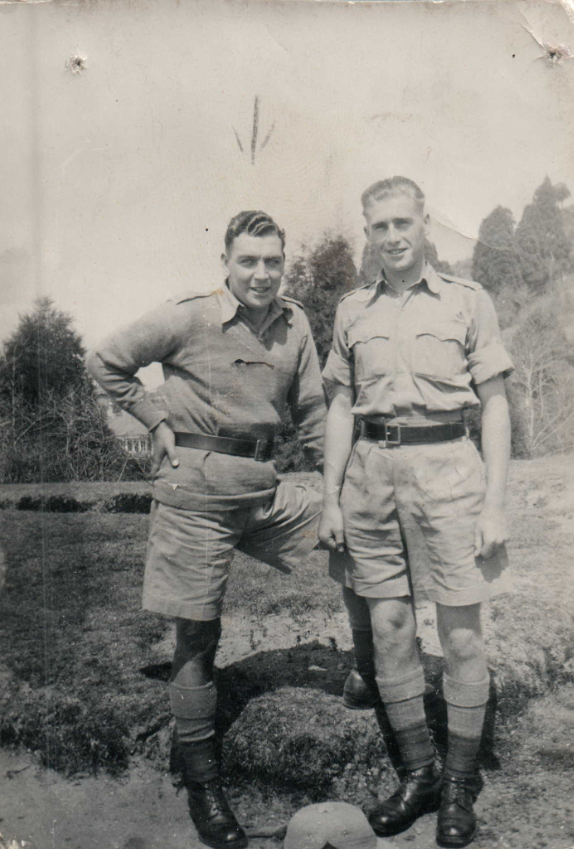
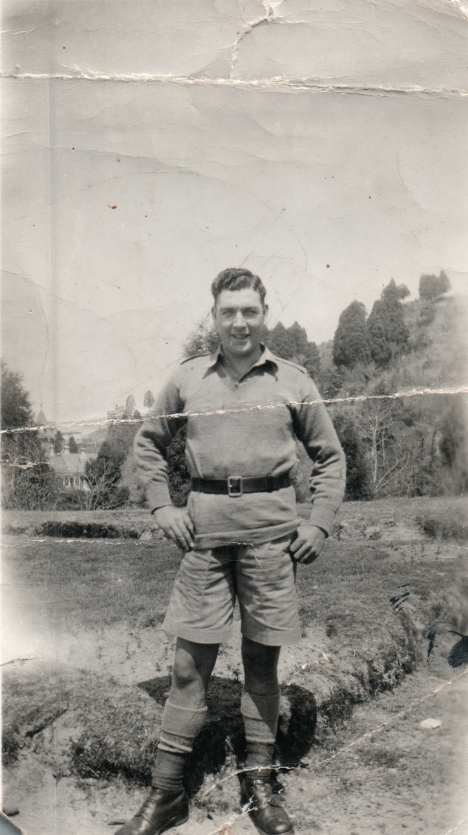
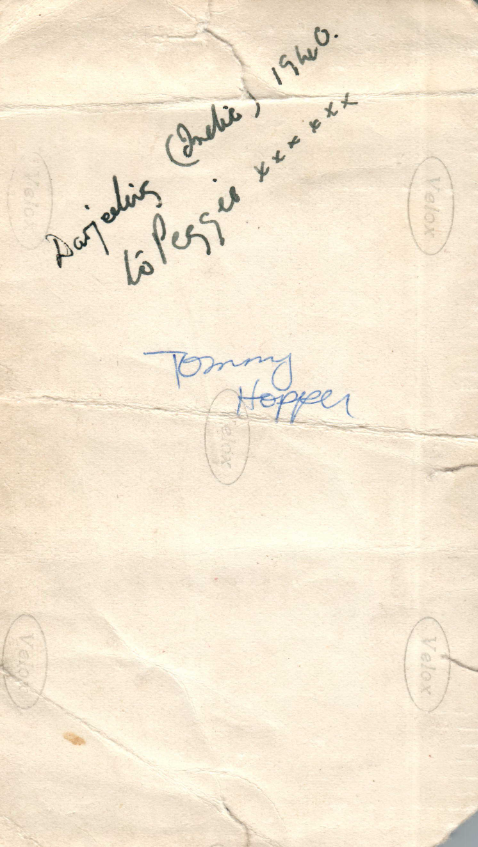
On the 17th October he is posted to the Royal Artillery Reception Centre. He is then posted to India on the 3rd November 1939 into the 8th Heavy Anti-Aircraft Battery. He is at Darjeeling in 1940 then In January 1941` he is at Karachi. On the 27th August 1941, Thomas is appointed to a Paid Lance Bombardier
After 18 months in India, Thomas in admitted to the 61st British General Hospital on the 5th November 1941 with an ingrowing Toenail. This was in Deolali, which was a large military cantonment in Maharashtra, India. Deolali was a major transit and training centre for British troops, and the hospital served as a crucial medical facility for soldiers serving in the region. [Its where the expression Deolali Tap comes from]. Thomas cannot get his boots without causing pain. He is operated on and is discharged on the 19th December 1941.
The British were unable to hold the Japanese in southern Burma and by early March 1942 it was clear that Rangoon would have to be evacuated. The denial scheme was put into operation at Rangoon at 02:00 on 7th March and huge stockpiles of stores and equipment were destroyed. Amongst the items to be destroyed was much of the equipment belonging to the 8th Battery, which together with the 3rd Indian L.A.A. Battery, took their remaining guns to the defence of the bridge at Hlegu where
they were joined by the 8th Indian H.A.A. Battery from Pegu. The whole British force continued to withdraw northwards from the Rangoon area and by 9th and 10th March was concentrated around Tharrawaddy on the Irrawaddy River. At this time all of the antiaircraft batteries were together with the force and were later deployed to defend Shwedaung, Prome, Allanmyo and Magwe. By the time the 1st Burma Corps or ‘Burcorps’ came into being on 19th March 1942, the 8th H.A.A. Battery was assigned as Lines of Communication Troops. On 25th March, ‘Burcorps’ issued orders that the 8th H.A.A. and the 3rd Indian L.A.A. Batteries were to come under the command of the 17th Indian Infantry Division for the defence of Prome.
By 1st April, the 8th Battery was at Allanmyo, where it was in action almost daily. The Japanese advance continued and the British were forced to withdraw from Prome to a new line south of Magwe. The 8th Battery left for Satthwa on the 6th April 1942 in the early hours and was in action later that day, where two Japanese aircraft were possibly shot down. The next day, the 8th Battery moved to Magwe via Taungdwingyi, arriving on the 9th April. It remained at Magwe until forced to pull out to Yenangyaung, then in the area occupied by the 1st Burma Infantry Division, on 13th April. On 15th April, as the Japanese closed in, orders were given for the destruction of the oilfields at Yenangyaung. As it attempted to withdraw further northwards, on 16th April, the 1st Burma Infantry Division found its line of retreat blocked at the Pin Chaung by a Japanese force that had come around the British flank and down from the north. Battery H.Q. and No.1 Section managed to withdraw to the Pin Chaung without too much trouble in the early hours of 17th April, but No.2 Section was surrounded by the Japanese and suffered several casualties. Some surrendered but many men broke away and when British tanks of the 2nd Royal Tank Regiment arrived to drive the Japanese away, the rest also got away to rejoin the others. With the aid of No.1 Section, No. 2 Section was to reform. A short while later that morning, No.1 Section deployed a single gun in the ground role against Japanese troops on high ground in Yenangyaung, inflicting a number of casualties. Just before 10:00, the Battery complete, less two guns, made its way through the Japanese roadblock under heavy mortar and machine gun fire. The two guns of No.2 Section and several lorries were briefly abandoned but all were later brought through by tanks. On the road to Meiktila, the next day the Battery reorganised as a four-gun section. Meiktila was reached on the afternoon of 19th April. Eventually, after having abandoned much of its equipment, the 1st Burma Infantry Division found a way through the Japanese and broke out of the encirclement on the afternoon of 19th April.
Thomas was originally posted as missing but later was found to have been killed in action on Friday 17th April 1942.
*We are all in his debt for our lives.
Sources: War Diary WO 172/757; “History of the Royal Regiment of Artillery, The Far East Theatre, 1941-46”, Farndale M.; The Royal Artillery Institution (2000); “Indian Armed Forces in World War II, The Retreat from Burma, 1941-42”, Prasad Bishewar (ed), Orient Longmans (1959); “The War Against Japan, Volume 1 – India’s Most Dangerous Hour”, Woodburn Kirby S., HMSO (1958). “The Lineage Book of British Land Forces, 1660-1978”, Frederick J.B.M., Microform (1984); Indian Army List, April 1928, July 1936.; The British Newspaper Archive; The National Archives; The Burma Campaign; *Joyce Marley has submitted this information.
Unknown Newspaper 1942 reads :
Littletown – Presumed Killed
Mr and Mrs W Hopper 6 Front Street Littletown have received official news that their son Tom Hopper (23) has been missing since April 17th and is presumed killed in action in the far east. He enlisted three years ago and served in India, Iraq, Burma and Rangoon. In civilian life he was an employee at Elemore Colliery. He was well known and popular amongst all his acquaintances and friends.
Thomas Hopper is remembered at Hallgarth, Pittington on H143.01 and at Durham on D146.65.
First Name: Thomas
Last Name: Hopper
Service Number: 1469665
Which War: Second World War 1939-45
Died: 17/04/1942
Age: 22
Rank: Lance-Bombardier
Regiment: Royal Artillery
Served in: Army
Unit/Ship: 8 Heavy Anti-Aircraft Independent Battery
Links to Source Material