Every Name a Story
Thomas William Brown
Every Name a Story
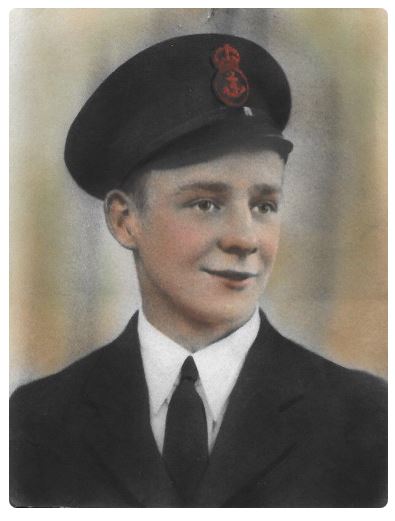
In Tynemouth (Preston) Cemetery is the Commonwealth War Grave with a private headstone of C/NX 2661 Leading Seaman Thomas William Brown, G.M., serving on H.M.S. Belfast the Royal Navy Catering Service who died 13/02/1945.
The son of Thomas William and Margaret Brown, of North Shields.
The headstone reads:-
In loving memory of
Our dear son
And daughter
Died Feb. 13th 1945 .
Thomas W. Brown
G.M. R.N.
Aged 19 years
Maureen Brown
Aged 4 years.
Thomas William ‘Tommy’ Brown was born on the 9th December 1925, at 6 Lily Gardens, North Shields, the eldest boy of twelve children to Thomas William Brown, (born 1898) and his wife Margaret Jean nee Whitfield, (born 16th December 1901, died 1974), Brown, [she was the youngest daughter of seven children, of which only two survived to Thomas Chapman Whitfield, (born 1876 died January 1945), and Margaret Jane nee Keenan Whitfield, (born 1876, died 1921), of 45 Eldon Street, North Shields, they were married in 1895].
Thomas and Margaret were married in 1924 at Tynemouth.
The other eleven children were Margaret Brown, born 4th December 1924, Lilian Mary Brown, born 15th June 1931, Maureen Brown, born 1941 died 13th December 1945, Stanley Brown,, Betty Brown, Mary Brown, Nancy Brown, Albert Brown, Sylvia Brown, David Brown born 1930, and Norman Brown born 1933.
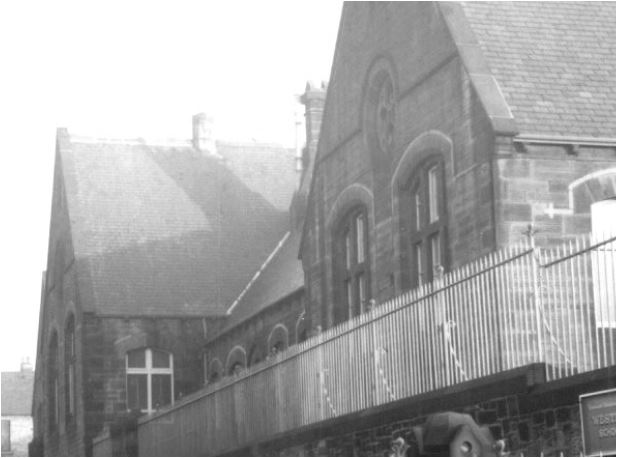
Tommy was educated at the Western Board School, then was employed for about 18 months, leaving his native North East for work. He went to reside at Station Road, Earl Shilton, Leicestershire, with his aunt, uncle [John Wlliam Whitfield died 4th May 1969], and cousin.
Tommy aged 14 worked for Abbot’s shoe factory, then a builder’s Labourer before joining the NAAFI.
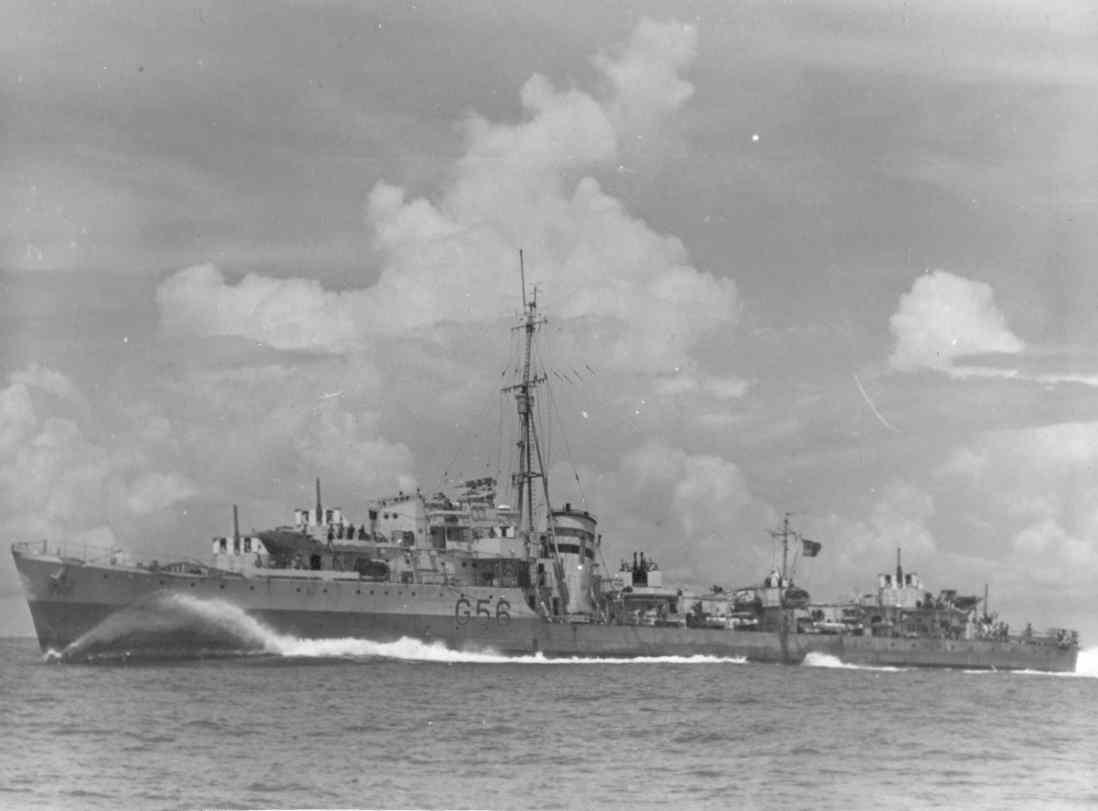
Thomas William Brown, ‘Tommy’ at the age of 15, joined the NAAFI in April 1942, and was assigned as a Canteen Assistant on-board HMS Petard, a P class destroyer, for service during World War II. Unlike other services, the NAAFI only accepted men from the age of 17 onwards, so Brown had to lie about his age to join. On the 30th October 1942, his first sea trip, HMS Petard was in the waters off the coast of Port Said, Egypt. They were being sent to relieve HMS Hero, and to investigate radar contact with a submarine along with Pakenham, Dulverton, Hurworth, and Vickers Wellesley light bombers of No. 47 Squadron RAF.
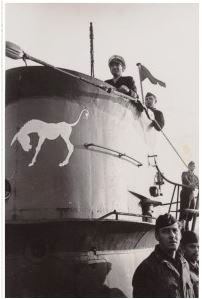
After ten hours of depth charge attacks, after no fewer than 288 depth charges were dropped on it by four British destroyers, U Boat U-559, commanded by Kapitänleutnant Hans Heidtmann, in position 32.30N, 33.00E, came to the surface at 10 pm, it being identified by its distinctive white donkey emblem on its conning tower. HMS Petard fired her 4–inch guns at the submarine, causing such damage that the crew abandoned ship.
Petard then launched a boarding party in a whaler. Lieutenant Francis Anthony Blair Fasson and Able Seaman Colin Grazier dived into the sea and swam to the submarine, with Brown following them over. The German crew had opened the boat’s seacocks, and water was pouring into the vessel. The two Navy men made their way into the captain’s cabin where Fasson found a set of keys. They unlocked drawers and found two code books: the Short Weather Cipher, called Wetterkurzschusse and Short Signal Book, Kurzsignalsheft. Brown carried these documents up the iron ladder of the U-boat’s conning tower to Petard’s whaler, climbing with one hand while holding the documents in the other. After his third trip down and up the ladder, he called for his shipmates to get out of the boat, but the submarine sank before they could escape. Brown himself was dragged under with the submarine, but managed to fight his way back to the surface and was picked up by the whaler.
He was promoted to Senior Canteen Assistant following the incident. Due to the attention arising from his actions in the incident with U-559, his age became known to the authorities.
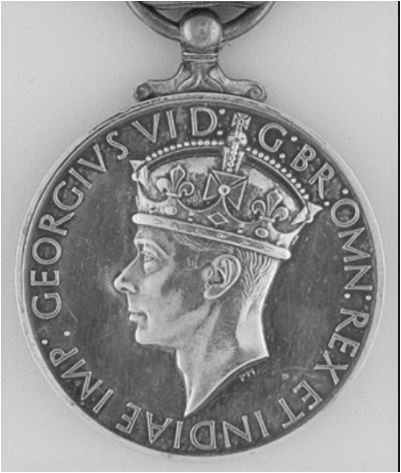
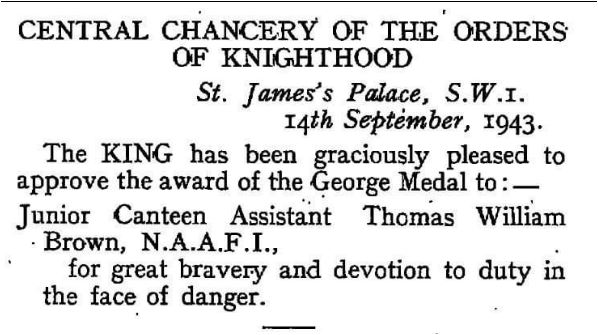
For their actions, Fasson and Grazier were posthumously awarded the George Cross. Being a civilian due to his NAAFI employment, Brown was awarded the George Medal. His mother Margaret and brother Stanley travelled to London to receive his medal on his behalf after Brown’s death in 1945. Prior to being told about the presentation ceremony, his mother hadn’t been told that Brown had received a medal for his actions. Unknown to Brown, the documents that he, Fasson, and Grazier retrieved were extremely valuable in breaking the German Enigma code. They allowed British codebreakers to attack the “Triton” key used by the U-boats, which had been invulnerable for nine months. Allied convoys in the Atlantic could be directed away from known U-boat locations.
Winston Churchill wrote that the actions of the crew of Petard were crucial to the outcome of the war. Brown never knew the contents of those documents; information relating to Enigma was not released till decades after his death.
For the previous 10 months, an adaptation to the German’s Enigma encoding machine had meant that Alan Turing and his team at Bletchley Park had been unable to decode the navy signals. The documents taken from U-559 were rushed back to England, arriving at Bletchley Park on November the 24th. They included the U-boat’s “short signal key” and “weather signal key”, and provided the decoders with an invaluable “crib” to help crack Enigma. By December 13th they had broken the code and the first intercept arrived at the Admiralty Operational Intelligence Office – a cable giving the positions in the North Atlantic of 12 U-boats. A steady stream of intercepts followed, enabling the Admiralty to re-route the vital convoys coming in from the USA, and saving thousands of tons of shipping.
This might be Tommy Brown’s account of the incident though it was unsigned: The lights were out. The First Lieutenant [Fasson] had a torch. The water was not very high but rising gradually all the time. First Lieutenant was down there with a machine gun which he was using to smash open cabinets in the Commanding Officer’s cabin. He then tried some keys which were hanging behind the door and opened a drawer, taking out some confidential books which he gave me. After finding more books in cabinets I took another lot up (he was describing his second descent inside the U-boat)…The water was getting deeper and I told the First Lieutenant they were all shouting on deck. He gave me some more books from the cabin. I took these up on deck. The First Lieutenant appeared at the bottom of the hatch. I shouted: ‘You had better come up’ twice and they had just started up when the submarine started to sink very quickly. Source: Celebrating Bletchley Park.
Naval War Diary.
October Deployed with Flotilla in eastern Mediterranean.
30th After U559 was reported on surface 70 miles north of Nile Delta sailed from Port Said with HM
Destroyers PAKENHAM, DULVERTON and HURWORTH to relieve HM Destroyer HERO.
On arrival took part in submarine search operation with the other 3 ships and WELLESLEY
aircraft of 47 Squadron RAF .
After submarine located, carried series of joint depth charge attacks lasting nearly 10 hours. When
U559 was forced to surface after night fall, engaged with main 4in and secondary armament.
As range closed main armament could not be used.
Seaboat launched with a Boarding Party when U559 crew seen to abandon. Lieutenant Tony
Fasson RN and Able Seaman Colin Grazier swam to U559 and entered hull.
They recovered moveable parts of ENIGMA coding machine, associated documentation and some
Charts which they handed to Tommy Brown, a NAAFI Canteen Assistant who also had swum to the
U-Boat.
From a position at the bottom of conning tower he made three trips carrying vital items to seaboat
lying alongside.
As seacocks had been opened before crew abandoned, U559 was flooding rapidly and sank quickly
with the two courageous men still inside and unable to overcome the inrush of water.
(Note: Tragically they went down with the submarine
. Their outstanding gallantry in obtaining this invaluable information was posthumously
recognised by the award to each of the George Cross.
Brown was awarded the George Medal and promoted to Senior Canteen Assistant.
He was not discharged despite his age when entering NAAFI service in 1941.
Sadly he later died in April 1945 when he was trapped in a fire at his family home in North
Shields. Survivors from U559 were rescued.)
November Took the ENIGMA material to Haifa, escorted by HMS DULVERTON.
(Note: This enabled enemy encrypted signal traffic to be read by Bletchley Park codebreakers
and resulted in allied convoy traffic being diverted away from known U-Boat
concentrations during the 1943 Atlantic battles thus saving the lives of many seamen.
For details see GCHQ by Nigel West, BREAKING THE ENIGMA by David Kahn,
Admiralty Fleet Orders, .Report No 5 by P Wescombe and J Gallehawk (BLETCHLEY
TRUST) and SEEK AND STRIKE by W Hackmann.)
Source : Naval History Net.
That ended his posting aboard Petard, but was not discharged from the NAAFI. He returned on leave to his family home in September 1944, at 6 Lily Gardens, Ridges Estate in North Shields, and later returned to sea on board as a Leading Canteen Assistant on-board HMS Belfast.
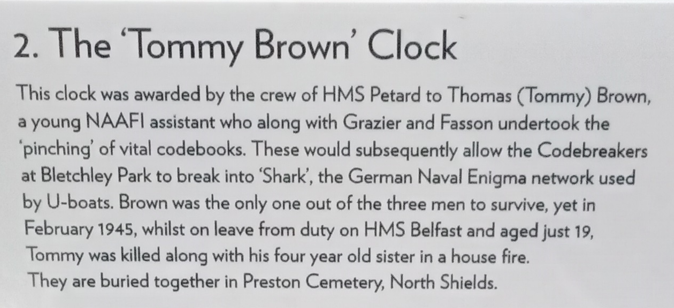
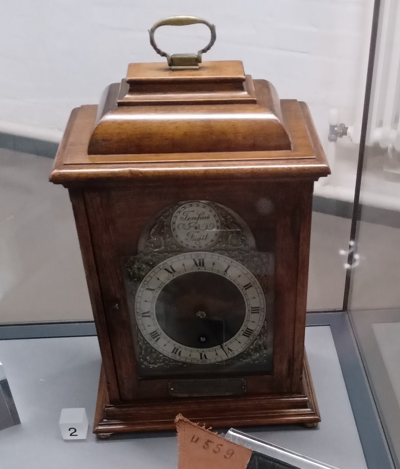
A clock was presented to Thomas Brown by the crew of HMS Petard. See attached photos. Its now in the Bletchley Park Museum.
In 1945, HMS Belfast was being refitted from August 1944, to March 1945. His father, was home on leave for the last two weeks of January, [He had been working in Persia, doing service with the Inland Water Transport for 3 years now stationed in Ireland].
Now ‘Tommy’ was in the habit of coming home from his ship every night and going back in the mornings, when a fire broke out at about 2.20am, at 6 Lily Gardens on the 13th February 1945. When the alarm was raised, the kitchen was practically destroyed, where Thomas was sleeping, the living room of the house, an upstairs flat, was well ablaze and the first efforts of the rescuers to effect an entrance was checked by flames and smoke. The mother, Mrs T.W. Brown discovered the fire, escaped with eight children three boys and five girls, and raised the alarm. The mother and the children were taken care of by the neighbour Mrs E.J. Stonebanks.
Some other neighbours had played gallant parts in the rescue work. Leading the rescue attempts were Constable J. Crawford, of Tynemouth Police, George G. Williamson, [born 9th October 1900, residing at 10 Lily Gardens], T. Baines and M. Riches, all of Lily Gardens. Williamson, with the protection of a Service respirator, recovered Maureen, who was found in her bed unconscious. She was taken to a house of a neighbour, Mrs A. Brown, where artificial respiration was applied, and then was removed to Tynemouth Infirmary, where she later died from delayed shock.
Later, after members of the N.F.S. under Divisional Officer R. H. Patterson had mastered the outbreak, the body of William Brown ‘Tommy’ was found partially clothed, in the kitchen badly burned and dead.
Mrs Brown who by now was greatly distressed said I heard a crackling in the wall and fancied I heard someone shouting Let’s be out. I could not be sure. The passage was full of smoke and I opened the Kitchen door and saw the house on fire. Four of the girls were sleeping together and the two youngest were with me. The three lads were in the back room separately and Thomas was in the kitchen where his bed was. I called Mr Baines and the fire brigade was telephoned for. Everybody has been very good. Mr Williamson, [of 10 Lily Gardens], went in and brought Maureen out and the fireman brought my son out. They were taken to the Infirmary. I think it took about one and a half hours to get the fire out. Practically all the furniture was destroyed in the living room, scullery and one bedroom. Mrs Brown added that her son had not received his George Medal from the King and she mentioned that he had been presented with a special NAAFI award a beautifully engraved clock. This had been presented to Tommy in London by the chairman of the NAAFI Board of London. She also had mentioned that her father [Thomas Chapman Whitfield], had died a fortnight ago.
Mrs Stonebanks, whose home was damaged by water and walls cracked by the heat. I was awakened when Mrs Brown shouted and helped to get the children into my house, when the fireman arrived they ordered us all out in case of the fire spreading to my home. We went to Mrs A. Brown’s at 3 Lily Gardens and we able to return to my house later. All the menfolk and lads in the block got up to lend a hand. Mrs G. Williamson said We were sleeping when Mr Baines knocked us and told us the Brown’s house was on fire and that kiddies were in bed. We got up straight away and my husband went across but could not get in for the stifling smoke. He came back home, put on his service respirator and found his way the best way he could about the Brown’s house which he was not acquainted with. He found one of the girls [Maureen] in bed, brought her downstairs and handed her over to someone. He then went back into the house to see if there was anyone else in. That was before the boy was found. He must have been trapped in the kitchen. The fireman could not get into the kitchen because of the heat and smoke. They got ladders and smashed the windows to get the hoses through. When the fire had been extinguished the boy’s body was found. His death was registered as Accidental asphyxiation by fire. At this time, the facts regarding his bravery were never disclosed due to Official Secrecy.
On Wednesday 14th February 1945, there was an inquest held at Tynemouth Infirmary into the cause of the fire and the deaths of the two people. A lighted cigarette accidentally thrown on to an arm chair instead of into the fireplace, is believed to have been the cause of the double tragedy. Deaths were recorded as accidental by the Coroner Mr P. N. Dodds. The coroner after the hearing said If there is any consolation for the parents, they can take it in the knowledge that both of them were not severely burned at all. The little girl had no burns and the boy had only one or two slight burns. I think it safe to assume that both were asphyxiated by the fumes from the smoke before flames actually touched the bodies and they did not suffer any pain. We are all very sorry for Mrs Brown in the bereavement they have suffered. It is very fortunate indeed that other member of the family were not fatally injured. I am sorry that Mr. G.D. Williamson is away from home today. He seems to have rendered very good service in endeavouring to do what he possibly could to help Mrs Brown in her troubles. P.C. Crawford and Mr Walton and his men did all they possibly could. There is no doubt that the fire was centralised in the Kitchen, and the part of the furniture which caught fire most was the armchair. There was practically no fire in the room and it is quite consistent with the theory that the boy had lain down on the settee to go to sleep. Obviously he had intended to rest there for the night. Probably finishing a cigarette, he haphazardly threw it hoping it would reach the fireplace, but instead it landed on the chair and that was the cause of the fire. There is no suggestion it was otherwise than accidental and there will be a record accordingly.
Evidence of identification was given by the father, after which the mother, Margaret Jane Brown, described what had occurred. Thomas used to come home at night. At 6.30 on Monday night he left the house and witness went to bed about 10.30. David was in the kitchen then but followed witness to bed little later. Thomas slept in the bedroom with Albert, but did not do so that night. Witness did not hear him come in and in reply to the Coroner she said he smoked cigarettes. ‘As far as I can recollect.’ said Mrs Brown ‘between 1.30 and 2 a.m. there was a cracking of the walls. I jumped up and went into the passage, which was full of smoke. I tried the kitchen door, opened it a little bit and found the place was full of smoke. The fire was very low when I went to bed.
Mr Dodds: When you found the fumes coming out what did you do? Mrs Brown replied, I went into David’s room and shouted and then went into the girls’ room and shouted for them. I could see Thomas was not in bed. I ran to the neighbour’s downstairs and we all went in there, but had to be moved because water was coming in. I saw the youngest one was not out. Maureen was the last to get out as the smoke had got worse. All the neighbours assisted and one went for the fire brigade.
Mr Dodds, Was it Mr Williamson who recovered Maureen? Yes, as far as I know. Did you see Maureen? I did not see her anymore.I thought she was in bed asleep. Replying to further questions, Mrs Brown said there was a three piece suite in the kitchen. She could not account for Thomas sleeping on the settee that night.
Mr Dodds said, He may have come in, laid on the settee and fallen asleep. Mrs Brown responded Yes sir; he may have.
The next witness was a P.C.J. Crawford who said his attention was drawn to something being wrong about 2.30 a.m. He had been informed by a neighbour and immediately told Police Headquarters and the N.F.S. ‘I went to the house and found the flat was on fire. I was told that there were children in the house. I went in and examined all the bedrooms but failed to trace anyone at all. The rooms had been vacated. Mrs Brown told me her son was in the kitchen and I re-entered the house, and went towards the kitchen but the heat was terrific and the smoke was very dense. I only got in a few feet and had to withdraw again.’ By this time the N.F.S. had arrived and they were quickly on the scene. They were able to get the water on and had the fire under control by about 2.55. The smoke had cleared slightly and Thomas was found lying on the settee in a sleeping position. He had all his clothes off except his shirt. His clothes were lying on a chair. There was no fire on them. The armchair was on fire at one side of the room and the boy was lying at the other side of the room. The armchair was burnt out only the back being left. The cupboard was completely burnt out. The armchair had been in front of the cupboard. The armchair was about 8 feet from the settee‘.
Mr Dodds, ‘There was no question of a spark from the fire?’ No sir, Was the reply. There must have been something to set fire to the chair other than the fire? Yes sir.
Mr Dodds, Can your account for it. In my opinion I think he may have been smoking and thrown a cigarette from a reclining position towards the fireplace and it must have landed one on the armchair’. Company Officer Lewis Walton N.F.S. said they received he call at 2.29 a.m. and arrived at 2.32 a.m. The living room was well alight.
I found the body of Thomas lying on the settee, at about 2.55. The kitchen was the only part of the building burning and the remainder suffered from intense heat. I think a light had been dropped into the armchair.
Dr. J.E. Stobbs, resident surgeon at Tynemouth Infirmary, said Maureen was brought in to the institution about 4 o clock and was dead. She had been dead for about twenty minutes or half an hour. She was not burnt at all and death was due to asphyxia caused by the inhalation of fumes from the smoke.
Lieutenant (S) H. D. Solomon, R.N.V.R, said ‘On behalf of the officers and ship’s company of the vessel [HMS Belfast], on which Brown was serving I express deep sympathy with Mr and Mrs Brown on the loss of their children. We knew Brown for a very brave and likeable young man whose death is a sad loss to the service and to our ship‘.
There was a Public Notice printed on the 9th March 1945 in the Shield Daily News for the Ridges Fire Fund in which the Chief Constable had kindly given permission to run house to house collection in the Ridges Estate for the purpose of raising funds for Mr and Mrs Brown, of 6 Lily Gardens, where a recent Fire Disaster occurred. This was being organised by Councillor George C. Murray from the Ridges Inn. The Mayor of Tynemouth Councillor T. Duff gave his patronage to the appeal, and Mr T. Cook a local butcher from Marina Avenue had generously offered to start the appeal with a donation of 5 guineas, as did Messrs, McEwan and Co Ltd. The collectors started hose to house calls from Monday 12th March through to 17th March 1945.
Tommy Brown’s medals are now on display at the NAAFI headquarters in Darlington. They were brought there to celebrate the 90th anniversary of the NAAFI in April 2010, with a ceremony being held to celebrate the return of Brown’s medal to the North East. In attendance were five of his siblings, Lillian, Sylvia, Norman, Nancy, and Albert.
Thomas William Brown was buried with full military honours in Tynemouth Preston Cemetery.
Research: British Newspaper Archive; Brown Family; James Pasby; Naval History net; Bletchley Park Trust Museum;
Thomas William Brown is remembered at North Shields on N34.54 and in our List of Ships’ Crews.
First Name: Thomas William
Last Name: Brown
Service Number: C/NX 2661
Which War: Second World War 1939-45
Died: 13/02/1945
Age: 19
Rank: Leading Seaman
Regiment: Royal Naval Catering Service
Served in: Navy
Unit/Ship: HMS Belfast, HMS Petard
Decorations: George Medal
Naval History Net.
Links to Source Material
The Evening News Tuesday 13/02/1945
The Evening News Thursday 16/09/1944
Newcastle Journal Wednesday 14/02/1945 Part 1
Newcastle Journal Wednesday 14/02/1944 Part 2
Newcastle Journal Wednesday 14/02/1945 Part 3
Shields Daily News Friday 09/03/1945
Shields Daily News Friday 09/03/1945 Part 1
Shields Daily News Friday 09/03/1945 Part 2
Shields Daily News Friday 09/03/1945 Part 3
Shields Daily News Monday 09/10/1944