Every Name a Story
Reginald Henry Callender
Every Name a Story
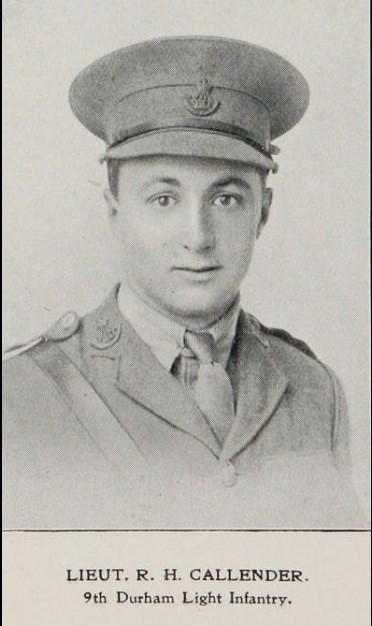
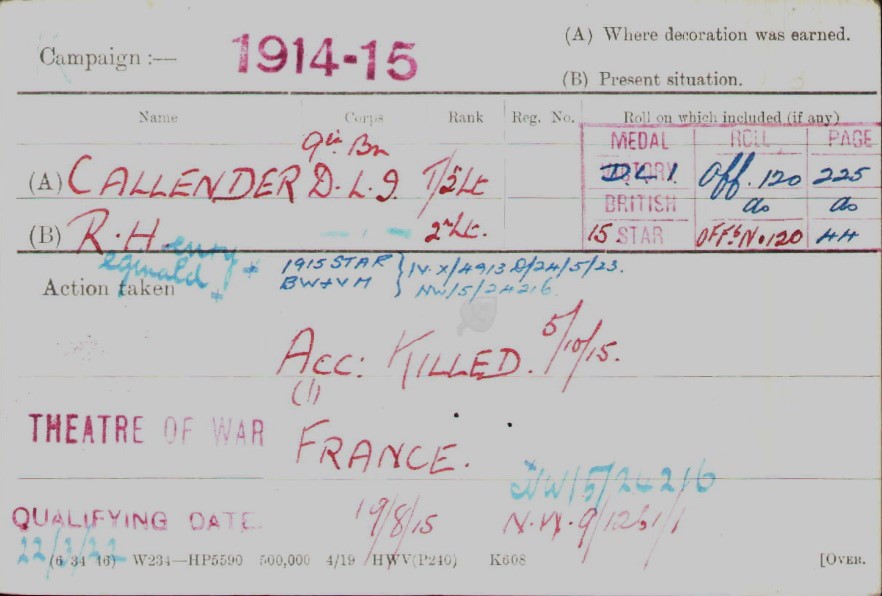
In Cité Bonjean Military Cemetery, Armentieres, France is the Commonwealth War Grave of Second Lieutenant Reginald Henry Callender, serving with the 17th Battalion Durham Light Infantry, attached to the 1/9th Battalion who died 05/10/1915.
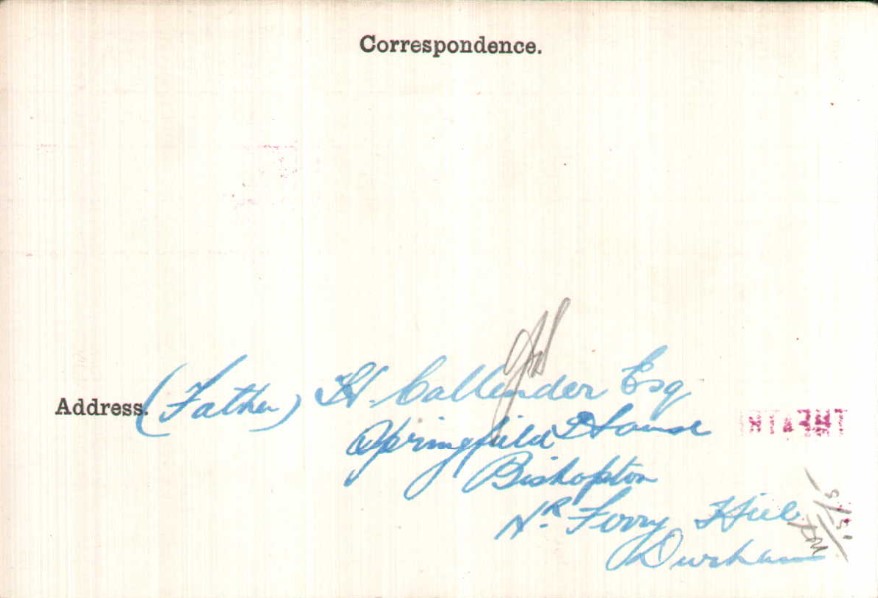
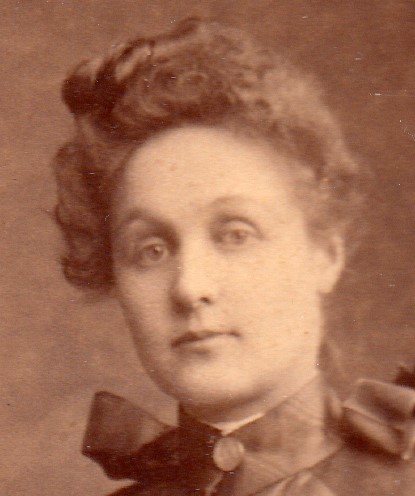
Reginald ‘Reggie’ Henry Callender was born the 31st August 1892, the eldest boy of nine children, to Henry Callender, a butcher, born 1865, died 4th January 1935, and his wife Jessie Gertrude nee Mills, (born 7th August 1867, at Bardsley, baptised 10th September 1867, died 7th April 1936), she was the daughter of Samuel Mills, a school master, (born 1835, died 1922), and his wife Betty Wardle, (born 1835 died 1879). Henry Callender and Jessie Gertrude were married in 1890.
[The father Henry Callender was born at his father’s 143 acre farm at Redmarshall, Co Durham].
The other children were
- Mildred Annie Callender, born 13th June 1894, died 10th November 1988, [she married Thomas Robson, born 15th July 1898, in 1939, they were residing at ‘Glenville House’, Darlington Road, farm with his father, and their child Ernest Robson, born 12th June 1921].
- Amy Evelyn Callender born 1896, died 1987, [she married Dennis Cruddace, and they had one chid Dennis Raymond Cruddace, born 1924, died 1990].
- Ernest Raymond Callender, born 19th March 1897, died 27th June 1980, [he married Doris Fawcett, born 29th November 1895, in 1939 they were residing at ‘Westlands Springs’ with their son, Peter F. Callender, born 1931, died 2018, Ernest was a Veterinary Inspector for Food and Fish].
- Tom Mills Callender, born 30th January 1899, died 1953, [in 1939 he was an Admiralty Overseer for Ship Fittings, residing at 170 Stephenson Street, Newcastle upon Tyne].
- Sydney Callender, born 11th July 1899, died 21st June 1973, [he married Florence Annie Orwin, born 7th August 1900, in 1939 they were residing at the School house, Stokesley Road, they had one child Reginald H. Callender, born 17th July 1928, died 2000].
- Herbert Callender, born 1901, died 1928.
- George Harold Callender, a butcher, born 20th August 1903, died 21st October 1963, [he married in 1937, Mary Stephenson, born 5th January 1908, she died 2001, in 1939 they were residing at Springfield House, Darlington Road, with William W. Callender born 6th March 1867, a farmer].
- Doris Mary Callender, born 17th August 1905, died 29th September 1992, she married John Robert ‘Jack’ Hall, on the 26th September 1931, at Sedgefield, who was born 26th September 1905, died 1975, in 1939, he was a farmer at Manor Farm, Cowpen Bewley, at Billingham.
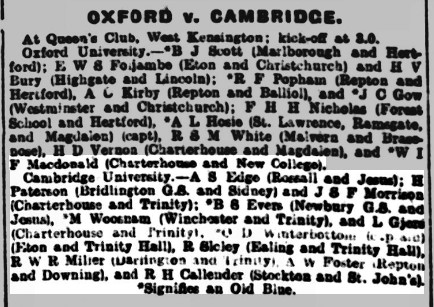
Reginald won a scholarship to Stockton Grammar School which he left in 1911. Another scholarship took him to Cambridge University firstly as a non-collegiate student for two terms, based at Fitzwilliam Hall. At Easter 1912 he entered St. John’s College. Whilst there he qualified as a teacher at the Training College for Schoolmasters and obtained the certificate in the Theory and Practice of Education, and graduated in History in the summer of 1914. A B.A., Honours with Historical Tripos Part I and was presently reading Part II.
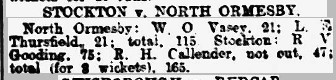
He was an all-year-round sportsman; cricket in summer, football in winter. He played cricket for Stockton in the South Durham and North Yorkshire League, for St. John’s College, for Cambridge University second team (the Saracens) and just after graduating in History, for Durham County.
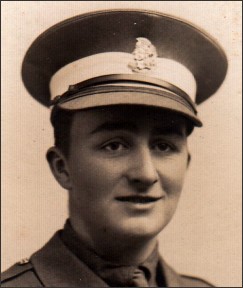
He played football for Stockton, being in the team which won the FA Amateur Cup in 1912. He also played for Fitzwilliam Hall and then St. John’s College, for Cambridge University, for the Combined Varsities (Oxford & Cambridge), and for England as an amateur international, including some matches in Europe. In addition to this he played 1 match for Glossop and towards the end of the 1913-14 season, 5 matches for Derby County who were then in the first division. He also played for the Corinthians. Reginald always played as an amateur and was rated by some as the best amateur outside left in the country. He represented the England amateur national team.
In the Autumn term of 1914, he took up a teaching post at 15 Langdon Road, Bromley, where the Boys School in Kent was located. Reginald enlisted on the 28th November that year and was gazetted a temporary 2nd Lieutenant on the 4th December 1914 December in the Durham Light Infantry. He was 5 feet 6 and a half inches, 125lb. He joined the 17th Battalion Durham Light Infantry., disembarked to France on the 18th August 1915. And at the beginning of September was fighting very near the Belgian border in the trenches. He was seconded to the 1/9th Battalion Durham Light Infantry.
After returning from the trenches to their billets, all the men were to be instructed in bomb throwing. They spent the morning of the 5th October, at Le Bizet, Armentieres, practising throwing bully beef tins. In the afternoon Reginald was lecturing on the use of a live G.S.1. hand grenade to 15 and 16 platoons of ‘D’ Company, when it exploded in his hand, killing both him and Private Renforth and injuring several others. He was instructing 15 platoon as Serjeant Burton was instructing Platoon 16 further down the room. (about 15 yards away).
There was a Court of Enquiry held on the 19th October at Armentieres by Brigadier-General Shea.
Witness 1: Lieutenant Callender had placed the detonator inside the grenade at about 2.15pm, He then proceeded with further instructions, meanwhile I moved up the room to another platoon, which was also under instruction. I just joined this platoon when there was a loud explosion. The grenade that Lieutenant Callender had been using for demonstration had exploded. Lieutenant Callender was demonstrating with this grenade for at least five minutes before it exploded. Lieut {sic} was a qualified and competent Bomb Officer.
Witness 2; He explained that the grenade was not perfect as the retaining spring was broken, he then put the cap on turned it round to ‘Fire’ and saying ‘This is how it goes off’ hit the cap with his hand and the explosion followed.
Witness 3; I was standing 3 or 4 feet away when Lieut Callender was explaining the parts of the dismantled grenade, putting in the detonator and saying, You strike it this way’ striking the detonator, when the explosion followed.
The Court is of opinion that 2nd Lieut Callender death was purely accidental and in no way due to negligence on the part of anyone concerned. Dated 19th October 1915.
The London Gazette Supplement of the 5th December 1914 shows that Reginald had been commissioned as a 2nd Lieutenant the day before.
In 1921, Henry and Jessie were still residing at the same address, as were three of their children plus a grandson. George Harold, Doris May, Mildred who was married and just had a baby Ernest Robson. Her husband was working for George Callender as a butcher’s assistant.
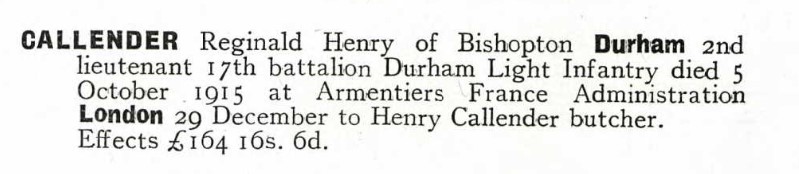
In his will he left £164 16 shillings and 6 pence to his father.
Acknowledgments: Rev. David Youngson; Peter Whittaker and Peter Nichol; Janet Callender; National Archives; British Newspaper Archive; War Diary
Reginald Henry Callender is remembered at Bishopton on B142.01, at Stockton on S138.29, in the 9th Battalion Book of Remembrance page 8 and in the D.L.I. Book of Remembrance page
274.
First Name: Reginald Henry
Last Name: Callender
Which War: First World War 1914-18
Died: 05/10/1915
Age: 23
Rank: Second Lieutenant
Regiment: Durham Light Infantry
Served in: Army
Unit/Ship: 17th Battalion attached 1st/9th Battalion